Africa
Dem Go Flog, Flog, Flog, Dem Go Tire”: Falana’s Unyielding Crusade Against Power in Nigeria’s Judiciary – Will His Fight Spark Change or Echo in Vain?, by John Egbeazien Oshodi

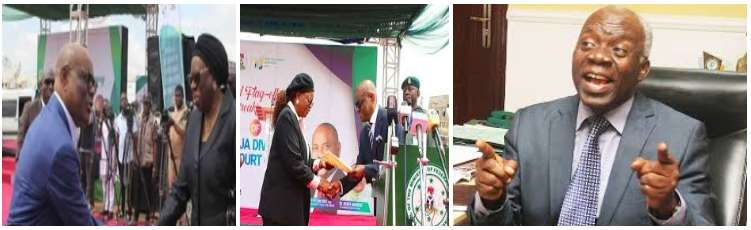
Repeatedly, lawyer and civil rights activist Femi Falana raises his voice against the entrenched powers represented by Wike, Tinubu, and a judiciary seemingly indifferent to the principles of accountability. Yet his impassioned calls for reform seem to fall on deaf ears. His unyielding campaign against undemocratic practices within Nigeria’s judiciary brings to mind young Brave Success, who captured the nation’s spirit with her resolute, viral words: “Dem go flog, flog, flog, dem go tire.” Like Brave Success, Falana remains undeterred amid resistance, his advocacy standing as a beacon for transparency and justice. But as he relentlessly battles the compromised state of the judiciary, Nigerians are left to ponder: will Falana’s steadfast pursuit of reform finally resonate within the halls of power, or will his call for accountability echo unheeded, lost among those who possess the true power to bring about change?
For years, Femi Falana has served as a lone voice of dissent, persistently calling out the undemocratic and self-serving actions within Nigeria’s leadership. Among his key targets is Federal Capital Territory (FCT) Minister Nyesom Wike, who has systematically used his position to exert influence over Nigeria’s judiciary through strategic gifts and demolitions. Falana’s efforts to expose these actions have so far been met with silence, even from the highest office in the country, leaving many to wonder why President Bola Tinubu has failed to intervene. The prevailing theory is that Tinubu may be unwilling—or perhaps even fearful—to confront Wike, given the significant role Wike played in securing the votes from Rivers State that were pivotal in Tinubu’s own electoral victory. The calculated support Wike extended during the campaign, paired with his established influence over judicial circles, could give him considerable leverage over both the judiciary and the presidency. Wike’s political capital is such that if pressured, he might reveal damaging details of backdoor alliances, thereby unraveling the delicate power structure that currently benefits those at the top.
Expressively, Wike appears to be a master strategist, adept at evading accountability by repeatedly tying his controversial actions to Tinubu’s broader political agenda. This strategic alignment not only protects him under the shadow of presidential authority but also creates significant obstacles for any attempts to question his actions. Each time Wike’s questionable maneuvers—whether his generous gifts to judges or his contentious demolition campaigns—draw public scrutiny, he deflects criticism by framing these as extensions of the administration’s policies. This tactic implicitly positions Tinubu’s endorsement as a protective shield, suggesting that any opposition to his actions would be tantamount to challenging the president himself. The optics here suggest a troubling alliance; some believe that Tinubu’s apparent hesitation to confront Wike is rooted in a deeper political entanglement, wherein Wike’s instrumental role in the elections has secured him an untouchable status. This alliance grants Wike a dangerous level of autonomy, allowing him to manipulate the system with impunity, secure in the knowledge that Tinubu cannot easily distance himself without potentially destabilizing his own support base. In this complex political landscape, Falana’s fight exposes the broader implications of unchecked power consolidation, where the principles of accountability and transparency are steadily eroded in favor of personal allegiances.

Undeterred by these alliances, Falana has remained vocal about the constitutional infractions inherent in Wike’s actions. During a recent appearance on Channels Television’s Politics Today, Falana passionately argued that provisions for judicial welfare—such as housing and vehicles—should be handled exclusively by the National Judicial Council (NJC) and funded through appropriations by the National Assembly. He warned that direct, unregulated gifts from a minister to judges undermine judicial independence and create a perception of compromised impartiality. Falana’s unwavering stance on this issue, however, stands in stark contrast to the deafening silence from the presidency. This silence raises uncomfortable questions about whether high-level political interests have effectively sidelined constitutional principles, as those with power seemingly prioritize their political alliances over the integrity of the nation’s institutions. In the face of such widespread complicity, Falana’s calls for accountability underscore the urgent need for transparency in Nigeria’s governance—an imperative that appears increasingly neglected by those in positions of influence.
The true depth of Wike’s influence over the judiciary becomes apparent when examining his specific targeting of judges in Nigeria’s highest courts—particularly those in the Supreme Court, the Court of Appeal, and Federal High Courts situated in Abuja. This focus appears to be more than mere generosity; it is a calculated maneuver, especially given the ongoing legal battles in which Wike himself is embroiled. Notably, many of these cases, which involve significant disputes with the Rivers State governor and government, are being transferred from local jurisdictions to these very courts in Abuja. Observers argue that Wike’s foresight is anything but altruistic. For critics, it is inconceivable that a Minister of the FCT would sidestep constitutional norms and assume the role of benefactor to judges in strategically positioned courts without ulterior motives. If these gifts are not meant to tilt judicial decisions in his favor, one has to question why Wike has taken it upon himself to allocate resources outside his jurisdictional responsibilities. His actions present a dangerous precedent; if his justification holds, should governors across Nigeria now feel empowered to shower federal judges with gifts, thereby eroding the judiciary’s independence under the guise of “support”? This line of reasoning, critics argue, is not only absurd but also perilous, as it opens the door for state actors to blur the lines between governance and influence, fundamentally compromising the autonomy of the judiciary.
The Socio-Economic Rights and Accountability Project (SERAP) has publicly joined Falana’s critique, urging President Tinubu to put a stop to what they describe as an egregious overreach of executive power. SERAP has called for judicial welfare to be managed through formal legislative appropriations rather than individual gifts, asserting that this unchecked executive intervention threatens the very fabric of Nigeria’s democracy. Their appeal, which has even been sent to the United Nations Special Rapporteur on the Independence of Judges and Lawyers, underscores the seriousness of the issue. SERAP warns that the continued practice of government officials bestowing favors on judges not only casts the judiciary in a subservient light but also chips away at public trust, undermining the separation of powers that is essential for a functional democratic state. The implication here is that Nigeria’s judiciary, rather than serving as an impartial arbitrator of justice, risks becoming a subsidiary arm of the executive, bending to the whims of those who can afford to bestow favors. In light of these warnings, the silence from the presidency appears even more troubling, suggesting a tacit endorsement of these practices that stand in direct opposition to the principles of fair governance.

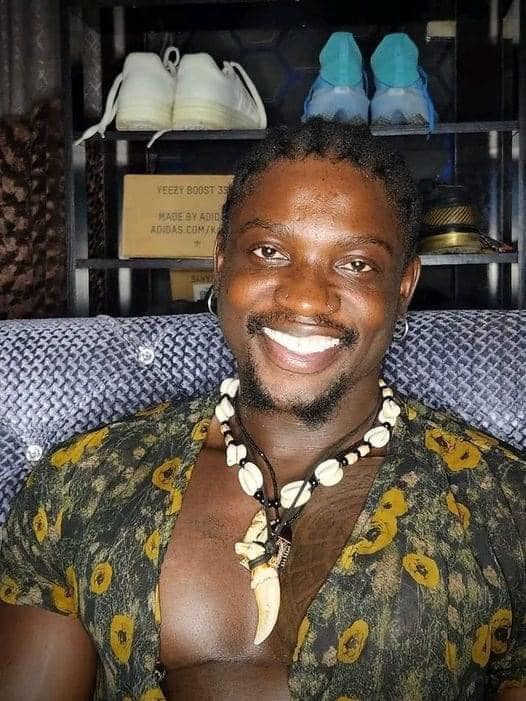
Falana’s ongoing battle evokes the spirit of resilience embodied by Brave Success, the young Nigerian girl whose defiant words, “Dem go flog, flog, flog, dem go tire,” became a viral rallying cry for perseverance in the face of adversity. Like Brave Success, Falana’s tireless advocacy seems destined to continue despite the lack of a substantive response from those in power. Nigerians watch as he repeatedly raises the alarm, much like Brave Success’s undaunted stance against hardship. But just as Brave Success’s words served as both inspiration and a sobering commentary on the challenges of standing alone, Falana’s unwavering efforts underscore the difficulty of dismantling entrenched structures of power single-handedly. His “flogging” of these undemocratic practices, though principled, raises the question of whether his efforts alone will suffice to instigate change, or if he, like Brave Success, will continue to voice his concerns until those in power either exhaust his will or finally enact the reforms he demands.
If Nigeria were genuinely committed to democratic values and transparency, the judiciary’s budget would be designed to cover essential resources like housing and vehicles for judges, removing any need for politically motivated “gifts” from figures like Wike. This responsibility should rest solely with the National Judicial Council (NJC) and be funded through the National Assembly, thereby insulating the judiciary from the undue influence that comes with external financial favors. Furthermore, oversight of infrastructure and housing should fall under the purview of the Minister of Works—not the Minister of the FCT. Wike’s insistence on providing these lavish benefits to judges, especially in Abuja’s highest courts, raises serious questions about his motivations. His ongoing legal battles, many of which are or will be handled by the very judges he’s attempting to “support,” make his direct involvement in judicial welfare not only questionable but profoundly troubling. It demonstrates a blatant disregard for the boundaries established to safeguard judicial impartiality.
In light of all these concerns, the so-called “special panel” set up by the President of the Court of Appeal, Justice Monica Dongban-Mensem, seems almost performative. This panel—tasked with addressing Rivers State’s deeply rooted political conflicts, including the high-stakes dispute between Governor Siminalayi Fubara and the Rivers State House of Assembly—appears to be a mere symbolic gesture rather than a sincere effort to resolve these issues. Led by Justice Onyekachi Otisi, the panel is already stumbling with procedural issues such as non-service on respondents, adjournments, and delays, all of which cast serious doubts on its efficiency and impartiality.
The establishment of this panel seems more like judicial theater than a true intervention, an attempt to convey action where none may be forthcoming. For a judiciary that’s already under intense public scrutiny, the suggestion that a special panel could provide clear solutions to these convoluted political conflicts is, quite frankly, absurd. Wike’s involvement, which bypasses constitutional norms under the guise of benevolence, signals a calculated attempt to cultivate influence within the judiciary rather than genuine concern for judicial welfare.
For critics such as Falana and SERAP, Wike’s actions are part of a larger, more disturbing pattern—the manipulation of executive power to corrode the judiciary’s independence. As this trend unfolds, Falana’s unyielding warnings highlight the urgent need to protect Nigeria’s judiciary from such overt political entanglement. Without decisive action to rein in these practices, the judiciary risks being reduced to another tool in the hands of those who prioritize personal gain over justice and fairness.

Professor John Egbeazien Oshodi, born in Uromi, Edo State, Nigeria, is an American-based police and prison scientist, forensic psychologist, public policy psychologist, and legal psychologist. He’s a government advisor on forensic-clinical psychological services in the USA and the founder of the Dr. John Egbeazien Oshodi Foundation for Psychological Health. With a significant role in introducing forensic psychology to Nigeria through N.U.C. and Nasarawa State University, he’s also a former Secretary-General of the Nigeria Psychological Association. He’s taught at esteemed institutions like Florida Memorial University, Florida International University, Nova Southeastern University, and more, and is currently an online faculty member at ISCOM University, Weldios University and Walden University.