
Economy
Excuses Won’t Fix The Economy: Tinubu’s Supporters Must Face Reality, by Isaac Asabor

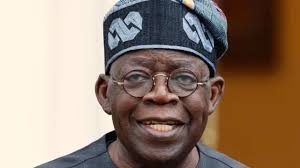
Since the inauguration of President Bola Ahmed Tinubu on May 29, 2023, Nigerians have endured an unprecedented level of economic hardship. The steep rise in fuel prices, skyrocketing cost of living, devaluation of the naira, and the attendant ripple effects on businesses and households have created an environment of despair. Amid this growing frustration, a curious pattern has emerged among Tinubu’s supporters: a tendency to explain away the situation with defensive rhetoric, arguing that the hardship could have been worse if not for Tinubu’s emergence as president.
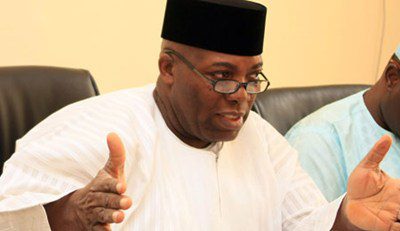
Such claims are becoming increasingly frequent. At first, the narrative was that the president inherited a battered economy from his predecessor, Muhammadu Buhari, and thus should not be held accountable for the suffering of Nigerians. More recently, a new spin has emerged, with supporters claiming that the exchange rate of the naira to the dollar, despite its rapid depreciation, would have been much worse had Tinubu not been in power. This refrain has been echoed by notable figures, including Pastor Enoch Adeboye and Dr. Doyin Okupe, but it is evident that these narratives are failing to resonate with the masses.
The realities on the ground tell a different story from the defensive rhetoric. Since Tinubu took office, the naira has weakened significantly against the dollar. At the time of his inauguration, the naira was trading at around ₦461 to the dollar in the official market, with black market rates slightly higher. Today, the currency is significantly weaker, trading far beyond ₦1000 to the dollar in parallel markets at certain points in recent months.
The removal of the fuel subsidy, a controversial move Tinubu announced in his inaugural speech, has had catastrophic effects. While proponents of subsidy removal argued that it was necessary for fiscal stability, the government has failed to cushion the impact on ordinary Nigerians. Transportation costs have soared, food prices have spiraled out of control, and businesses reliant on fuel for operations are struggling to survive.
These dire economic conditions have left many Nigerians questioning the credibility of the administration’s promises. Tinubu’s team has touted its plans to stimulate economic growth and attract foreign investment, but these promises have yet to yield tangible results for the average citizen.
One of the most glaring issues with the defensive rhetoric from Tinubu’s camp is its lack of accountability. Claims that the economy was already in shambles when Tinubu assumed office do not absolve the current administration of responsibility. While it is true that Buhari’s tenure left the country in a precarious state, Nigerians expected Tinubu to bring solutions, not excuses. After all, he campaigned on a platform of competence, touting his economic expertise and track record as governor of Lagos State.
The argument that the naira’s exchange rate could have been worse also rings hollow. For most Nigerians, the exchange rate is not just a number; it determines the cost of essential goods, many of which are imported. A weaker naira translates to higher prices for food, medicine, and other necessities. Telling people that it “could have been worse” offers no comfort when they can barely afford a meal.

Pastor Adeboye’s recent comment that the naira’s devaluation could have been more severe if Tinubu were not in power reflects this flawed rhetoric. Similarly, Okupe’s assertion that Tinubu’s policies have averted economic catastrophe fails to address the palpable suffering in the country. These narratives, rather than reassuring the populace, only deepen their frustration by appearing dismissive of their struggles.
The disconnect between the government’s rhetoric and the lived experiences of Nigerians is glaring. For the millions of citizens who cannot afford to pay school fees, cover medical expenses, or put food on the table, debates over what might have been are irrelevant. What matters is the here and now: a Nigeria where life has become unbearably difficult.
Small and medium-sized enterprises, which form the backbone of the Nigerian economy, are collapsing under the weight of inflation and unstable exchange rates. Families are making impossible choices, between paying rent and buying food, between educating their children and covering healthcare costs. These are the realities that no amount of spin can obscure.
The government’s supporters may find solace in rhetorical gymnastics, but ordinary Nigerians are demanding action. They need policies that deliver measurable results, not platitudes.
Rather than focusing on hypothetical scenarios and defending the indefensible, the Tinubu administration must acknowledge the severity of the crisis and take bold, decisive steps to address it. While it is true that reforms often come with short-term pain, there are ways to mitigate their impact. For instance, palliatives must be meaningful and targeted, reaching those who need them most. Half-hearted measures or token gestures, like the widely criticized cash transfer scheme, only serve to deepen mistrust.
The administration must also prioritize policies that stabilize the exchange rate. Encouraging transparency in the forex market, combating corruption, and fostering an environment conducive to investment will help restore confidence in the naira. Additionally, efforts to boost local production and reduce reliance on imports can help shield the economy from external shocks.
Finally, the government must communicate honestly with the people. Nigerians are resilient and willing to endure hardship if they believe it will lead to a better future. However, this resilience should not be taken for granted. The administration must provide a clear roadmap for economic recovery, complete with timelines and measurable milestones. Empty assurances and defensive rhetoric will only breed further disillusionment.
There is no denying the fact that the Tinubu administration is at a crossroads. It can continue to rely on narratives that absolve it of responsibility, or it can rise to the occasion and deliver the transformative leadership Nigerians were promised. The defensive rhetoric about the naira and the economy is not only unconvincing but also a disservice to a populace desperate for real solutions.
Excuses won’t fix the economy. Nigerians deserve better. The question now is whether President Tinubu and his team will rise to the challenge or whether history will remember this administration as one that talked the talk but failed to walk the walk. The clock is ticking.
























You must be logged in to post a comment Login