
Africa
National Orientation Agency (NOA) And The Challenges Of Re-orienting -By Mercy Johnson
Despite these challenges, NOA has recorded some achievements. It has championed campaigns on voter education, anti-corruption, peacebuilding, and public health awareness. For instance, during the COVID-19 pandemic, the agency helped disseminate safety protocols to communities. Similarly, NOA has promoted initiatives like the “Do the Right Thing” campaign to instill ethical behavior among Nigerians.

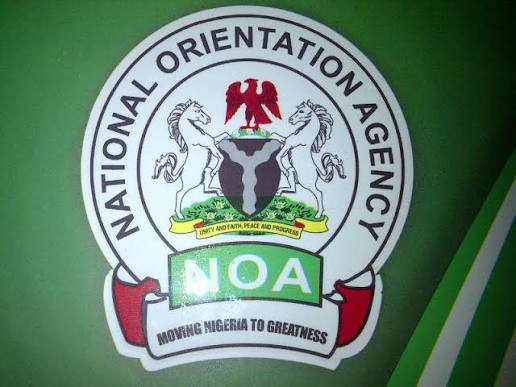
The National Orientation Agency (NOA) was established in 1993 to promote national values, social harmony, patriotism, and civic responsibility among Nigerians. Its mandate includes mobilizing citizens for national development, fostering unity, and instilling discipline in public life. In theory, the agency plays a vital role in shaping public attitudes and behaviors to align with national goals. However, despite this noble mission, NOA has struggled to fulfill its objectives due to a series of persistent challenges.
One major challenge is the pervasive trust deficit between citizens and government institutions. Nigerians often view government policies with suspicion due to years of corruption, unfulfilled promises, and lack of transparency. This makes it difficult for NOA campaigns to gain credibility among the populace. Citizens sometimes perceive the agency as a mouthpiece of the ruling government rather than an independent promoter of civic values, thereby undermining its legitimacy.
Funding constraints also limit NOA’s effectiveness. Public orientation requires extensive outreach through media campaigns, town hall meetings, and grassroots mobilization. Unfortunately, the agency operates on limited budgets, which reduces the scope and quality of its programs. Without adequate financial resources, many of its campaigns fail to reach rural communities where orientation is most needed.
Another significant challenge is the decline in value systems among citizens. Issues such as corruption, ethnic divisions, religious intolerance, and indiscipline remain widespread. NOA campaigns often emphasize unity, honesty, and hard work, but these values clash with the realities of poor governance and socio-economic inequalities. When citizens see leaders act contrary to national values, the agency’s message becomes ineffective.
The digital revolution also poses both opportunities and challenges. While social media provides a platform for NOA to reach millions, it also exposes citizens to misinformation, fake news, and divisive narratives. Many young Nigerians are influenced more by online content creators than by official campaigns. Unfortunately, NOA has been slow in adapting to digital platforms, leaving a gap in engaging the tech-savvy population.
Another obstacle is political interference. The agency is often pressured to promote partisan agendas instead of focusing on national unity and civic responsibility. This politicization erodes its credibility and alienates segments of the population who see it as biased. A truly independent orientation agency would focus on non-partisan values such as patriotism, discipline, and collective responsibility.
Cultural and linguistic diversity also complicates the agency’s work. Nigeria has over 500 languages and numerous ethnic groups, each with its unique worldview. Communicating orientation messages effectively across these divides requires significant resources and creativity. Too often, NOA campaigns are limited to English and a few major languages, leaving many communities underrepresented.
Lack of measurable impact is another challenge. While the agency organizes programs and campaigns, there is little empirical evidence to show that these efforts change behaviors or attitudes on a large scale. Unlike agencies that produce tangible outputs, NOA’s work is difficult to quantify, which makes it harder to justify increased funding.
Despite these challenges, NOA has recorded some achievements. It has championed campaigns on voter education, anti-corruption, peacebuilding, and public health awareness. For instance, during the COVID-19 pandemic, the agency helped disseminate safety protocols to communities. Similarly, NOA has promoted initiatives like the “Do the Right Thing” campaign to instill ethical behavior among Nigerians.
In conclusion, NOA remains an important agency for nation-building, but its impact is limited by issues of trust, funding, politicization, and weak adaptation to new realities. To re-orient Nigerian citizens effectively, the agency must embrace digital communication, ensure independence from political influence, and design measurable programs that resonate with citizens’ lived experiences. Only then can it fulfill its role as a true driver of national consciousness and social reformation.
MERCY JOHNSON IS A 300 LEVEL STUDENT FROM MASS COMMUNICATION DEPARTMENT UNIVERSITY OF MAIDUGURI.




















You must be logged in to post a comment Login