
Africa
Nigeria’s Bad Roads are Taking a Toll on Our Economy -By Babatunde Yusuf
We need to talk about inaction. The FG and state governments often announce ambitious road projects, but completion rates remain low. According to BudgIT’s 2023 report on capital projects, over 50% of road projects funded between 2015 and 2022 were either abandoned or under-delivered. Yet mouthwatering amount were budgeted for these roads. At this point accountability should not be elusive in such a critical sector.

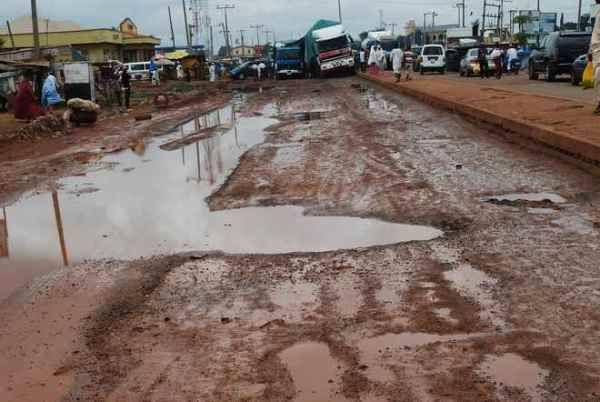
Drive anywhere in Nigeria, and it won’t take you long to find evidence of a broken system: cracked highways, cratered city streets, and rural roads that are somehow impassable. For decades, the conversation around bad roads has centered on inconvenience and traffic. But there’s a deeper and less talked-about consequence, and this is the toll these bad roads are taking on our economy.
Road transportation remains the backbone of commerce in Nigeria, and over 90% of goods and passengers are moved by roads, according to the National Bureau of Statistics (NBS). Yet, many of these roads are in poor condition, making delivery times slow, increasing fuel costs, and the lifespan of vehicles drops dramatically. So, who pays for this inefficiency? The consumers, business owners, and the government all lose in different ways albeit.
A 2022 report by the World Bank estimated that Nigeria loses about $1 billion annually due to poor road infrastructure. This includes losses from increased travel times, higher vehicle operating costs, and goods damaged in transit. Can a developing economy afford such a loss year after year? Especially when capital budgets are shrinking and inflation is rising? This and is clearly NO.
Let’s even consider the agricultural sector. Farmers in Benue or Taraba often struggle to get their produce to markets in Lagos or Port Harcourt due to inaccessible rural roads. And the result of that is definitely food waste. The Nigerian Stored Products Research Institute even estimates that up to 40% of food produced in the country never reaches the final consumer, largely due to transportation and logistics challenges. Isn’t this concerning for a country not free from food shortage? In urban areas, the economic cost translates to lost productivity. Workers spend hours in traffic jams caused by bad roads. This isn’t just about time, it’s about GDP. How many work hours are lost daily due to roads that were either poorly constructed or left unrepaired for decades? How much value is drained from the economy by this everyday inefficiency?
Logistics companies are among the hardest hit. Businesses like GIG Logistics or Jumia spend heavily on vehicle maintenance and fuel because of rough terrains. These extra costs are passed on to customers. Is it any wonder that intra-country shipping in Nigeria costs more than in many other West African countries with better road networks? We all know this is another factor skyrocketing the inter-state movement cost.
Foreign investment also suffers from our bad roads Investors visiting Nigeria for the first time will definitely judge the state of the country by its infrastructure. When road travel between major cities becomes a gamble, the overall investment climate is tainted. In 2023, Nigeria attracted just $3.7 billion in Foreign Direct Investment (FDI), a significant drop from previous years. Poor infrastructure is a glaring reason for this. The effects ripple into security. Bad roads slow down emergency responses, ambulances, police patrols, and even the military find it difficult to access volatile areas. In regions plagued by banditry or communal clashes, poor road networks complicate enforcement and evacuation. Isn’t national security also an economic issue? Obviously, it is.
We need to talk about inaction. The FG and state governments often announce ambitious road projects, but completion rates remain low. According to BudgIT’s 2023 report on capital projects, over 50% of road projects funded between 2015 and 2022 were either abandoned or under-delivered. Yet mouthwatering amount were budgeted for these roads. At this point accountability should not be elusive in such a critical sector.
To surmise, fixing Nigeria’s roads is not just a matter of convenience, it’s an economic imperative. The country’s future competitiveness depends on how efficiently goods, services, and people can move. Shall we continue to tolerate the quiet economic sabotage that these bad roads inflict, or will we finally see infrastructure as the foundation of growth it truly is?
Babatunde Yusuf is the CEO of Mapleby Autos and can be reached via: maplebyautos@gmail.com

























You must be logged in to post a comment Login