
Africa
Open Letter to EFCC Chairman Ola Olukoyede: A Call for Uncompromising Action Against Anticipatory Asset Declaration Fraud and Judicial Complicity -By Forensic Psychologist John Egbeazien Oshodi
Yet, it is impossible to ignore the elephant in the room: judicial obstruction remains a formidable barrier to effective anti-corruption enforcement. The judiciary, meant to be a neutral and independent arbiter of justice, at times acts as an impediment through delays, procedural technicalities, or even collusion with corrupt interests. Judges who engage in willful delay, grant questionable injunctions, or fail to enforce anti-corruption rulings become gatekeepers of impunity, undermining EFCC’s hard-fought progress and devastating public confidence in the rule of law. This judicial complicity is as corrosive as the corrupt acts themselves, and EFCC must develop strategies to confront and neutralize this threat without compromising its own integrity.

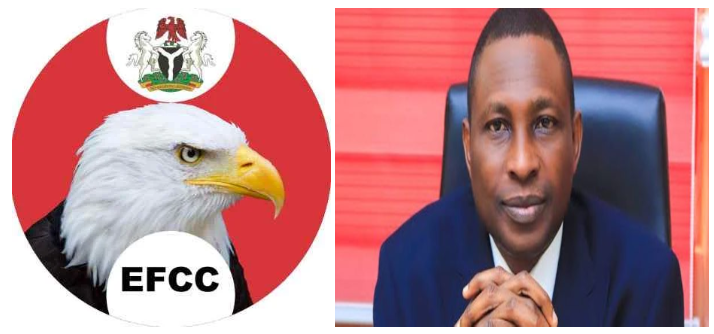
Dear Chairman Olukoyede,
The revelations uncovered by the Economic and Financial Crimes Commission regarding anticipatory asset declaration fraud mark a critical juncture in Nigeria’s ongoing fight against corruption. This sophisticated form of criminality, where public officers preemptively declare assets that do not exist to legitimize future illicit enrichment, signals an evolution in corrupt practices that demands an equally evolved and robust response. The audacity to fabricate billions of naira in phantom properties with fictitious addresses reflects not only individual greed but a systemic exploitation of weak verification mechanisms. This is a direct attack on the structures designed to promote transparency and accountability, turning these safeguards into tools for deception. Such calculated, forward-looking fraud not only deprives Nigeria of vital resources but also erodes public confidence in the very institutions meant to protect the common good.
This alarming scenario exposes deep structural vulnerabilities within our institutional frameworks, particularly the asset declaration and verification systems. The Code of Conduct Bureau, while constitutionally mandated to oversee integrity in public service, is severely hamstrung by over-reliance on self-reporting and limited verification capabilities. The lack of systematic physical inspections, minimal use of geospatial technologies, and insufficient cross-referencing with independent registries like land titles, tax records, and financial disclosures render the process vulnerable to manipulation. These shortcomings are further exacerbated by internal complicity or negligence, where some verification personnel may be coerced, compromised, or simply ineffective. Without urgent, comprehensive reforms to introduce multi-layered scrutiny and accountability, these weaknesses will continue to be exploited by corrupt officials who anticipate and outmaneuver our current controls.
Beyond the institutional gaps lies the more insidious challenge of an adaptive and resourceful criminal mindset among corrupt actors. The anticipatory asset declaration tactic is not a spontaneous or opportunistic crime but a premeditated strategy crafted to stay one step ahead of regulatory scrutiny. Corrupt officials today are no longer isolated malefactors but part of well-organized, sophisticated networks involving legal professionals, real estate agents, financiers, and relatives who facilitate and conceal these illicit acts. To effectively counter this menace, EFCC must shift its approach from reactionary investigations driven by complaints to proactive, intelligence-led operations that identify patterns, anticipate schemes, and dismantle entire criminal enterprises. This paradigm shift requires investing in multidisciplinary teams capable of integrating forensic accounting, cyber intelligence, behavioral science, and legal expertise into a seamless enforcement apparatus.
To meet the scale and complexity of anticipatory fraud, EFCC must embrace cutting-edge technologies that serve as force multipliers for human intelligence and investigative capacity. Satellite and geospatial imagery can provide indisputable evidence of the physical reality—or lack thereof—behind declared assets, enabling real-time monitoring and timely intervention. Blockchain technology, with its immutable, timestamped, and geotagged records, offers a transformative opportunity to secure the integrity of asset declarations and prevent document tampering or backdating. Equally important is the creation of integrated data ecosystems where land registries, tax authorities, financial institutions, and utility companies collaborate to cross-verify asset information, augmented by artificial intelligence capable of detecting anomalies and flagging high-risk cases for further scrutiny. This fusion of technology and data-driven insight must become foundational to EFCC’s strategy.
However, technology alone cannot secure victory without an accompanying transformation in investigative rigor and legal innovation. EFCC must institutionalize intelligence-led investigations, prioritizing high-risk officials and sectors with enhanced field verification, including covert surveillance and forensic psychology-informed interviews that detect deception and rationalization patterns. Legal frameworks must evolve to treat corruption as organized crime, allowing for comprehensive prosecution of entire conspiracies rather than fragmented charges against individuals. Swift, uncompromising asset freezing and forfeiture—both within Nigeria and through robust international mutual legal assistance treaties—are essential to deny corrupt actors the fruits of their crime. Whistleblower protections and incentive programs must be strengthened to empower insiders to expose fraud without fear, amplifying EFCC’s reach and intelligence capabilities.
At the heart of these efforts must lie a commitment to transparency and public engagement. Nigerians deserve unfettered access to truthful and timely disclosure of asset declarations and enforcement actions. Public-facing online portals that enable citizens to view declarations, submit reports, and participate in verification create a powerful societal check on corruption. Partnerships with civil society and media organizations further democratize oversight and magnify pressure on institutions to act decisively. Embedding continuous ethics education within public service cultivates an institutional culture where integrity is celebrated and corruption vilified, gradually reshaping norms and expectations around public accountability.
Yet, it is impossible to ignore the elephant in the room: judicial obstruction remains a formidable barrier to effective anti-corruption enforcement. The judiciary, meant to be a neutral and independent arbiter of justice, at times acts as an impediment through delays, procedural technicalities, or even collusion with corrupt interests. Judges who engage in willful delay, grant questionable injunctions, or fail to enforce anti-corruption rulings become gatekeepers of impunity, undermining EFCC’s hard-fought progress and devastating public confidence in the rule of law. This judicial complicity is as corrosive as the corrupt acts themselves, and EFCC must develop strategies to confront and neutralize this threat without compromising its own integrity.
Confronting judicial obstruction requires an aggressive, multi-pronged approach. EFCC should advocate for strengthening judicial oversight institutions like the National Judicial Council to hold judges accountable for conduct that impedes justice. Simultaneously, EFCC must adopt parallel legal strategies—pursuing civil forfeiture, administrative sanctions, or corruption charges that can circumvent courts prone to delays. Establishing specialized anti-corruption courts staffed by vetted judges committed to swift and fair adjudication can further insulate corruption cases from judicial sabotage. Public transparency about cases of judicial obstruction, amplified through media and civil society, exerts necessary societal pressure and empowers reform advocates. EFCC’s legal teams must also become experts in navigating procedural challenges, appealing unfavorable rulings promptly, and leveraging alliances with independent legal organizations to sustain prosecutorial momentum.
Building institutional resilience within EFCC is equally crucial. This includes maintaining impeccable evidence management standards, training investigators and prosecutors in advanced procedural and psychological tactics, and forging international partnerships that provide external checks on domestic judicial limitations. Only by fortifying its internal capacity and external collaborations can EFCC withstand pressures from powerful actors seeking to shield corruption through judicial means.
Chairman Olukoyede, Nigeria’s anti-corruption struggle stands at a crossroads. The combined menace of anticipatory asset declaration fraud and judicial complicity threatens to render anti-corruption efforts ineffective and hollow. Yet, this crossroads also offers a moment of opportunity—to lead with courage, innovation, and uncompromising resolve. EFCC must embrace a transformative vision that matches the complexity and audacity of corruption itself, deploying every tool at its disposal with strategic precision.
The Nigerian people watch with hope and impatience. Delivering tangible, swift, and visible justice will not only reclaim stolen resources but restore faith in governance and the rule of law. It is time for EFCC to rise beyond symbolic gestures, to become a beacon of integrity that Nigeria can rely on unreservedly.
I remain committed to supporting EFCC in this mission and stand ready to collaborate in designing practical frameworks, capacity-building initiatives, and forensic methodologies tailored to Nigeria’s unique challenges.
With respect and good wishes,
Prof John Egbeazien Oshodi
























You must be logged in to post a comment Login