Africa
Schlimbesserung: The Nigerian Viewing Centre -By Prince Charles Dickson Ph.D
Maybe, one day, Nigeria will learn from its viewing centres. That leadership is not about ego but about banter, listening, fairness, and laughter. That community is possible without tribal filters. That justice can be swift and final, like a referee’s whistle—not dragged through courts for decades.


There is a word in German—Schlimbesserung—it translates loosely as “an improvement that makes things worse.” It is the kind of irony that explains Nigeria better than all the policy briefs, communiqués, and cabinet memos stacked in dusty government shelves. Every attempt at reform somehow lands us in a deeper pit. Every cure tastes more poisonous than the disease.
And yet, in all of this, Nigeria is one giant viewing centre.
Across the country, from Sokoto to Port Harcourt, Jos to Ibadan, there is a curious temple of democracy: the football viewing centre. Here, Arsenal fans bleed with pain, Liverpool supporters scream “You’ll Never Walk Alone,” and Manchester United devotees still invoke the ghost of Sir Alex Ferguson. The Barcelona faithful chant Messi’s gospel even though he has left, and Madridistas count their trophies as if it were inheritance.
Inside these often dimly lit rooms with wooden benches or plastic chairs, Nigeria briefly works. There is: No tribalism, no racism, no religion, no ethnicity, no rank, no introduction.
A president’s cousin sits beside an okada man.
The unemployed graduate debates tactics with a bank manager.
A student shouts at a soldier, and both laugh when the referee blows the whistle.
It is here you can say with confidence that Eberechi is better than Saka, and though voices will rise, nobody reaches for a machete. Freedom of speech is absolute; equality is unshakable. You are not known by your tribe but by your club jersey.
“Idan ka shiga kasuwa, kowa ya zama ɗan’uwa”—in the market square, everyone is your brother. The viewing centre is our market square. If only Nigeria could run like this…
Step outside and harmony dissolves. Nearly 30% of Nigerians battle with mental health issues—anxiety, trauma, depression. Our leaders, instead of tackling this, focus on making tinted glass regulations for cars.
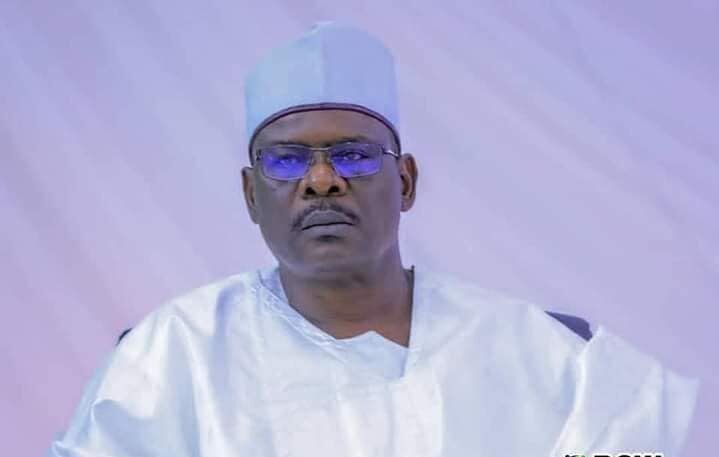
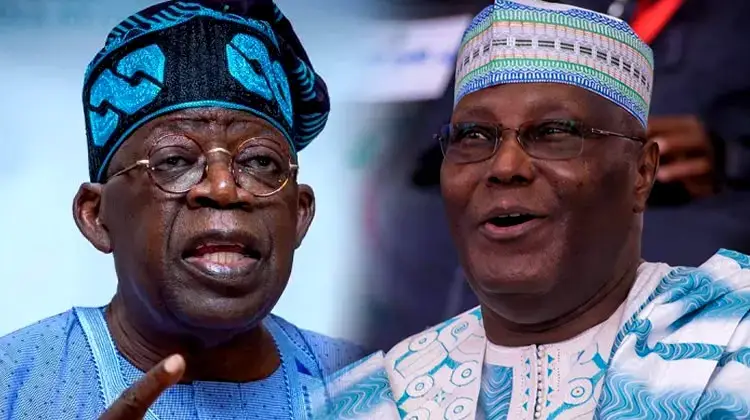
And with 2027 by the corner, the political transfer market is open. Defenders like El-Rufai, attackers like David Mark, and coaches like Rauf Aregbesola are changing jerseys—sorry, parties. In Nigeria’s democracy, transfers do not follow ideology, only contracts of convenience. “Agwụ na-agbanwe akpụkpọ ya, ọ naghị agbanwe agwa ya”—the python may shed its skin, but it never changes its character.
Doctors and nurses strike. ASUU reminds us that universities are not lecture halls but bargaining arenas. In Benue, the State Assembly performs tragicomedy: a Speaker praised for doing right is removed for doing exactly that. The governor, a clergy, cannot preach sanity into the madness.
Even traditional stools are dragged into ego battles. The Alaafin and the Ooni lock horns like rival captains fighting for armband supremacy.
Meanwhile, we are told one trillion naira is needed to feed school children. Yet classrooms echo with hunger. Who fed us during our own time? Nobody. And still we grew. At one point, billions were spent to feed children at home during COVID lockdowns—phantom meals for invisible pupils.
“Omo tí a ò kọ́, ló máa gbé ilé tí a kọ́ tán jìnà”—the child we fail to train will eventually sell off the house we built.
Every reform creates more problems. We privatized electricity to improve supply; we got higher tariffs and darker nights. We increased allocations to local governments, but communities only see abandoned boreholes and half-finished health centres.
It is like patching a leaking roof with sponge, like replacing a broken pipe with straw. Leaders coin big slogans—“transformation agenda,” “renewed hope,” “next level.” The more syllables the slogan carries, the less light there is in people’s homes.
“Gidan da babu wuta, ai babu haske”—a house without light cannot claim brightness.
So, where do Nigerians run? Back to the viewing centres. For ninety minutes, the problems disappear. Men and women forget unpaid salaries, fuel queues, epileptic power. They argue whether Arsenal is truly back, whether Chelsea will ever recover, whether Haaland is human or a myth.
Bets are staked, insults are exchanged, friendships are forged.
Here, no one asks if you are Igbo, Hausa, Yoruba, Berom, or Tiv. What matters is: did your team win?
If only our National Assembly, state houses, and councils could argue with the same passion but leave with the same laughter. “Ọ̀jị anaghị agba mgba n’aka mmadụ abụọ”—the kolanut does not wrestle in two men’s hands; sharing is natural when there is respect.
We live in a nation where the real democracy is not at the polling booth but at the viewing centre. Where equality is not in the constitution but in the plastic chairs arranged before a flickering screen. Where justice is not in the courtroom but in the unwritten rules of banter, respect, and loyalty to one’s club.
Meanwhile, our rulers promise reforms. They inflate school feeding budgets, they distribute palliatives like yellow cards, they announce subsidy removal as though it were a trophy lift. Each decision is supposed to improve us, but it leaves us worse off.
Maybe, one day, Nigeria will learn from its viewing centres. That leadership is not about ego but about banter, listening, fairness, and laughter. That community is possible without tribal filters. That justice can be swift and final, like a referee’s whistle—not dragged through courts for decades.
Until then, Nigerians will keep paying gate fees into viewing centres, not just for football but for a brief taste of the country we wish we had: ninety minutes of unity, freedom, and laughter before the lights go out again. The whistle blows, the people rise, and once again, we step back into Nigeria—land of Schlimbesserung.
—
Prince Charles Dickson PhD
Team Lead
The Tattaaunawa Roundtable Initiative (TRICentre)
Development & Media Practitioner|
Researcher|Policy Analyst|Public Intellect|Teacher
234 803 331 1301, 234 805 715 2301
Alternate Mail: pcdbooks@yahoo.com
Skype ID: princecharlesdickson