


As veterinarians and public health practitioners, our responsibility goes beyond treating sick animals. It includes educating farmers, promoting preventive healthcare, strengthening disease surveillance and supporting sustainable...
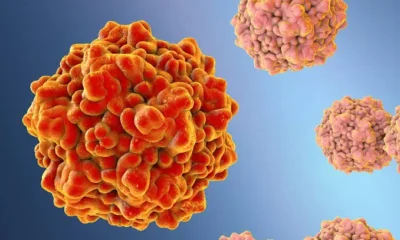

For small animal practitioners in West Africa, maintaining a high index of suspicion for ehrlichiosis in appropriate clinical contexts is essential. Practical diagnostic approaches utilizing readily...


The fight against aspergillosis is therefore not simply a battle against a fungus. It is a commitment to better husbandry, stronger disease prevention and healthier production...


For farmers, a persistent swelling around the jaw should never be ignored. Early veterinary assessment can help distinguish actinomycosis from other conditions and improve the chances...
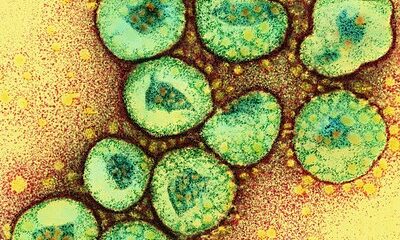

Although black quarter is not a major zoonotic disease, responsible management of affected animals remains important for occupational safety, food hygiene, and environmental protection. More importantly,...
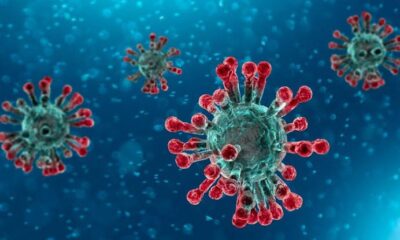

The answer lies not in waiting for mortality to expose the problem, but in building stronger systems before the crisis begins through vaccination, surveillance, biosecurity, farmer...
Effective control begins with awareness, early diagnosis, and responsible animal management. By prioritizing preventive veterinary care and embracing the principles of One Health, we can protect...


Tetanus is a disease that modern science has given us the tools to prevent, yet it continues to cause avoidable suffering in both animals and humans....


But acne is more than all of this. Although it is a skin condition, it really is not contagious or something that we should be afraid...


The human impact is both direct and far-reaching. Farmers, dairy workers, butchers, and their families face heightened occupational risks, with children particularly vulnerable through contaminated dairy....


Taylor Swift breaks the MTV VMAs record for most wins, becoming the ceremony’s most awarded artist with 31 trophies.

Messi scored a brilliant free-kick, but Jamal Thiare’s stoppage-time goal gave Columbus Crew a 2-1 win over Inter Miami.


Resident doctors under NARD have issued the Federal Government a two-week ultimatum over welfare, remuneration, workload and manpower shortages.


Supreme Court restores key Electoral Act provisions, raising fresh questions over PDP, SDP, APM and other opposition candidates.


CBN moves to address complaints over forex withdrawal restrictions, with banks facing possible directives to honour legitimate requests.


More than 51,000 people gathered in Lagos to watch Nollywood crime thriller ‘Black Market’, setting a Guinness World Record for...


Chief of Staff Femi Gbajabiamila canvassed support for Tinubu, Hamzat and other APC candidates during an empowerment programme in Surulere.

Blue finance must become the preferred option for capital mobilisation as Nigeria seeks to diversify away from oil dependence. The...

The citizen's economic reality is determined by what remains in his pocket after paying for food, transport, rent, electricity, school...


Super Eagles goalkeeper Maduka Okoye joins Nigeria’s camp after missing two training sessions ahead of the Madagascar clash in Uyo.


Get the date, time, venue and viewing details for Nigeria vs Madagascar as the Super Eagles begin their 2027 AFCON...
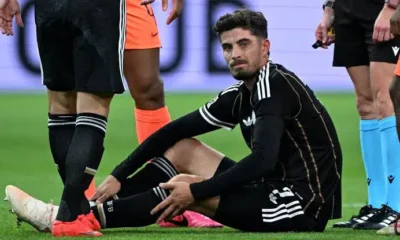

Germany will be without Kai Havertz and Jamal Musiala against Greece after the DFB confirmed injuries to both players.


CAMA 2020 represents a significant shift in Nigerian insolvency law by recognizing that financial distress should not always end in...


A new Africa Magic documentary will celebrate Olu Jacobs’ decades-long career in Nigerian theatre, television and film, featuring reflections from...


Joao Felix’s deflected strike gave Portugal a 1-0 win over Wales, while Cristiano Ronaldo saw a goal ruled out for...
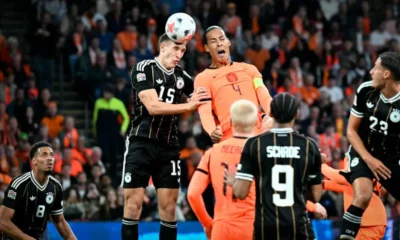

Jurgen Klopp’s Germany debut ended in a 1-1 draw after Cody Gakpo’s stoppage-time goal rescued the Netherlands in the Nations...


Anthony Gordon says England should embrace their own footballing strengths rather than replicate Spain’s possession-based style.


Inter Milan fought back from two goals down against Roma as Lautaro Martinez scored twice to secure a 2-2 draw...


Barcelona preserved their 100% record with a 3-1 win over Sevilla, thanks to Raphinha’s hat-trick and two assists from Lamine...