
National Issues
The Economic Reality Behind the NLC’s ₦1 Million Wage Proposal -By Iswell Emmanuel
A nation cannot legislate wealth into existence by simply adding zeros to a salary scale. Income must be supported by output, and wages must rest upon productivity. Until Nigeria builds a far larger productive economy, a compulsory ₦1 million national minimum wage would remain economically impossible. The true victory for workers will not be won by passing an unattainable law. It will be secured by building an economy capable of paying higher wages naturally, sustainably and without destroying the jobs upon which millions of families depend.

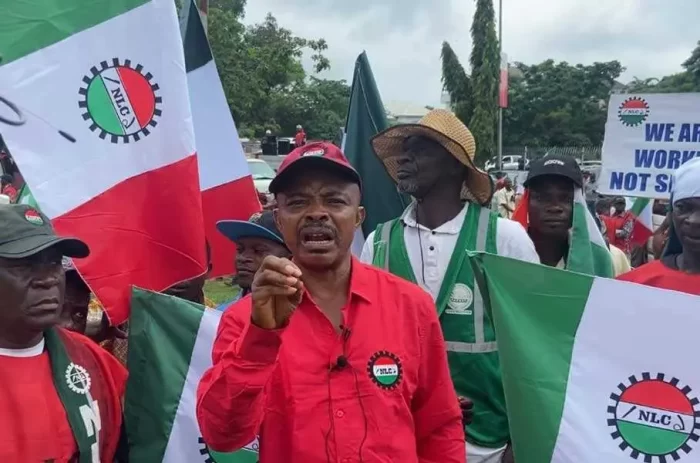
Few ideas ignite public excitement as quickly as the promise of a higher salary. The mere mention of a ₦1 million national minimum wage has already stirred hope among workers and applause across social media. After all, millions of Nigerians have watched the purchasing power of their incomes shrink while the prices of food, transport, rent and healthcare continue to climb. The frustration is genuine. The hardship is undeniable. Yet, there is a painful difference between what is desirable and what is economically sustainable. A salary can be demanded by emotion, but it can only be paid by productivity and economic reality. That is the hard arithmetic that every nation must confront.
No fair-minded observer should dismiss the concerns raised by the Nigeria Labour Congress. The present ₦70,000 minimum wage has been badly weakened by inflation, and many workers can barely meet basic needs before the middle of the month. According to the National Bureau of Statistics, Nigeria’s headline inflation stood at 22.97 per cent in May 2026, a figure that continues to erode household purchasing power. Inflation behaves like a silent tax. Without a single law being passed, salaries lose value while expenses keep climbing. It is therefore understandable that organised labour seeks a dramatic adjustment. The problem, however, is that economic pain cannot always be cured by multiplying wages. If that were true, every struggling country would simply legislate prosperity.
The proposal for a ₦1 million minimum wage runs into an obstacle that slogans cannot overcome. Minimum wage laws are not written exclusively for government ministries. They also bind the organised private sector. Every registered company that falls within the legal framework would be expected to comply. That obligation would not stop with senior officers or skilled professionals. It would extend to receptionists, security guards, cleaners, dispatch riders, clerks, factory assistants and every other entry-level employee. A law that appears compassionate on paper could become devastating in practice if those expected to implement it simply do not possess the financial capacity to do so.
Nigeria’s economy is not built upon giant multinational corporations alone. It rests heavily upon small and medium-sized enterprises, many of which are already struggling with rising electricity costs, expensive diesel, volatile exchange rates, multiple taxation, insecurity and weak consumer demand. The Small and Medium Enterprises Development Agency of Nigeria estimates that Nigeria has over 39 million micro, small and medium enterprises, making them the backbone of employment and local commerce. A compulsory ₦1 million minimum wage would instantly multiply wage bills by several hundred per cent for countless businesses. Many would respond by reducing staff strength, freezing recruitment, automating jobs where possible or shutting their doors entirely. Workers cannot be protected by a law that unintentionally destroys the very jobs it seeks to improve.
Economic history repeatedly teaches the same lesson. Sustainable wage growth is usually produced by stronger productivity, expanding industries and higher business profitability, not by legislation alone. Henry Hazlitt captured this reality in Economics in One Lesson when he wrote, “The art of economics consists in looking not merely at the immediate but at the longer effects of any act or policy.” His observation remains remarkably relevant. Every wage increase produces consequences beyond the first headline. If businesses are forced to pay salaries that exceed the value created by their workers, prices are often increased, investments are delayed, employment is reduced and inflationary pressures may intensify. The intended beneficiaries may eventually find themselves paying more for goods and services while opportunities become scarcer.
None of this should be mistaken for an argument against better wages. Nigerian workers deserve incomes that reflect their dignity and effort. However, lasting prosperity is built from production before consumption. Factories must produce more. Farms must harvest more. Technology companies must innovate more. Manufacturers must become more competitive. Exports must expand. Electricity must become more reliable. Infrastructure must improve.
The wiser national conversation should therefore move beyond headline figures and focus on the foundations that make higher wages possible. Government should continue tackling inflation with discipline, stabilising the currency, reducing the cost of doing business, expanding industrial production and encouraging investment that creates quality jobs. Tax reforms that relieve productive enterprises, improved transport infrastructure, affordable energy and access to credit for businesses would gradually strengthen employers’ capacity to pay better salaries without threatening their survival. At the same time, periodic wage reviews linked to measurable economic indicators would provide workers with more realistic protection against the rising cost of living.
The desire for a ₦1 million minimum wage springs from genuine suffering, and that suffering deserves compassion rather than ridicule. Nevertheless, sound public policy must be anchored in economic reality rather than emotional appeal. A nation cannot legislate wealth into existence by simply adding zeros to a salary scale. Income must be supported by output, and wages must rest upon productivity. Until Nigeria builds a far larger productive economy, a compulsory ₦1 million national minimum wage would remain economically impossible. The true victory for workers will not be won by passing an unattainable law. It will be secured by building an economy capable of paying higher wages naturally, sustainably and without destroying the jobs upon which millions of families depend.
Iswell Emmanuel is an economist and social media personality.

























You must be logged in to post a comment Login