
Forgotten Dairies
You Can’t Be A Journalist Without Unknowingly Attracting Enemies To Yourself -By Isaac Asabor
A colleague once covered a municipal project meant to provide clean water to a rural community. Her article praised the initiative but noted that, three months in, the water supply had stopped due to poor maintenance. Within days, she received a furious phone call from the local council chairman, accusing her of trying to sabotage his re-election campaign. She had not “campaigned” against him, she had simply reported the situation as it was. But in his mind, she had crossed an unforgivable line.

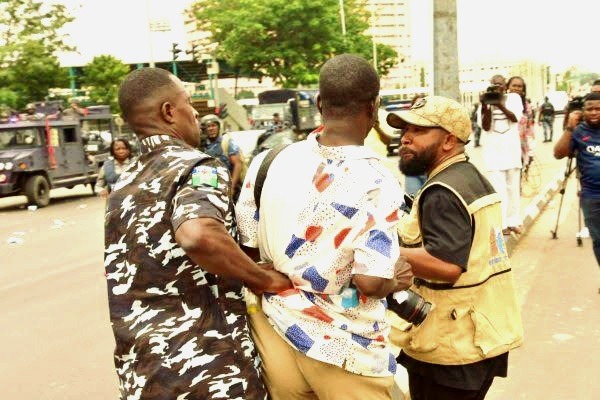
The moment you decide to become a journalist, you inherit two things: the responsibility to tell the truth and the certainty that, along the way, you will make enemies, many of whom you will never have intended to offend. This is not paranoia. It is not self-pity. It is simply the nature of the job.
The uncomfortable reality is that journalism, by its very essence, exposes uncomfortable realities. And people, especially those benefiting from the status quo, do not like their comfort disturbed. The late American columnist Molly Ivins put it best: “It is a journalist’s job to comfort the afflicted and afflict the comfortable.” What she left unsaid, but what every seasoned reporter knows, is that in doing so, you will unknowingly cultivate grudges in places you never imagined.
In fact, not all enemies in journalism are obvious. Sometimes they are the subjects of your investigative pieces, the politicians you have exposed, and the businessmen whose fraudulent schemes you have laid bare. These are expected. But often, the more insidious enemies are those you did not even realize your work would upset; a government aide embarrassed by a passing reference, a community leader who feels misrepresented, a celebrity angered by a factual but unflattering description.
I once covered a seemingly harmless human-interest story about how traders in a Lagos market were innovatively managing waste. It was intended as a positive feature. Weeks later, I heard that a market leader was fuming because he believed my description of “dirty drainage channels” had painted the entire market as filthy, thereby hurting its public image. It did not matter that the rest of the article praised their efforts, one line had turned me into an enemy in his eyes.
People often think journalists set out to provoke. In reality, provocation is rarely intentional, it is the truth itself that provokes. A statistic, a quotation, a photograph, any of these can destabilise someone’s carefully crafted public image.
Walter Lippmann, the legendary American journalist, once said, “There can be no higher law in journalism than to tell the truth and to shame the devil.” The trouble is, devils, and those merely caught looking like them, tend to remember who shamed them.
And here is the rub: your “enemy” may not even be the person at the centre of your story. It could be their cousin, their political ally, or a friend in the press corps who takes sides. Journalism works like a ripple effect, the truth you release can touch distant shores and stir resentment in places you never thought to look.
There is a peculiar phenomenon in journalism where you can go into a story with no ill intent whatsoever, only to emerge painted as the villain.
Years ago, while interviewing a high-ranking public servant, he chuckled and said, “Just don’t make me the bad guy in your piece.” I told him the framing would depend on the facts. A week later, the article ran. It wasn’t flattering, not because I had sharpened my pen against him, but because the documented inefficiencies in his department spoke for themselves. His reaction? He never took my calls again. I hadn’t “attacked” him; I had simply refused to hide the truth. In his mind, that was enough to make me an adversary.
The internet has turbocharged the phenomenon of accidental enemies. In the past, a person upset by an article might write a strongly worded letter to the editor or grumble to friends. Today, they can mount an all-out online campaign, questioning your credibility, dissecting your personal life, and inciting their followers against you.
Social media outrage is often disproportionate to the offense. A single phrase can be taken out of context and circulated without the rest of the story. Soon, people you’ve never met and never written about are convinced you’re the enemy. It is not that they read your work carefully; it’s that they heard about it from someone who felt attacked.
Ironically, even attempts at neutrality can make enemies. In highly polarized societies, if you are not explicitly siding with someone, you are automatically seen as siding against them.
Christiane Amanpour once told young journalists, “If you are neutral in situations of injustice, you have chosen the side of the oppressor.” Even when you try to present both sides, one faction may still interpret your even-handedness as betrayal. Thus, in journalism, there is no true safe zone, every choice you make, including the choice to be neutral, carries the risk of offending someone.
Despite this danger that is inherent in the practice of journalism, it would have been okay for any Journalist to resort to self-censorship. Unfortunately, in this case, self-censorship is more dangerous than enemies.
Knowing that every story has the potential to breed resentment can tempt journalists into self-censorship. You tell yourself, “Better to soften this paragraph” or “Let us leave out that damning fact.” But here is the danger: self-censorship may shield you from making enemies in the short term, but it robs the public of the truth in the long term.
Enemies can be managed; compromised integrity cannot be repaired. If journalists’ primary goal becomes “avoiding backlash,” they have already stopped being journalists and started being PR officers.
A colleague once covered a municipal project meant to provide clean water to a rural community. Her article praised the initiative but noted that, three months in, the water supply had stopped due to poor maintenance. Within days, she received a furious phone call from the local council chairman, accusing her of trying to sabotage his re-election campaign. She had not “campaigned” against him, she had simply reported the situation as it was. But in his mind, she had crossed an unforgivable line.
Another time, a well-meaning lifestyle piece on the rising popularity of a certain street food prompted calls from health officials, angry vendors, and even nutritionists, all claiming bias in one way or another. It was a story about food, yet it bred enemies across three different professional sectors.
In the end, the journalist’s oath is to the public, not to the preservation of personal popularity. Offense will happen, grudges will form, and enemies, both overt and invisible, will emerge. This is the price of telling the truth in a world where many would prefer the comfort of silence.
Florence Ita-Giwa once said, “If the truth offends you, be offended. My work is not to massage your ego.” That is the mindset every journalist must adopt if they hope to survive in this profession without losing themselves.
The real measure of a journalist is not how many enemies they have avoided making, but how faithfully they have served the truth, even when it makes them enemies. In the words of another old newsroom saying: “If you have no enemies, you’re not doing your job.”
So if you choose this path, be ready. You cannot be a journalist without unknowingly currying enemies to yourself. That is not a flaw in the system; that is the system.























You must be logged in to post a comment Login