
Africa
If There’s No Coup, Why Is the Presidency Sweating? -By Oluwafemi Popoola
This moment demands honesty from those in power. It calls for genuine economic relief, national cohesion, security reforms that protect civilians as much as they protect votes, and governance that listens instead of lectures. Because coups are not born in barracks alone. They are conceived in the society’s wounded conscience. And if a government loses both the love of its people and the confidence of its soldiers, then every rumor becomes a prophecy waiting for a careless day.


In August 1985, when Buhari’s iron-willed deputy, Major General Babatunde Idiagbon, caught whispers in the barracks about a brewing coup, he brushed them aside like a pesky mosquito: “Let them try,” he reportedly said. He believed rumors stayed rumors. But history laughs at overconfidence. On August 27, 1985, while Idiagbon was away on pilgrimage, Ibrahim Badamasi Babangida struck a bloodless coup that toppled the government. What had been dismissed as idle talk became the most consequential political twist of that era.
Today, that same ghost of history prowls our national discourse. Once again, Nigerians are exchanging knowing glances at the mere whiff of a coup rumor.
But unlike Idiagbon, who practically offered the coup plotters groundnuts and a seat, this current administration is not amused. The faintest suggestion of a coup is enough to make any president sweat through agbada fabric, even if it was woven in Paris.
The Defence Headquarters stepped forward with its polished press statements on October 1, insisting that everything was under control, and that the cancellation of the Independence Day parade had absolutely nothing to do with instability. Perhaps rain threatened. Or maybe the chairs were tired. Nigerians, however, sniffed the air like hungry dogs near a steaming pot of jollof. Something seemed to be cooking.
That growing suspicion deepened when multiple reports emerged suggesting that senior military officers were arrested and interrogated. Then came sudden changes to military leadership. Officials insisted that the detained personnel were questioned for “indiscipline and breach of service regulations,” but the timing made Nigerians wonder if there was more to the story.
Nigeria has recorded more than five successful coups since independence, and many failed attempts. This legacy has conditioned us to see smoke long before any fire. Just last year, protests fuelled by economic hardship included open calls for military intervention. Across Africa, the resurgence of coups since 2020 has troubled political analysts who say the continent still struggles with governance credibility.
So when a leading news platform reported a possible coup plot recently, the story spread quickly.
On October 24, 2025, President Bola Tinubu approved sweeping changes in the leadership of the Armed Forces. General Olufemi Oluyede replaced General Christopher Musa as Chief of Defence Staff. Major-General W. Shaibu became Chief of Army Staff. Air Vice Marshal S. K. Aneke assumed duty as Chief of Air Staff, while Rear Admiral I. Abbas was appointed Chief of Naval Staff. Curiously, the Chief of Defence Intelligence, Major-General E. A. P. Undiendeye, retained his position.
On the same day, the Senate loudly demanded improved welfare for soldiers, and airlines received instructions to give military personnel priority boarding privileges. These gestures, for many observers, appeared to be sugar-coated reassurance for the men with the guns.
Here lies the government’s real dilemma. It cannot afford a coup narrative, not even a rumor. Because rumors are mirrors that reflect public mood. And right now, that mood is bruised. A government losing the compassion of its people is like a king ruling a palace where the walls have begun to whisper rebellion. And if the military, whose loyalty is the final pillar of civilian power, feels neglected or conflicted, then the political center wobbles dangerously.
As I assess the developments, I recall a warning attributed to a former military leader, General Olusegun Obasanjo, who wrote in his memoir, My Command, that “a soldier’s loyalty is as firm as the system that holds him.” In the same vein, renowned scholar Ken Saro-Wiwa once stated: “The government rules the people, but the people must feel governed.” These insights highlight the delicate bond between the military institution, civilian authority and social legitimacy.
There is a reason coup stories are spreading like dry-season wildfire. Citizens are angry with worsening insecurity. They feel betrayed by policies that deepen hardship. They see a widening gulf between the rulers and the ruled. A government thriving on political survival instead of public service will always find itself haunted by shadows.
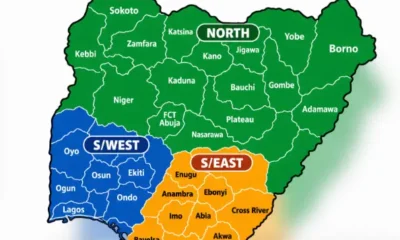
Heading into the 2027 elections, Nigeria’s political terrain is a land of quiet thunder. Deep divides persist. In my earlier article on the political North-South divide, I argued that Nigeria today resembles the dramatic tension of Chinua Achebe’s Things Fall Apart. Our political trajectory today reflects competing regional grievances battling for recognition. The South seeks continuity. The North seeks redress. The East seeks inclusion. The Middle Belt seeks justice. The Niger Delta demands respect. It insists its wealth must not be its curse. And political loyalty in the military often mirrors the nation’s fractures.
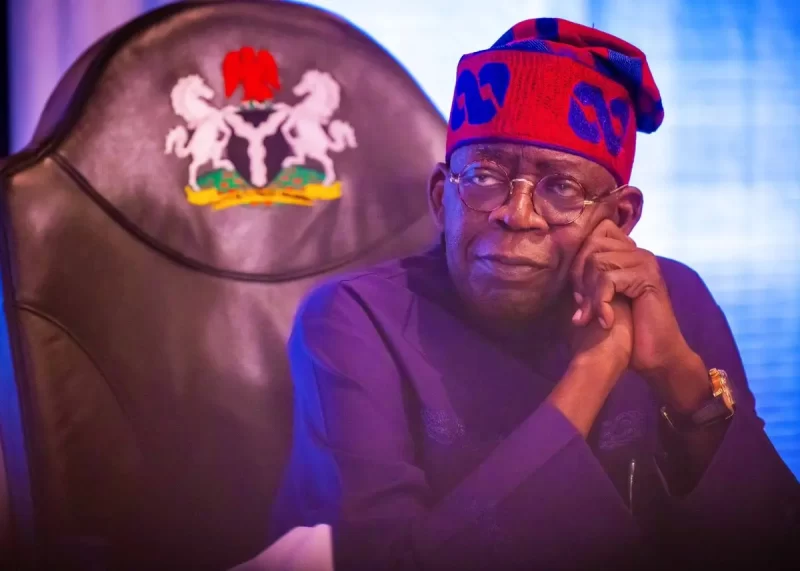
These realities shape political loyalty like rivers shape a valley. The future of this administration depends heavily on how effectively it navigates these pressures, both within the civilian space and within the military ranks. Tinubu’s presidency now resembles a man attempting ballet steps while balancing a bowl of pepper soup on his head. One misstep could be disastrous.
Which is why the administration urgently needs these whispers to evaporate, if they truly are nothing more than whispers. They reveal the cracks beneath the glossy speeches. They signal to the world that discontent is no longer confined to hungry citizens but may be creeping into the barracks, among those who carry the rifles of authority. Ignoring the tension is like whistling cheerfully while the walls smolder around you, pretending the fire has no ambition.
If a coup was indeed foiled, then democracy deserves swift, lawful protection. But if the rumor is merely sound without substance, the government must ask itself a painful question that why does the fear seem believable?
Whether or not a coup was plotted, the scare itself is telling. It reveals unease within a system already weighed down by economic pains, worsening insecurity, and growing polarization.
Nigeria has chosen democracy as its compass. The overwhelming wish of our people remains that the soldiers stay in the barracks and the ballot stays sovereign. But democracy is not self-sustaining. It needs nourishment. It requires governments that act, listen, and rebuild public confidence.
This moment demands honesty from those in power. It calls for genuine economic relief, national cohesion, security reforms that protect civilians as much as they protect votes, and governance that listens instead of lectures. Because coups are not born in barracks alone. They are conceived in the society’s wounded conscience. And if a government loses both the love of its people and the confidence of its soldiers, then every rumor becomes a prophecy waiting for a careless day.
Oluwafemi Popoola is a Nigerian journalist, media strategist, and columnist. He can be reached via bromeo2013@gmail.com

















You must be logged in to post a comment Login