
Africa
Injecting The Masses: How The Hypodermic Needle Theory Found A New Home In Nigeria’s Online Media -By Isaac Asabor
As traditional newspapers continue to decline in influence and readership, online platforms are rapidly becoming the primary source of information. But they are also becoming the primary channels for uncritical absorption, emotional manipulation, and cognitive conditioning, hallmarks of the theory once believed to be dead.

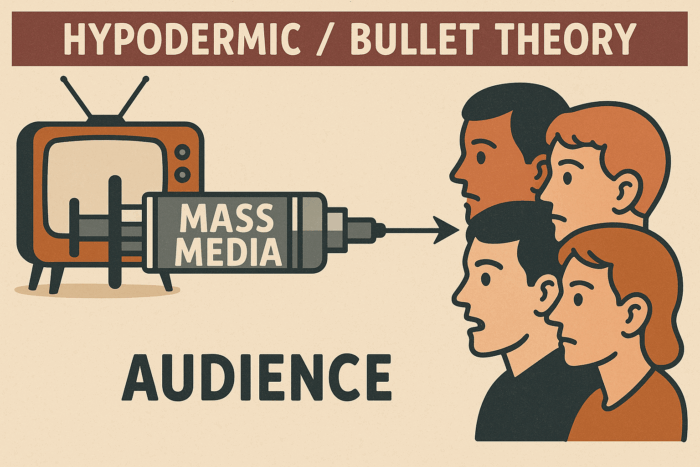
Once dismissed as an outdated relic of early communication theory, the “Hypodermic Needle Theory”, also known as the “Bullet Theory”, is now experiencing a disturbing resurrection. Originally formulated in the early 20th century, the theory suggested that media messages could be “injected” directly into a passive audience with powerful and immediate effects. At the time, it was closely linked to propaganda efforts during wartime and totalitarian regimes, and was eventually set aside by scholars who believed audiences had become more discerning and critical.
But the current reality in Nigeria, and globally, is that this theory is not only back, it is thriving, albeit not through the conventional media that once held sway. The digital era, particularly the explosion of “online news platforms and social media”, has given the Hypodermic Needle Theory new life and relevance. Ironically, it is not on the pages of traditional newspapers that this phenomenon is most evident, but in the fast-paced, viral ecosystem of online media.
In fact, there is no denying the fact that from the Nigerian context that a fertile ground for hypodermic influence exists.
In Nigeria’s current media landscape, where online news outlets mushroom daily and social media remains a major source of information for the populace, the conditions are ripe for the return of a theory once thought obsolete. The sheer volume of information, factual, half-true, and patently false, that gets circulated online every day, and the speed at which it spreads, has turned many Nigerian internet users into the kind of passive audience the theory predicted nearly a century ago.
Take the example of celebrity death hoaxes. For the umpteenth times, prominent Nigerian personality had been prematurely declared dead online. The audience, without verifying the claims, reacts in mass hysteria, forwarding WhatsApp messages, tweeting condolences, and lamenting societal decay. It is often only after the subject of the fake news appears live or issues a statement that the frenzy subsides. This pattern of uncritical acceptance followed by emotional reaction is textbook Hypodermic Theory in action.
Another glaring example lies in politically charged misinformation, especially around election seasons. Online platforms, often operated by political mercenaries, “inject” targeted narratives into the public psyche, false figures about voter turnout, doctored videos of opponents, fabricated endorsements. The audience swallows it whole, forming rigid opinions that no amount of fact-checking can undo.
Contrast this with Nigeria’s traditional print newspapers. As flawed as they may be in certain editorial aspects, they follow a process, a measured, often multi-layered workflow of reporting, editing, headline crafting, and proofreading. The physical limitation of daily or weekly publication cycles imposes a natural brake on the wild race to be first. Errors, while not uncommon, are typically fewer. Sensationalism exists, but it does not metastasize at the speed of online virality.
Traditional newspapers encourage deliberate reading. One must purchase or access the paper, sit down, and engage with its contents. There is a tactile seriousness about it. This process fosters media literacy and comprehension far better than the rapid-fire consumption of news online, where a reader might absorb 15 headlines in 60 seconds without clicking on a single article.
Yet, despite these advantages, the traditional newspaper is dying. And as it dies, so too does the buffer it provides between the raw media message and the human mind. Online news platforms are now the main conduit through which Nigerians receive and internalize information, and unfortunately, these platforms are far more compatible with the hypodermic model.
What makes online media the perfect petri dish for the Hypodermic Needle Theory? The answer lies in the algorithms.
Online platforms are optimized for engagement, not accuracy. The more shocking the headline, the faster it spreads. Clickbait titles, emotionally charged language, and doctored images are all tools used to keep readers scrolling, sharing, and reacting. This emotional bombardment overwhelms critical thinking. With a single line of text or a 10-second video clip, digital media can now “inject” an opinion, bias, or fear directly into the minds of millions.
Moreover, comment sections and social shares act as amplifiers. A user reads a headline (often without opening the article), shares it with outrage, and thereby authenticates it to their own network. This chain reaction turns individual misinformation into collective belief. Suddenly, fake news becomes public opinion, and perception replaces reality.
This is especially dangerous in a country like Nigeria, where education gaps and media illiteracy are still rampant. The average Nigerian internet user often does not distinguish between a verified news outlet and a blog run from a bedroom. Add to that data costs, which discourage users from clicking on full articles, and what you have is a nation forming conclusions based on headlines alone.
Social media platforms, particularly Twitter (now X), Facebook, TikTok, and WhatsApp, have further entrenched the bullet theory by creating a new class of “instant authorities.” These are influencers, comedians, skit-makers, or self-styled analysts whose posts go viral and whose words are consumed as gospel, regardless of their training or credibility. The lines between journalist, activist, propagandist, and entertainer are now blurred.
In such a chaotic information ecosystem, the public becomes exactly what the Hypodermic Needle Theory envisioned: a “mass audience”, emotionally reactive and intellectually unguarded, absorbing media messages with little resistance.
The consequences are grave, not just for journalism, but for democratic governance. A public that is constantly misinformed or manipulated is incapable of making rational decisions, whether in elections, civil discourse, or economic behavior. Politicians exploit this, weaponizing online media to stir ethnic tensions, demonize opponents, or deflect from governance failures.
The role of journalists, traditionally seen as gatekeepers, has now been reduced to mere participants in a content-saturated battlefield. In a world ruled by clicks and shares, ethical journalism struggles to survive.
The Hypodermic Needle Theory may have been dismissed in media classrooms as too simplistic for modern times, but Nigeria’s online media landscape is proving that its core assumptions were not only relevant, they were prophetic.
As traditional newspapers continue to decline in influence and readership, online platforms are rapidly becoming the primary source of information. But they are also becoming the primary channels for uncritical absorption, emotional manipulation, and cognitive conditioning, hallmarks of the theory once believed to be dead.
We are now living in a time when the masses are not just reading the news; they are being injected with it, without filters, without context, and without pause.






























You must be logged in to post a comment Login