Africa
Judicial Shame: Wike, Atiku, and the Abuja Judges—The Masterminds Behind the PDP’s Dysfunction, by John Egbeazien Oshodi

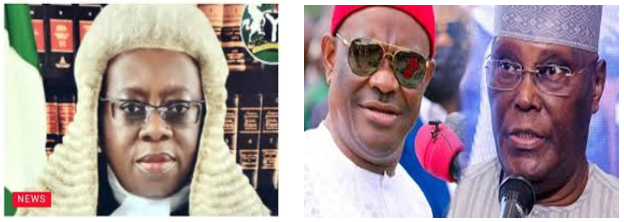
As Abuja judges stand ever ready to dish out restraining orders that can be pulled out from the pockets of warring party powers, dished out like weapons, political meetings descend into ludicrous gatherings where the real decision-makers are not the party leaders but the judges themselves, casting a shadow over democratic processes and reducing the once-esteemed People’s Democratic Party (PDP) to a puppet show of court rulings and legal machinations.
Welcome to the latest episode of the People’s Democratic Party (PDP) Psychiatric Theater, where the real opposition isn’t the ruling party—it’s the judiciary. In Nigeria today, political strategy has been replaced by a mad scramble to the courthouse. The players aren’t policy-makers or leaders—they’re lawyers with folded court orders in their pockets, ready to spring them at the slightest sign of conflict. Why bother with governance when a politicized restraining order from a friendly Abuja judge can decide the fate of an entire political faction?
Why not save us all the charade and just roll out the red carpet for these Abuja judges at every PDP meeting? After all, they’re the real puppet masters pulling the strings behind the scenes. Let’s name names: Peter Lifu, James Omotosho, Inyang Ekwo, Emeka Nweti, and John Tsoho. These aren’t just your average judges—they’re the de facto overlords of the PDP! Seriously, let’s give them thrones at the table, complete with crowns and gavels, ready to slam down verdicts on internal party squabbles before the tea even cools!
And where does our dear John Tsohofit into this circus? He’s the grand supervisor, casually assigning these judges to “funny matters,” like a talent scout for a political comedy show, amidst a sea of other federal high court judges who are probably rolling their eyes. Who needs party leadership when the judiciary is moonlighting as the party’s errand boys? At this rate, we should just rename the PDP the “Judicial Comedy Club” because that’s where the real action—and absurdity—seems to be happening!
Enter the Joint Action for Democracy (JAD), a coalition of lawyers, civil society organizations (CSOs), ethical leaders, and political parties that have finally had their fill of this judiciary-sponsored psychodrama. In an unprecedented move, the JAD has publicly called out judges like John Tsoho, Emeka Nweti, Inyang Ekwo, Peter Lifu, and James Omotosho—all prominent Abuja figures who seem to have their hands in every major political dispute. One has to wonder if these judges have a secret side hustle as political consultants, because their rulings aren’t just questionable; they’re a direct affront to the very idea of judicial neutrality.
In fact, JAD’s demands make perfect sense: if these judges are so eager to shape the PDP’s future, let them do so openly. Let them set up camp right at the heart of the party’s decision-making process. Maybe they can hand out gavel-shaped party membership cards while they’re at it. After all, with the way things are going, who needs democratic governance when we can just have a “Judicial Party” instead?
And who could blame them? The PDP’s internal affairs have become a psychotic playground of political sabotage, where court orders fly faster than reason, and where supposed leaders like Umar Damagum preside over a farcical merry-go-round of suspensions, reinstatements, and shadow games. The acting chairman himself was put in place after the court-ordered removal of Senator Iyorchia Ayu. Now Damagum’s leadership is under siege, his decisions perpetually countered by rival factions and Abuja judges alike.
At the heart of this psychotic disorder is Nyesom Wike, the former governor of Rivers State and now the Federal Capital Territory Minister, who is reportedly more aligned with the ruling party than the PDP. Meanwhile, in Rivers State, his faction celebrates court rulings that secure his grip over local executives, leaving the party’s supposed leadership scrambling for relevance. What remains is a party spiraling out of control, trapped in endless legal battles fueled by personal vendettas and external loyalties.
And where does this lead? To the doors of the judiciary, of course—the Abuja judges who seem to be ever-present in every political mess, handing down decisions that do more to protect interests than uphold justice. The likes of Peter Lifu and James Omotosho have become household names in political circles, infamous for their rulings that keep the PDP’s internal crises festering like an open wound. Their presence has turned the judiciary into a willing accomplice in the chaos, one that feeds off the party’s dysfunction while ensuring the perpetuation of corruption and personal gain.
But here’s the real tragedy: Nigerians are watching in horror as the PDP collapses under the weight of its own psychotic behavior, while the judiciary enables it. Voices of reason, like Hon. Ikenga Ugochinyere, are drowned out by the madness. Ugochinyere, a lone democratic mind in a sea of dysfunction, has consistently spoken out against the abuse of court orders and the judiciary’s shameful interference in political party processes. He’s taken to the media, decrying the manipulation of the judiciary for personal and political gain, asking repeatedly, “When will the NJC step in and restore sanity?” But instead of action, his pleas fall on deaf ears.
The truth is painful: the Abuja judges are not just complicit—they are pivotal actors in this tragic play. And while Ugochinyere fights for a semblance of integrity, the judiciary closes ranks, protecting its own. The leadership of the National Judicial Council (NJC), compromised or fearful, turns a blind eye. It is a shameful reality that these judges, who should be the guardians of justice, are presiding over its slow and painful death.
And who suffers the most from this courtroom psychosis? The people. Ordinary Nigerians, watching from the sidelines, can only shake their heads in sorrow as personal interests, political fights, and deep-seated corruption destroy the very fabric of democracy. While the PDP spirals into chaos and the judiciary stands as its silent partner, the people are left to suffer the consequences.
They are the ones left without proper governance, left to endure rising unemployment, failing infrastructure, and a political system that cares more about who can get the next court order than who can serve the public. They watch helplessly as politicians dance to the tune of the judiciary, their voices silenced under the weight of court rulings designed to maintain power for the few at the expense of the many.
As this painful drama unfolds, Nigerians are forced to confront the brutal reality: democracy, once the hope for a brighter future, is now a weapon in the hands of those who seek to destroy it. And as the Abuja judges continue to shape the destiny of a broken political system, the Nigerian people are left with little more than their own despair—a despair born not just from failed leadership, but from the betrayal of the very institutions meant to protect them.
In the end, the PDP’s psychotic spiral will pass, the court orders will fade, and the power struggles will shift. But the scars on Nigeria’s democratic soul will remain, a constant reminder of a judiciary that failed to serve the people and a political party that lost its way.
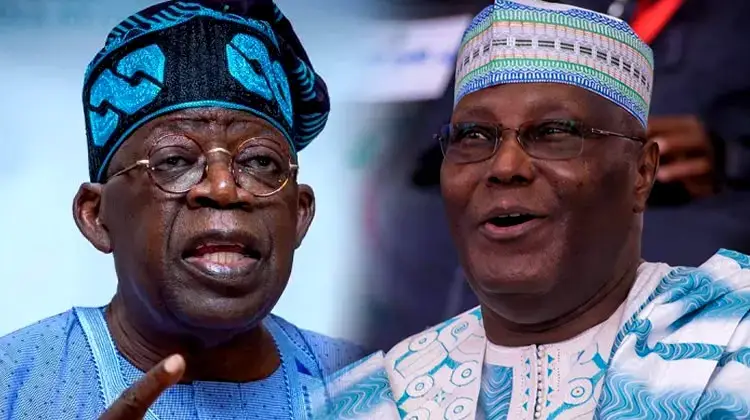
What we need now is for one of those infamous Abuja judges to step up and issue a restraining order that calls for the suspension of Nyesom Wike and former Vice President Atiku Abubakar. After all, Wike has become the proverbial bad apple, dividing the PDP from within while simultaneously cozying up to the APC, and Atiku, with his constant back-and-forth maneuvers, seems more concerned with his own self-interest than the party’s welfare. Their ongoing conflict only highlights the toxic dynamic that has infiltrated our once-proud party.
Imagine the psychological relief and revival the PDP could experience if such decisive actions were taken. It would send a clear message that the PDP is ready to reclaim its identity, free from the shackles of internal discord. If the party can stand firmly on its constitution and governance structures instead of relying on the whims of Abuja judges, perhaps it can emerge stronger and more unified than ever.
It’s time to cleanse the party of elements that prioritize their personal agendas over the collective aspirations of its members. Only then can the PDP truly rise to the occasion, ensuring that its leadership reflects the principles of democracy, accountability, and genuine representation. A revitalized PDP, standing tall and fearless, can harness its foundational values to guide the party forward—not the courts.
By suspending these divisive figures, the PDP could restore its integrity and credibility, demonstrating its commitment to the democratic process. In doing so, it can restore the faith of its members and the Nigerian populace, proving that it is still capable of being the formidable opposition needed to safeguard our democracy.
In the midst of this turmoil, one undeniable truth emerges: Nigeria desperately needs a strong opposition party that can transcend internal strife and uphold the values of democracy. The PDP, with its legacy and potential, should be a beacon of hope and accountability, but instead, it has succumbed to infighting and the corrosive influence of the judiciary. For democracy to thrive, the opposition must unite around a common vision, advocating for the interests of the people rather than personal ambitions. Only through a reformed and resilient opposition can Nigerians reclaim their political voice, ensuring that their concerns are heard and addressed. A robust opposition can serve as a counterbalance to the ruling party, holding it accountable and pushing for reforms that reflect the true will of the people. It’s time for the PDP to rise from the ashes of its internal conflicts and embrace its responsibility as the voice of the Nigerian populace, for without a credible opposition, the foundation of democracy is at risk, and the future of the nation remains precarious. The Nigerian people deserve better, and it is the duty of the opposition to provide that better path forward.
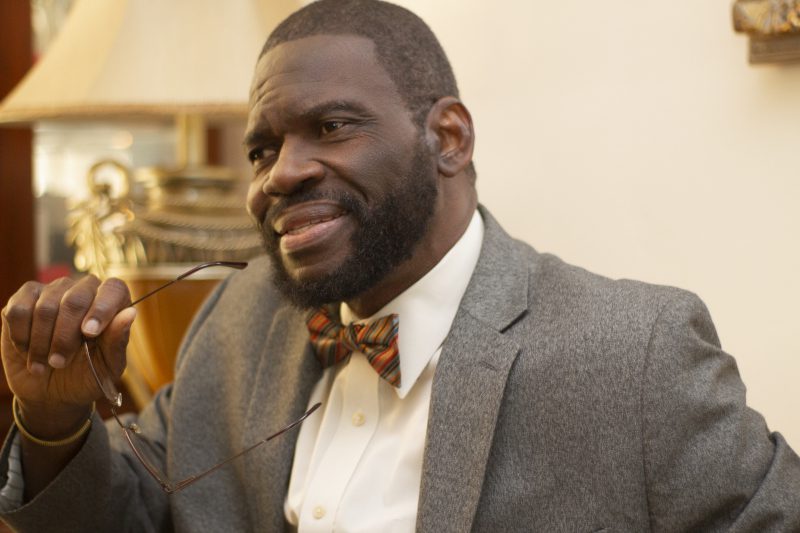
Professor John Egbeazien Oshodi, born in Uromi, Edo State, Nigeria, is an American-based police and prison scientist, forensic psychologist, public policy psychologist, and legal psychologist. He’s a government advisor on forensic-clinical psychological services in the USA and the founder of the Dr. John Egbeazien Oshodi Foundation for Psychological Health. With a significant role in introducing forensic psychology to Nigeria through N.U.C. and Nasarawa State University, he’s also a former Secretary-General of the Nigeria Psychological Association. He’s taught at esteemed institutions like Florida Memorial University, Florida International University, Nova Southeastern University, and more, and is currently an online faculty member at WeldiosUniversityand Walden University.