
Africa
Examining the President’s T-Pain Alias, by Festus Adedayo

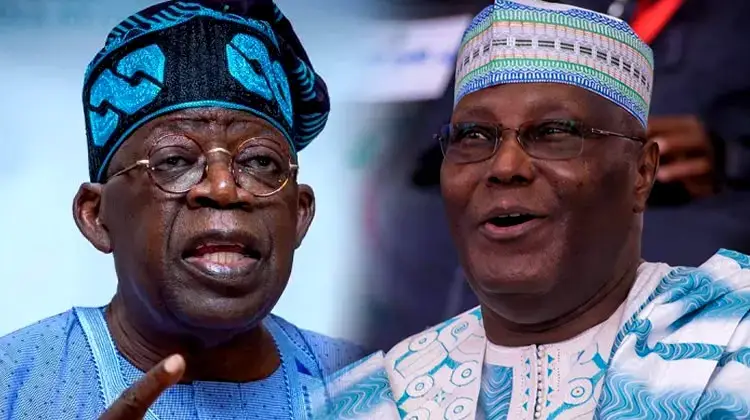
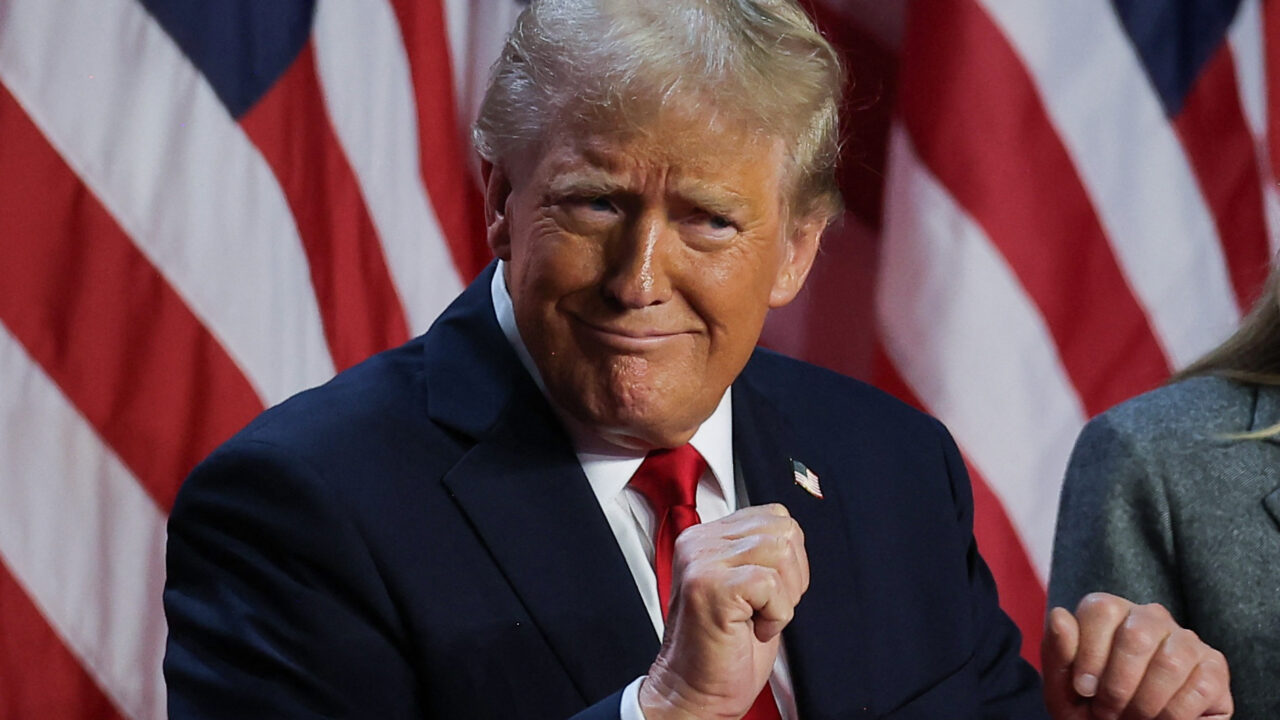
In Arabian folklore, the genie is a spirit depicted as being imprisoned inside a bottle or oil lamp. No matter how impregnable the walls of its captivity are, the moment it is summoned, the spirit comes out and grants the wishes of the one who invoked it. Trust them for their gift of incredible ingenuity, in the thick of their daily pain, Nigerians trip above their existential woes to summon the genius within them. Their latest invocation is a perfect-fit moniker which they affix to their president’s lapel. To them, their president’s diverse self-procured prefixes – Asiwaju, Jagaban etc – are miscasts today. “T-Pain” is his super fit. To be able to arrive at this moniker, Nigerians travelled through thorns and briers in search of existence. In the last 17 months, suffering and pain have been the first guests Nigerians see at cockcrow, sunset and at dusk.
Noelia Bueno-Gómez, in his journal article, “Conceptualizing suffering and pain” published in the Philosophy, Ethics, and Humanities in Medicine (2017) described suffering as an unpleasant, anguishing experience which severely affects a person at a psychophysical and existential level. Nigerians can relate with this definition, using the government of the day as an empirical example. Bueno-Gómez said when a human being is inflicted with this form of social and existential turmoil, like the excruciating poverty Nigerians undergo at the moment whose expiry no one can tell, the pain from it is comparable to a medical ailment.
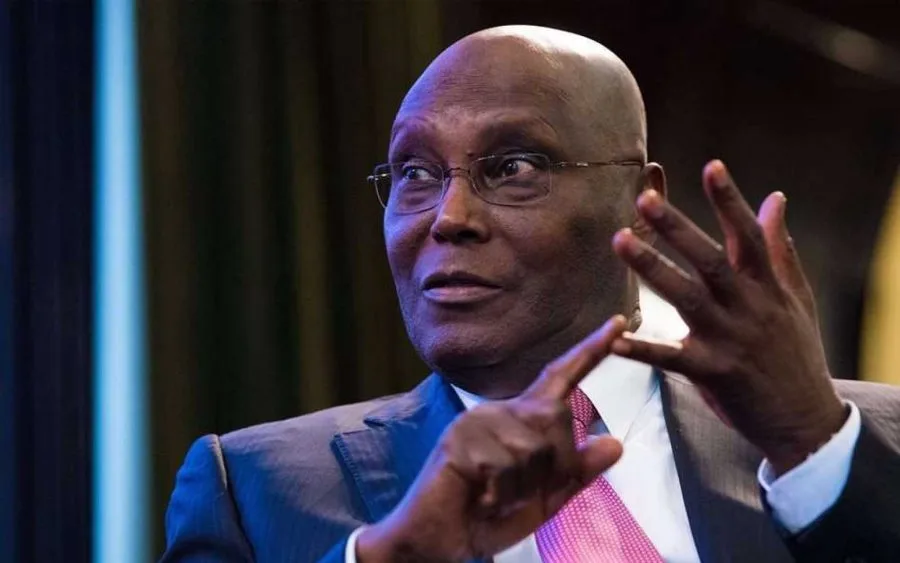
But, why T-Pain? Are Nigerians suggesting that their president is wicked? Indeed, the last 17 months under his watch have been a very harrowing experience.Masochism occurs when one who inflicts pain on another derives pleasure and enjoyment in watching their victim experience such pain. Similar to it, sadism is the enjoyment of such inflicting of pain on someone else. By labeling their president T-Pain, are Nigerians saying he is a masochist or sadist?
The T-Pain moniker for the president is a borrowing from the stage name of an American singer named Faheem Rashad Najm. Born September 30, 1984 in Tallahassee, Florida, Najm’s professional alias of T-Pain has successfully drowned his real name. That stage name, eerie as it may sound, is a shortened form for “Tallahassee Pain”. The musician chose it to remind himself of the hardship and excruciating pain he experienced while living Tallahassee. Songwriter and record producer, T-Pain’s musical prowess stems from popularizing creative use of Auto-Tune pitch correction, a creation known to be used with extreme parameter settings in electronic-styled vocal performances. He blends R&B and hip hop throughout the 2000s and this shot him up as a prominent figure in both musical genres. The genie that pounced on those who couched Najm’s alias as moniker for the Nigerian president results from the unbearable pains the people suffer under his watch. Incidentally, “T” begins both the president’s name and his recent alias.
Countless times, the president and his minders have claimed they are reformists miscast as sadists. And that, like reformists all over the world, their heroism will come long after. But, aren’t there examples of reformists in countries of the world who deaden pains of reforms on their people? So, why did this government choose a reform model that is inhuman and inflicts maximum pain on the greatest number of the people? Is inflicting pains innate in the architects of the present reform? Against this background, the question that comes up is, how much of their president do the Nigerian people know? Did Nigerians know T-Pain enough when they voted him as their president?
In May, 1975, as Federal Commissioner for Works under Murtala Muhammed, Olusegun Obasanjo forcibly took over a building occupied by the US Embassy. The US Embassy building stood strategically behind the Federal Cabinet Office. Earlier in 1974, while a student of the Royal College of Defence, Obasanjo’s thesis centered on the unfavourable relationship between Britain and Nigeria. The work lamented the paucity of British economic assistance to Nigeria, vis a vis the humongous economic benefits it made from the country. To be fair to Obasanjo, for two years, the Murtala government had issued warnings upon warnings to the US to relocate from the building, stating that it wanted it for public use. So, angered by what he termed American arrogance, Obasanjo just woke up that day in May and crudely ordered soldiers of his Corps of Engineers to round up the US Embassy building. Frightened, the Americans ran like a snake escaping the gripping claws and maniacal jaws of the mongoose.

Twenty four years after, on November 20, 1999, as civilian president, Obasanjo ordered an invasion of a predominantly Ijaw town of Bayelsa State called Odi, leading to the massacre of an approximate 1000 civilians. Nigerians should have known that, as that English proverb goes, as they laid their beds, so shall they lay on it. They had elected an unrepentant dictator. Two years after, that same president ordered another massacre of unarmed civilians in Zabi-Biam area of Benue State in an invasion codenamed “Operation No Living Thing.” It was a mass execution of hundreds of unarmed Tivs by the Nigerian Army which happened between October 20 and 24, 2001. The Odi villagers had killed 12 men of the Nigerian police on November 4. In Zaki-Biam, men of the Nigerian army were ordered to avenge the killing of 19 of their men whose mutilated bodies were recovered on October 12, 2001. Till date, no soldier was ever punished for the massacres, nor did anyone suffer for this gruesome vengeance.
In the final analysis, as revealed by the above and subsequent others, Nigerians may actually be their own problem. In the criminal and wicked leadership they suffer, the Nigerian cannot be totally exonerated. The people’s undoing may actually be the general atmosphere of unscience that pervades the Nigerian mind. This has led to Nigerians’ inability to scientifically and critically appraise those who put themselves forward to lead them. The same way religious charlatans fleece them out of their ignorance, subjecting them to harrowing spiritual tasks that have no foundation in reality, is the way Nigerians are victims of political shylocks and narcissists masquerading as leaders.
Take another example. On October 13, 2000, hurting and grumpy as a result of inter-ethnic attacks between Fulani herders and their Oyo State hosts in the Oke-Ogun area of the state, General Muhmmadu Buhari, accompanied by Gen Buba Marwa, a former military administrator of Lagos State, had stormed Ibadan, the state capital. Wearing long faces, Buhari and his Arewa entourage sought and got audience with the state government under Late Alhaji Lam Adesina.
When it was his time to speak, spitting fire, Buhari said:“Your Excellency, our visit here is to discuss with you and your government of our displeasure about the incident of clashes between two peoples… the Fulani cattle-rearers and merchants are today being harassed, attacked and killed like in Saki. In the month of May, 2000, 68 bodies of Fulani cattle-rearers were recovered and buried under the supervision and protection from a team of Mobile Police from Oyo State Command.” Replying, Governor Adesina expressed disappointment that Buhari, a national leader and former Head of State, could descend into such “my people…your people” narrative.
In 2015, Nigerians went ahead to elect that same man, with such narrow-minded obsession with an ethnic superiority mentality, as president. The rest, as they say, is history. Buhari ran one of the most closet-minded governments in the history of Nigeria. He preferenced his northern people ahead of every other tribe and dealt with others as expendable specimens.
Before coming into office, the duo of Goodluck Jonathan and Umaru Yar’Adua also demonstrated tendencies which shouldn’t make their eventual manifestations in power strange. If, in spite of widespread knowledge that they harboured personal traits unbecoming of national leadership, the people still went ahead to elect such characters into office, such people can be likened to a farmer who knew that the farmland he ploughed and planted groundnut seeds on was squirrel-infested, yet howled helplessly when squirrels make mincemeat of his groundnuts. To avoid this, as America matches towards the November elections, every effort is being made to expose character traits in Donald Trump and Kamala Harris which may impact negatively on the quality of the presidency of America.
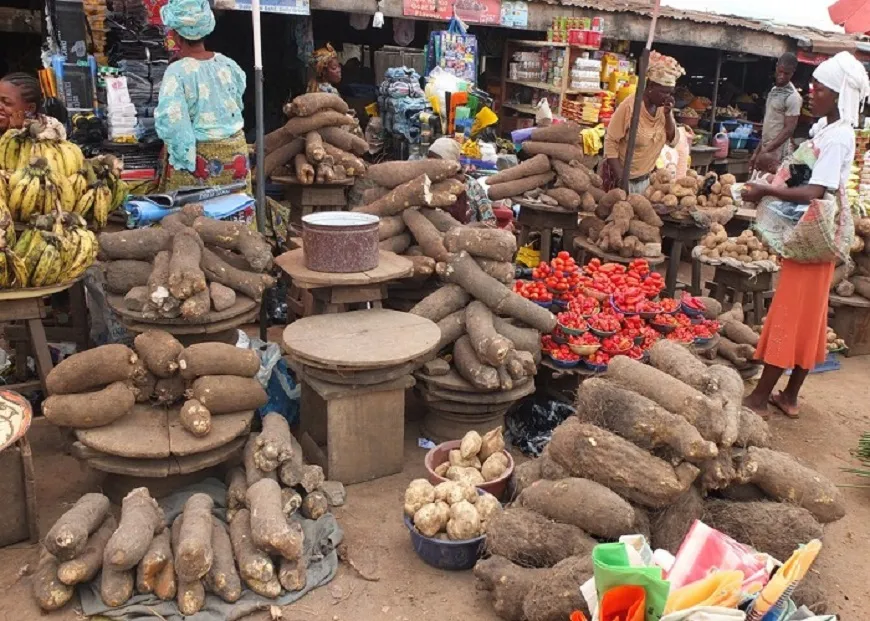
Unless they want to deliberately deceive the world, those who have had close association with our president, especially before his coming into office, will confess that he is a cold-hearted political calculator. A great giver who gave in a way that positively embarrasses the receiver, there is hardly any state in Nigeria where there isn’t someone or a group of people who have benefitted from his giving. In accepting his bucks, however, no one asks for his shop. It is said that he patterned his giving after Chief MKO Abiola who was known for such eye-popping generosity. Though he was a bit thrifty in the first few months of being in office as governor of Lagos State, the tsunami of his Chicago certificate scandal in the year 2000 was an about-turn for him. He emerged therefrom with the Yoruba philosophy that whoever pre-pours water on the intended path they hope to tread will navigate through an already comfortably wet route.
From journalists to judges, lawyers, political icons to government officials – name them – the extent of IOUs that T-Pain accumulated in the hearts of the high and mighty in Nigeria is unbelievably massive. However, he does most of the giving with an eye on self, something in the realm of narcissism. How do you think T-Pain was able to navigate through a hostile presidency under Muhammadu Buhari, to emerge the Nigerian president? Unbeknown to the somnambulist president, Tinubu the candidate had run a water-tight ring round him. Buhari was probably the only one in Aso Rock who had not been swept off his feet by the T-Pain person-purchase mystique. Even in running his presidency, T-Pain still believes in this person-purchase mystique as device of rule.
In 2010, T-Pain invited a gubernatorial candidate to his Bourdillon home. He gave him such money (an amount I don’t want to mention) that the politician almost fainted. The cash filled a whole bus. Fazed and as if hit by a tempest, the candidate prostrated in appreciation. The politician told me that T-Pain coldly upbraided him for thanking him. He didn’t give the money because he was Santa Claus, T-Pain said in a voice devoid of blood which grated like that of an underworld Capon. “I gave you the money because you are the one who can take that state for me,” he told the candidate. The politician won and throughout his eight years in office, T-Pain was exposed to plum cheese of the state.
My reading of Nigerians and the Nigerian electorate is that they have very poor reading of their subjects, leading to warped choices. T-Pain’s giving obviously towers more than his failings. It was the giving that Nigerians saw in their assessment of him at the polls, rather than his ability or a pedigree of pro-people interventions. No one bothered to come to the right conclusion that T-Pain is a functional giver who gives because of himself. It is why, in the last 17 months, apart from a coterie of aides and hangers-on who have benefitted tremendously from his presidency, the common man has not fared well in it at all. Apart from accidental benefits, I have asked, without answer, to be shown what good T-Pain has done for the people since he began politicking. And I am not talking about dashing out money.
Last Thursday, the First Lady, T-Pain II, also threw money at the situation. It was a perfect proverbial situation. As the Yoruba say, “Òwú tí ìyá gbòn lomo ń ran” meaning, you cannot stop a familial motherhood trait from emulation by the offspring. At the Palace of the Ooni of Ife, Oba Adeyeye Ogunwusi, T-Pain II was said to have pledged the sum of N1b while inaugurating a hostel and a 2.7 kilometer road donated to the Obafemi Awolowo University (OAU) by Ogunwusi. Thereafter, she went on a bumbling spree. According to her, the T-Pain-led administration was still very young and it should not be blamed for the current economic pains. Mrs. T-Pain has been variously pilloried for that unfeeling statement. “We are just 18 months into our administration; we are not the cause of the current situation; we are trying to fix it and secure the future” she said. This is a converse to her husband’s more realistic claim that he was not complaining as he knew the massive nature of the problems Nigeria faced before he opted for its leadership.
If you ask me, Mrs. T-Pain’s claim oscillates within the orbit of the usual anti-people assumption and self-righteousness of a larger mindset. Does she feel the pain of suffering Nigerians? Does she know that Nigerians are dying due to her husband’s very inhuman reforms? As usual, just like colonialists who sold God to us while filching our commonwealth, Madam T-Pain mumbled that same recourse to the Omnipotent at the OAU event. “With God on our side…” she assured of a better Nigeria. Yet, while the people wait and die waiting, it is fair for them to continue to die in droves? In the final analysis, I hope Kabiyesi will stop descending into the arena of matters pertaining to a federal institution as the OAU. He was quoted to have named a road in OAU after Mrs. T-Pain. What right has he to do this? Is he the OAU Chancellor?
That same Thursday when we got that bumbling from Mrs. T-Pain, Senator Godswill Akpabio also came with his own bumble. He urged Nigerians to cut back on the number of cars they own and embark on belt tightening measures. Akpabio spoke while addressing journalists in the senate. The paradox that juts out of this unfeeling statement is huge. The senate that Akpabio heads is the topmost demonstration of wastage, constituting a big drag on the Nigerian economy. Nigerian lawmakers own fleet of cars purchased from the laxity of Nigerian economy.
Whoever couched that T-Pain alias deserves a Nobel. Doesn’t it sound like Xi Jinping, warts and all?
















You must be logged in to post a comment Login