
Forgotten Dairies
Jungle Justice on Nigerian Campuses: When Suspicion Becomes a Death Sentence -By Abdulsamad Danji Abdulqadir
Law enforcement agencies must equally ensure that investigations into these incidents are thorough, transparent, and free from interference. Justice delayed or denied only encourages others to believe they can act with impunity.

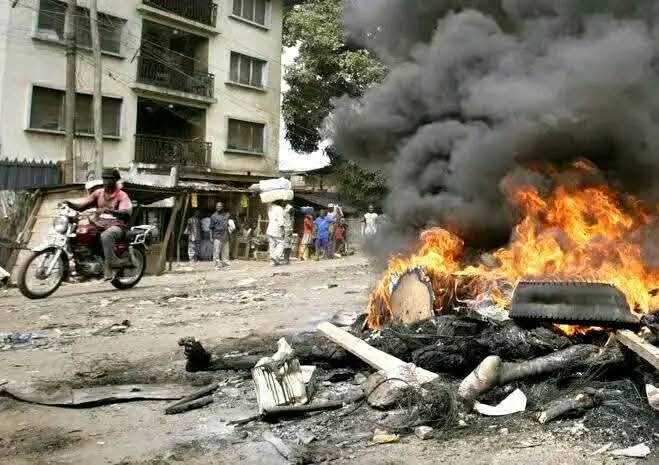
A university should be a sanctuary of knowledge, critical thinking, and justice. It is where young people are expected to learn not only academic theories but also the values of humanity, tolerance, and the rule of law. Sadly, a disturbing pattern is emerging across Nigerian tertiary institutions: students accused of stealing mobile phones are being tortured and killed by fellow students without any investigation, evidence, or fair hearing.
This growing culture of jungle justice is one of the greatest threats to the safety and dignity of students on Nigerian campuses. It is a painful reminder that when anger replaces reason and suspicion replaces evidence, innocent lives can be lost forever.
The recent death of Ibrahim Mbaye, popularly known as Ibee, a Political Science student of the University of Jos, shocked many Nigerians. He was accused of stealing an iPhone by fellow students and was reportedly tied up, tortured, and beaten to death. Investigations later indicated that the phone was never found in his possession. Reports also suggest that he had voluntarily returned to the apartment to clear his name after hearing about the allegation, only to be met with violence instead of justice.
Sadly, this is not an isolated incident.
In May 2024, Jeffrey Acro, a 200-level Mechanical Engineering student of Ajayi Crowther University, was accused of stealing a mobile phone. Instead of reporting the matter to university authorities or the police, fellow students allegedly subjected him to hours of brutal assault, leading to his death. The university later expelled those involved, while the suspects were arraigned before the court to face murder charges.
Perhaps the most infamous example remains the Aluu Four tragedy of 2012. Four University of Port Harcourt students,Ugonna Obuzor, Lloyd Toku, Chiadika Biringa, and Tekena Elkanah, were falsely accused of theft and cultism by a mob in the Aluu community. They were stripped, beaten, and burned alive in one of the most horrifying acts of mob violence in Nigeria’s history. Later investigations established that they were innocent and had merely gone to recover money owed to them. Their deaths remain a permanent scar on the nation’s conscience.
Another heartbreaking case occurred at the Federal University of Kashere. Ezekiel Musa, popularly known as “Badest,” a 200-level student of the Department of Criminology and Security Studies, reportedly lost his life after being accused by fellow students of stealing a mobile phone from their apartment. According to reports, he was allegedly tied up and brutally beaten by those he lived with, including his own roommate. The incident has left many students devastated and has once again raised serious concerns about the growing culture of jungle justice among young people who should understand the importance of due process and justice.
These tragedies force us to ask a difficult question: When did mere suspicion become enough to justify taking another person’s life?
No one is above the law, and no one should be below its protection. A person accused of theft remains innocent until proven guilty by a competent court of law. That principle is the foundation of every democratic society. Once a mob decides who lives and who dies, justice disappears and lawlessness takes its place.
It is particularly disturbing that many of these acts are committed by students individuals who are expected to be educated, enlightened, and capable of rational thinking. Instead of seeking help from university authorities, security personnel, or the police, some choose violence as their first response. In many cases, innocent people pay the ultimate price.
Jungle justice is not justice. It is murder. It destroys families, leaves parents mourning children they sent to school with hopes of a better future, and creates fear within university communities. No parent sends a child to a university only to receive news that their son or daughter has been beaten to death over an allegation that was never proven.
Universities must take stronger measures to prevent mob violence by strengthening campus security, educating students on human rights and conflict resolution, and ensuring that anyone involved in such acts faces the full weight of the law. Student unions, religious organizations, and campus associations also have a role to play by promoting peaceful dialogue, respect for human life, and awareness of the legal consequences of jungle justice.
Law enforcement agencies must equally ensure that investigations into these incidents are thorough, transparent, and free from interference. Justice delayed or denied only encourages others to believe they can act with impunity.
As students, we must remember that no mobile phone is worth a human life. Property can be recovered or replaced; a life cannot. Every allegation deserves investigation. Every suspect deserves a fair hearing. Every human being deserves dignity.
Nigeria cannot continue to normalize mob violence. The deaths of Ibrahim Mbaye, Jeffrey Acro, the Aluu Four, Ezekiel Musa, and many others whose names may never make national headlines should awaken our collective conscience.
The next victim could be anyone.
If we truly believe in justice, then we must reject jungle justice in all its forms. Universities should produce future leaders, not mobs. The rule of law not anger, rumours, or suspicion must always prevail.
Justice belongs in the courtroom, not in the hands of a mob.


























You must be logged in to post a comment Login