
Africa
Justice Delayed Until Death: How Outdated Laws and Delay Tactics Threaten to Outlast Afe Babalola in Nigeria, by Femi Oyesanya

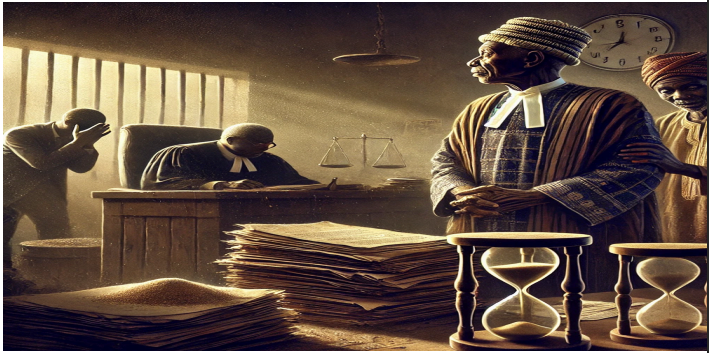
In Nigeria’s high-stakes legal arena, drawn-out battles are neither rare nor unexpected. High-profile cases can be manipulated through various means—ranging from mundane procedural maneuvers to dramatic, attention-grabbing displays like collapsing or fainting in court. In fact, feigning illness or suddenly losing consciousness before a judge is a well-known stalling measure. Such an approach could be employed by Dele Farotimi to secure adjournments and prolong the proceedings indefinitely. These tactics, often used by either party, serve to frustrate opponents and, in some cases, render the pursuit of timely justice nearly impossible.
Against this backdrop, the lawsuit pitting 95-year-old legal luminary Afe Babalola against human rights activist Dele Farotimi stands out as a revealing case study. It highlights the intersection of outdated laws, systemic judicial inefficiencies, and the strategic exploitation of delay tactics that can push a trial into protracted deadlock—potentially outliving the plaintiff himself.
A Legacy of Outdated Criminal Libel Laws
The core issue at hand—criminal libel—stems from colonial-era legal frameworks once aimed at containing dissent and stifling critical voices. Although many post-colonial states have evolved their legal codes to reflect modern democratic values, Nigeria’s reforms have not been uniformly implemented. While progressive states like Lagos and Edo have abolished or significantly reformed their criminal libel laws, a majority of the country’s 36 states continue to uphold archaic statutes that chill free speech and curb civil liberties.
In these jurisdictions, journalists, activists, and ordinary citizens remain vulnerable to accusations of criminal libel, discouraging robust public debate and limiting watchdog journalism. The result is an uneven legal terrain where fundamental freedoms hinge on geography. Citizens in states that embrace reform enjoy broader rights to speech and expression, while those in less progressive regions risk legal repercussions for voicing opinions that challenge entrenched interests. This patchwork undercuts the very idea of a unified Nigeria, splintering the legal landscape into enclaves of progress and pockets of stagnation.
The Imperative of Harmonization
The disparities in legal standards highlight the urgent need for harmonization. A unified set of free speech protections would not only affirm Nigeria’s commitment to democratic principles but also lend greater legitimacy and consistency to its judiciary. Harmonizing these laws would ensure that no Nigerian is disadvantaged by residing in a state clinging to antiquated rules. It would clarify the legal environment for journalists, activists, political challengers, and everyday citizens, all of whom rely on free expression to participate fully in civic life.
From a governance perspective, nationwide reforms would strengthen Nigeria’s image on the global stage. International human rights organizations, foreign investors, and diplomatic allies often scrutinize how well a country upholds civil liberties. A modernized, uniform legal code would position Nigeria as a nation willing to embrace democratic norms and protect its citizens’ voices, potentially improving its international standing and fostering greater trust in its institutions.
Delay Tactics: A Systemic Weakness
Compounding the problem of outdated laws are the systemic inefficiencies of Nigeria’s judiciary. Courts often grapple with large caseloads, limited resources, and slow administrative processes. Within this environment, well-resourced parties have learned to exploit procedural gaps to their advantage.
Common delay tactics include:
- Fainting or Collapsing in Court: By feigning sudden illness or loss of consciousness, the accused or their counsel can compel adjournments and buy valuable time. Dele Farotimi, for instance, could deploy this tactic to stall proceedings.
- Filing Multiple Preliminary Objections: By questioning jurisdiction or procedural details repeatedly, litigants force courts to grapple with side issues rather than addressing the case’s substance.
- Requesting Frequent Adjournments: Strategic claims of ill health, incomplete preparation, or absent counsel can postpone trials for weeks or months.
- Appealing Interlocutory Decisions: Contesting minor rulings at higher courts stalls the main trial until appeals are resolved.
- Exploiting Procedural Loopholes: Intentionally vague filings or incomplete documentation necessitate corrections and resubmissions, further slowing progress. ● Non-Compliance with Court Orders: Deliberate foot-dragging in producing evidence, documents, or witnesses creates repeated delays.
- Overloading with Frivolous Applications: Flooding the docket with baseless motions distracts the court and stalls proceedings.
- Delaying Discovery Processes: Keeping critical evidence or witnesses out of reach lengthens the timeline before the trial can fully engage the issues at hand. ● Failure to Appear: Simply not showing up to scheduled hearings compels the court to reschedule, sometimes multiple times.
- Strategic Withdrawal and Reappointment of Counsel: Changing lawyers midstream forces new counsel to study the case from scratch, causing inevitable delays. ● Manipulating Witness Schedules: Ensuring key witnesses are perpetually “unavailable” can keep a case in limbo indefinitely.
These tactics are particularly effective against plaintiffs who are advanced in age. For Afe Babalola—widely respected and well into his ninth decade—the very notion of lengthy legal combat raises the grim possibility of him not surviving to see the case concluded. In a system where delaying justice might effectively deny it, the moral implications are profound.
Consequences for Democracy and Public Trust
When courts appear easily manipulated, public faith in the judiciary erodes. If justice is perceived as a game of endurance and manipulation, citizens may lose trust in the courts’ ability to deliver fair and timely outcomes. This skepticism can discourage individuals from seeking redress at all, fearing that the process may be drawn out for years without any guarantee of resolution.
Such erosion of trust has broader democratic consequences. A functioning democracy relies on the rule of law, transparency, and accessible remedies for grievances. If the legal system’s failings allow the powerful to outlast or outmaneuver the vulnerable, the promise of equality before the law weakens. In turn, civic engagement declines, protests and unrest may rise, and the integrity of democratic institutions wavers.
The Potential Role of Civil Society and Professional Bodies
Reforming the system is no easy feat. Legislators, judges, and the executive branch must collaborate to review and replace outdated statutes, tighten procedural rules, and allocate resources to the judiciary. Civil society organizations—including human rights groups, bar associations, and journalism watchdogs—play a vital role in advocating for reform. They can
raise awareness, pressure policymakers, and provide professional input on effective solutions.
The Nigerian Bar Association (NBA) and other professional groups could lobby for strict enforcement of procedural timelines. Clear penalties for frivolous adjournments, stronger case management systems, and court technologies like electronic filing and virtual hearings can streamline processes. These changes, while incremental, can help courts deliver outcomes more swiftly, undermining the value of delay tactics such as sudden courtroom fainting.
International institutions and donors can also support capacity-building efforts. Training judges, court clerks, and administrative staff, as well as investing in digitization, can yield more efficient case handling. With stronger procedural safeguards, orchestrated collapses and feigned illnesses would lose their potency as tools of delay.
The Uncertain Future of Afe Babalola’s Case
As the Babalola-Farotimi case unfolds, it embodies a poignant reality. Without immediate systemic reforms, high-profile litigants can drag out cases indefinitely, benefiting from archaic laws and sluggish proceedings. For Babalola—long a titan in Nigeria’s legal landscape—this battle could linger beyond his capacity to see it resolved, leaving a moral quandary about the nature of justice itself.
His situation underscores that legal prowess and moral high ground alone are insufficient in a dysfunctional environment. Good laws, efficiently applied, are needed to ensure that justice does not merely become a war of attrition in which one party may never live to witness its conclusion.
Toward a More Equitable Legal Landscape
Addressing Nigeria’s patchwork of outdated laws and systemic judicial inefficiencies will not happen overnight. It requires political will, civil society engagement, and sustained commitment from judicial stakeholders. Yet, the potential rewards are immense: a judicial system that respects free speech, resists delay tactics—even those as dramatic as fainting in court—and delivers timely judgments would reinforce democratic values and bolster public faith.
By embracing harmonized laws that reflect contemporary human rights norms, Nigeria can ensure that future litigants—regardless of age, status, or ideology—face a fairer, more predictable system. Eliminating avenues for excessive delay and protecting the free exchange of ideas would encourage healthier public debate, a more informed electorate, and ultimately a more vibrant democracy.
Conclusion
The ongoing lawsuit involving Afe Babalola and Dele Farotimi represents more than a single legal dispute. It illuminates the broader challenges of Nigeria’s judicial system: outdated criminal libel laws that smother free speech, fragmented legal standards that create uneven rights protections, and procedural inefficiencies that invite endless delay tactics, including feigning illness or fainting in court as a means to secure adjournments.
Within these challenges lie opportunities for profound reform. To secure a future where justice is timely, free speech is safeguarded, and courts cannot be easily manipulated, Nigeria’s leaders—both in and out of government—must commit to harmonizing laws and strengthening judicial processes. Doing so would ensure that litigants like Afe Babalola, as well as countless Nigerians, see justice served in their lifetimes, that civil liberties are robustly upheld, and that democracy continues to flourish in the heart of Africa’s most populous nation.



























You must be logged in to post a comment Login