Health and Lifestyle
Mpox: A Zoonotic Disease at the Heart of Animal and Human Health -By Dr. Moris Umoru, DVM
For veterinary professionals, mpox reinforces the importance of watching the interface between wildlife, livestock, communities and the environment. For public-health professionals, it highlights the value of preparedness and rapid communication. And for society as a whole, it provides another lesson in the importance of respecting the connections that bind human health to the natural world.

Some diseases begin quietly at the boundary between wildlife, people, and the environment before becoming a wider public-health concern. Mpox is one of them. Once regarded mainly as a disease associated with certain parts of Africa, mpox has demonstrated that infectious diseases originating at the human–animal interface can cross geographical boundaries and challenge health systems far beyond their traditional areas of occurrence.
Although the disease is now more commonly called mpox, the virus responsible is still known as monkeypox virus (MPXV). It belongs to the Orthopoxvirus genus and can infect humans as well as certain animals. The disease may cause fever, swollen lymph nodes, painful skin or mucosal lesions, fatigue and other systemic signs. Most affected people recover, but severe disease can occur, particularly in people with weakened immune systems and other vulnerable groups.
The story of mpox is therefore more than a story about a rash or viral infection. It is a reminder that human health cannot be separated from animal health, wildlife ecology, environmental conditions and responsible public-health practices.
Background and Context
Mpox was first recognized in laboratory monkeys in 1958, while the first documented human case was reported in the Democratic Republic of the Congo in 1970. For many years, human infections were concentrated largely in Central and West Africa, where animal-to-human transmission has played an important role.
The virus has two major clades, clade I and clade II, with recognized subclades. The large international outbreak that began in 2022 demonstrated how efficiently mpox could spread through human populations beyond areas where it had traditionally been recognized. More recent outbreaks have also highlighted the continuing importance of clade I and its subclades in parts of Africa.
This changing epidemiological picture reinforces an important lesson: diseases associated with wildlife and specific geographical regions should never be considered permanently confined to those settings. Human movement, international travel, changing patterns of animal contact, urbanization and environmental disruption can all influence the emergence and spread of infectious diseases.
Main Discussion
Mpox is caused by an enveloped double-stranded DNA virus belonging to the Orthopoxvirus genus. The natural animal reservoir has not been definitively established, although several small mammals, including rodents and some primates, are susceptible to infection. Therefore, describing monkeys as the sole or primary source of the disease is misleading.
Transmission can occur through close contact with an infected person, including direct contact with lesions, body fluids and mucosal surfaces. It can also occur through contaminated materials such as clothing, bedding and other objects. In certain circumstances, respiratory particles may contribute to transmission, particularly during prolonged close contact.
Animal-to-human transmission remains particularly important from a veterinary and One Health perspective. In areas where the virus circulates among animals, people may become infected through bites or scratches or during activities such as hunting, trapping, skinning, preparing or handling infected wildlife. This makes occupational exposure and wildlife-related activities important considerations in disease prevention.
Recognizing the Signs
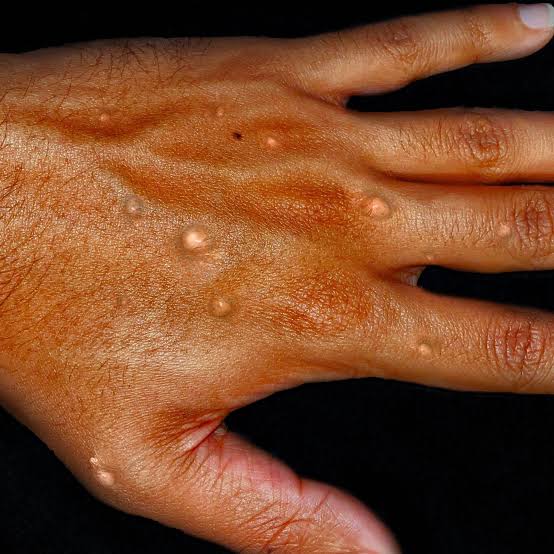
The clinical presentation of mpox can vary between individuals. Symptoms may begin within approximately 1–21 days after exposure. Fever, headache, muscle aches, backache, fatigue, sore throat and swollen lymph nodes may occur. A characteristic rash or lesions can then develop, although in some people the rash may appear first.
The lesions may appear on the face, hands, feet, mouth, genital region, anal area or other parts of the body. They can begin as spots or raised lesions and progress through stages involving fluid-filled lesions, pustules and crusts before healing.
One important clinical challenge is that mpox can resemble other diseases. Lesions occurring around the genital or anal region, for example, may resemble certain sexually transmitted infections, while more generalized rashes may resemble other viral diseases. Consequently, clinical assessment and appropriate laboratory testing are important for confirmation. PCR testing of material from skin lesions is commonly used for laboratory diagnosis.
How Mpox Spreads
Understanding transmission is central to controlling mpox.
Person-to-person spread may occur through direct skin-to-skin contact, contact with infectious lesions, kissing, sexual or intimate contact, and contact with contaminated materials. Transmission can also occur within households when people share living spaces or items with an infected individual.
Animal-to-human transmission presents a different but equally important pathway. People who hunt, capture, butcher, prepare or handle wildlife may be exposed to infected animals or their tissues and body fluids. This is particularly relevant in regions where people have close and frequent contact with wildlife for food, livelihood or cultural reasons.
Pregnancy also requires special attention because mpox infection can be transmitted from an infected pregnant person to the fetus or newborn and may result in serious complications.
Factors That Can Increase the Risk
Several factors can increase opportunities for mpox transmission. Close physical contact with an infected individual is one of the most important. Crowded environments and situations involving prolonged skin-to-skin contact can facilitate spread.
At the animal–human interface, occupational exposure, wildlife handling and inadequate protective measures can increase risk. Handling sick or dead wild animals without appropriate precautions can expose individuals to infectious materials.
Another challenge is delayed recognition. When people are unfamiliar with the disease, early symptoms may be mistaken for other infections. Delayed diagnosis can result in continued contact with family members, healthcare workers or other community members.
Public awareness is therefore not simply an educational exercise. It is an important component of disease surveillance and outbreak control.
The Human and Social Impact
Mpox can affect more than the physical health of an infected person. Painful lesions, fever, fatigue and prolonged recovery can interfere with work, education, family responsibilities and social interaction.
Stigma can also become a major problem. When communities associate a disease with particular groups or behaviors, affected individuals may avoid healthcare services because of fear, embarrassment or discrimination. This can encourage hidden transmission and delay treatment.
Public-health communication should therefore be based on facts rather than fear. Anyone can potentially acquire mpox through appropriate exposure, and prevention messages should focus on reducing risky contact, recognizing symptoms, seeking medical care and protecting vulnerable individuals.
Diagnosis and Veterinary/Public Health Response
Diagnosis requires a combination of clinical assessment, exposure history and laboratory confirmation. Healthcare professionals should consider mpox when compatible skin or mucosal lesions occur, particularly when there is a relevant history of close contact or exposure.
Laboratory confirmation is important because several diseases can produce similar clinical signs. PCR testing of lesion material is an important diagnostic method.
From a veterinary perspective, suspected animal involvement requires careful investigation. Veterinarians and public-health professionals should consider the possibility of zoonotic transmission when unusual illness occurs among wildlife or animals with epidemiological links to affected people.
However, suspected infection should never justify indiscriminate killing of wildlife. Such actions may damage ecosystems while failing to address the actual transmission pathway. Instead, surveillance, responsible wildlife handling, laboratory investigation and appropriate infection-control measures are more valuable approaches.
Treatment and Supportive Care
Most people with mpox recover within approximately two to four weeks, although illness may be prolonged or more severe in individuals with weakened immune systems and certain other high-risk conditions. Management generally focuses on supportive care, including pain control, hydration, nutrition, skin care and prevention or treatment of complications.
Some patients may require specialized medical care or specific therapeutics depending on disease severity, immune status and national or clinical guidance.
Patients should avoid close physical contact with others while infectious and follow healthcare advice regarding isolation. Lesions should be protected appropriately, and good hand hygiene is essential.
Prevention and the Way Forward
Preventing mpox requires action at individual, community, healthcare and animal-health levels.
People should avoid direct contact with individuals who have unexplained rashes or lesions suggestive of mpox. Sharing clothing, bedding, towels and other potentially contaminated materials should also be avoided. Regular handwashing remains a simple but important protective measure.
For people at increased risk, vaccination can provide protection against mpox and may also be used following certain exposures according to public-health recommendations. Vaccination should be integrated with other prevention strategies rather than viewed as a substitute for infection-control practices.
Healthcare workers require appropriate infection-prevention and control measures when evaluating and caring for suspected or confirmed cases. Early recognition, appropriate personal protective equipment, safe specimen collection and effective environmental cleaning can reduce healthcare-associated transmission.
At the community level, public-health authorities should strengthen surveillance, risk communication, contact tracing where appropriate and access to testing and healthcare.
A Stronger One Health Approach
Mpox demonstrates why One Health should be more than a concept discussed in conferences. Human health, animal health and environmental health are interconnected.
Veterinarians can contribute through disease surveillance, wildlife health monitoring, investigation of animal exposures, community education and collaboration with medical and public-health professionals. Physicians and public-health workers contribute through clinical diagnosis, case management, surveillance and outbreak response.
Environmental and wildlife authorities also have important roles in understanding how human activities influence contact with potentially infected animals.
The goal should not be to separate human health from animal health but to create a coordinated system capable of detecting threats before they become larger crises.
Conclusion
Mpox is a powerful reminder that emerging infectious diseases do not respect borders between humans, animals and the environment. Its history demonstrates how a disease associated for decades with specific regions and animal–human interactions can become an international public-health concern.
The response should therefore move beyond fear and misinformation. Early recognition, responsible animal handling, laboratory diagnosis, infection prevention, vaccination for eligible high-risk groups, supportive medical care and strong surveillance all have important roles to play.
For veterinary professionals, mpox reinforces the importance of watching the interface between wildlife, livestock, communities and the environment. For public-health professionals, it highlights the value of preparedness and rapid communication. And for society as a whole, it provides another lesson in the importance of respecting the connections that bind human health to the natural world.
The lesson from mpox is clear: when human, animal and environmental health are treated as one connected system, emerging diseases can be recognized earlier, controlled more effectively and prevented from becoming tomorrow’s larger crisis.
DR UMORU MORIS, DVM.