
Africa
Nigeria: Our Leaders No Rate Us (They Don’t Really…) -By Prince Charles Dickson Ph.D
Look at our roads—death traps. Look at our hospitals—morgues with fans. Look at our schools—colonial-era buildings filled with futureless children. Look at our markets—inflation rides on every tomato, every grain of rice. And yet, we clap when a politician shares noodles.

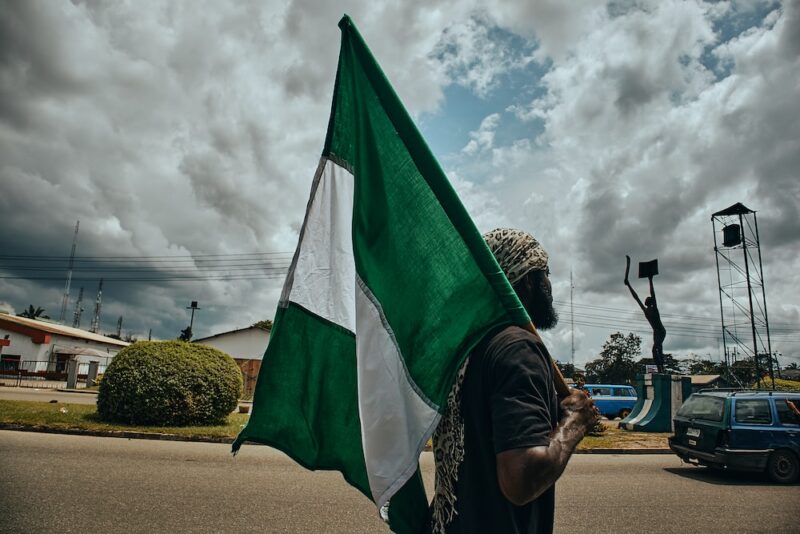
Neither the donkey knows what it is dragging, nor the camel understands where it is heading. That, my fellow Nigerians, is the state of our nation today. A country in motion without direction, burdened without clarity, her citizens left wandering in confusion while those entrusted with her reins of power prepare for their next feast of political conquest.
We are in 2025, and though general elections are still two years away, the politicians have already unbuttoned their agbadas and entered full campaign mode. Governance has been abandoned like a forgotten child at the market square. The focus has shifted entirely from serving the people to securing power. What is worse, never in the history of Nigeria has so much money moved from the federal centre to the states, yet so little has trickled down to the lives of ordinary Nigerians.
It is the era of war chests, of coalitions and realignments. Of power blocs consolidating strength, not to build roads, educate children, or empower small businesses, but to maintain their grip on a broken system. A system that rewards mediocrity, encourages impunity, and weaponizes poverty.
“When the goat follows the sheep to the slaughterhouse, it does not mean the goat is invited to the feast.” And so, it is with us, the people. We cheer, we dance, we vote, and then we suffer. Our joy at campaign rice is followed by years of starvation. Our reward for casting ballots is silence in the face of tyranny. We are pawns on a chessboard of betrayal.
Across the land, billions go missing without accountability. Trillions are budgeted, but none are seen. States receive allocations that could build new cities, yet their citizens drink dirty water and sit on hospital floors waiting for paracetamol. Governors fly in private jets while their people sleep under leaking roofs.
“If the mouth says it is full, but the eyes are dry, then surely the food was never eaten.” Development has become a myth in many parts of Nigeria. A mirage painted on campaign posters, sold as slogans, and buried after elections. Every four years, politicians promise paradise. But after the elections, they deliver purgatory. They promise bridges where no rivers exist, and roads that disappear before the rains arrive.
There is no ideology, no vision, no nationhood binding us. The country is adrift, held together only by the elastic of collective suffering and manufactured ethnic tensions. The same tired narratives of North versus South, Muslim versus Christian, old guard versus young blood. It is the same charade, dressed in different agbadas.
“A man who beats you with one hand and offers groundnuts with the other expects you to say thank you.” Our leaders are quick to celebrate token projects—flyovers that fly nowhere, boreholes that stop working after three weeks, and digital economies built on analog thinking. They weaponize gratitude, expecting applause for doing the bare minimum, if anything at all.
We are in a nation where the youth no longer dream. They emigrate. The word “japa” has become both a strategy and a survival mechanism. Our best minds are leaving. Our artisans are leaving. Even our doctors and nurses, those who care for our sick, are leaving. What is left behind is a people stuck between the horror of what is and the heartbreak of what could have been.
“When fish begins to rot, it starts from the head.” Leadership has failed us at all levels. The local councilor is as culpable as the senator. The state governor shares the same greed as the minister. The president stands atop a mountain of blame. Yet, no one resigns. No one is held accountable. No one even pretends to feel shame. The social contract has not just been broken—it has been burned and urinated upon.
Yet, Nigerians remain some of the most hopeful people on the planet. We endure. We survive. We hustle. But how much longer shall we patch a leaking boat with bare hands while those steering it drill more holes?
“The chicken standing on one leg still hopes it won’t be picked for pepper soup.” We are hopeful, but our hope has become a dangerous kind of patience. The kind that tolerates injustice. That normalizes dysfunction. That teaches children that corruption is not a crime but a career path. We have grown too used to hardship. We now call suffering “resilience.”
Look at our roads—death traps. Look at our hospitals—morgues with fans. Look at our schools—colonial-era buildings filled with futureless children. Look at our markets—inflation rides on every tomato, every grain of rice. And yet, we clap when a politician shares noodles.
“The man who carries an empty calabash to the stream and returns with it cannot blame the river.” We must ask ourselves: how did we get here? Why do we allow this theatre of misgovernance to continue? Why do we vote for those who mock us? Why do we cheer the same people who looted us blind? Have we so internalized oppression that we now romanticize it?
But perhaps the most painful part is the betrayal of those who know better—our intellectuals, our religious leaders, our traditional rulers. Too many of them have become praise-singers in the palace of rot. Too many have traded truth for contracts, conscience for convenience.
We must be honest with ourselves. This is not a country in crisis. This is a country in coma. And without urgent intervention, we may not survive the next prognosis.
“When the breeze blows, the fowl’s behind is exposed.” As 2027 approaches, the breeze is blowing again. The masquerades are returning to the square. They are sharpening their mouths, polishing their lies, and oiling their campaign machines. But this time, we must not dance to the same flute.
We must ask hard questions. Who has a track record, not just a mouth full of promises? Who is ready to lead with integrity, not just charisma? Who sees Nigeria, not as a prize to be looted, but as a people to be lifted?
Let us not be fooled by new posters or loud slogans. A snake, even when it sheds its skin, remains venomous. Let us not sell our votes for wrappers of garri and sachets of salt. The price of your vote is the cost of your future.
“If the child does not cry out, the mother will not know it carries pain.” Now is the time to cry out. Now is the time to demand better. To organize, to mobilize, and to vote wisely. Not just during elections, but every day thereafter. Governance is not a seasonal event. It is a daily demand.
We must stop celebrating mediocrity. We must challenge our leaders at every level. From the ward councillor to the president. Let them feel the weight of our expectation. Let them know that we are watching, that we are awake, and that we will remember.
Because truth be told, our leaders don’t rate us. They don’t really care about us. But maybe, just maybe, if we start to rate ourselves—if we start to believe that we deserve better, demand better, and organize better—then they will have no choice but to care.
Let us rise. Not in anger, but in resolve. Not with stones, but with sense. Not with violence, but with vigilance. Nigeria is ours. The future is ours. But only if we claim it. May Nigeria win!
—
Prince Charles Dickson PhD
Team Lead
The Tattaaunawa Roundtable Initiative (TRICentre)
https://tattaaunawa.org/
Development & Media Practitioner|
Researcher|Policy Analyst|Public Intellect|Teacher
234 803 331 1301, 234 805 715 2301
Alternate Mail: pcdbooks@yahoo.com
Skype ID: princecharlesdickson














You must be logged in to post a comment Login