
Forgotten Dairies
Tech and Humanity: The Future We Build Must Still Have a Human Face -By Onyejaka Alexander Arinzechukwu
Students must learn how to analyse information, identify misinformation, solve problems, communicate ideas, collaborate with others and make ethical decisions.

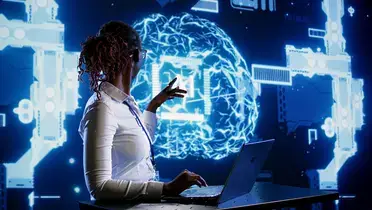
Technology has become one of the most powerful forces shaping human civilisation. It has changed how we communicate, work, learn, travel, conduct business, access healthcare, consume information and even understand ourselves. From the humble mobile phone to artificial intelligence, robotics, biotechnology, cloud computing and the Internet of Things, technology has moved from being a tool in human hands to becoming an environment in which modern humanity increasingly lives.
Yet, beneath all the excitement about technological progress lies a fundamental question that deserves greater attention: What happens to humanity when technology becomes more powerful than our ability to control its consequences?
This is not an argument against technology. Far from it. Humanity has always used tools to overcome limitations. The wheel extended the capacity of the human body. The printing press multiplied the power of the human mind. Electricity transformed civilisation. The telephone conquered distance. Computers accelerated calculation and information processing. The internet connected billions of people.
Today, artificial intelligence is taking another giant step. Machines can generate text, analyse enormous quantities of information, recognise images, translate languages, assist doctors, write computer programs, compose music and perform tasks that were previously considered exclusively human.
The possibilities are enormous.
But so are the responsibilities.
The central challenge of the 21st century is therefore not whether humanity can invent more powerful technologies. We clearly can. The real challenge is whether human wisdom, ethics and compassion can grow at the same speed as technological power.
Technology was created to serve humanity
At its best, technology is an instrument of human liberation.
A farmer using modern machinery can cultivate more land than generations before him. A student with a smartphone can access educational materials from universities around the world. A doctor can use sophisticated equipment to detect diseases earlier. A businessperson can reach customers thousands of kilometres away. A family separated by oceans can communicate through video calls almost as if they were in the same room.
Technology has therefore reduced many of the limitations that once defined human existence.
But technology should never become an end in itself.
The purpose of innovation should ultimately be to improve human life. Economic growth, efficiency, automation and convenience are important, but they must not become substitutes for human dignity.
A society cannot claim to be technologically advanced while millions of its citizens remain hungry, unemployed, uneducated or excluded from basic services.
A country does not become developed simply because its citizens possess smartphones.
Development is about the quality of human life.
That distinction is particularly important for developing countries such as Nigeria. The country does not merely need more technology. It needs technology that solves Nigerian problems.
Technology should help improve electricity supply, agricultural productivity, healthcare delivery, education, transportation, financial inclusion, public administration and security.
It should help a young Nigerian acquire knowledge, start a business and participate in the global economy.
Technology should make government more transparent and services more accessible.
Above all, technology must be connected to human development.
Artificial intelligence and the changing meaning of work
Perhaps nowhere is the relationship between technology and humanity more complicated than in the workplace.
Artificial intelligence and automation are already changing the nature of employment. Machines can perform repetitive tasks faster and sometimes more accurately than humans.
This offers tremendous opportunities.
Dangerous jobs can be automated. Workers can be relieved of tedious responsibilities. Businesses can become more productive. New industries and professions can emerge.
But there is another side to the story.
What happens to workers whose jobs disappear?
What happens to young people entering a labour market where artificial intelligence can perform tasks that once provided employment for millions?
What happens to professionals who spent decades acquiring skills only to discover that machines can now perform parts of their jobs?
These questions cannot be dismissed by simply saying that technology will create new jobs.
History shows that technological revolutions do create new occupations. But transitions are rarely painless. People can lose jobs before they acquire the skills required for emerging opportunities.
That is why governments, educational institutions and businesses must begin preparing society for the future of work.
The solution is not to stop artificial intelligence.
The solution is to educate humanity for an AI-driven economy.
Workers must be retrained. Schools must teach digital literacy, critical thinking, creativity, communication, problem-solving and adaptability. Universities must constantly review their curricula.
The most valuable worker of the future may not necessarily be the person who knows the most facts. It may be the person who knows how to work effectively with technology while retaining distinctly human abilities.
The danger of losing the human touch
There is a paradox at the heart of technological civilisation.
Technology was designed to connect us, yet it can sometimes make us feel more isolated.
Social media allows people to communicate with thousands of others while remaining emotionally disconnected from those physically around them.
A family may sit together at dinner while each person stares at a different screen.
Friends can spend hours exchanging messages but struggle to have meaningful face-to-face conversations.
Young people can measure their self-worth through likes, followers and comments.
This raises an uncomfortable question: Are we becoming more connected technologically but less connected emotionally?
Human beings need more than information.
We need affection.
We need friendship.
We need community.
We need physical presence.
We need empathy.
We need the experience of looking into another person’s eyes and understanding their pain without an algorithm translating it for us.
Technology can facilitate human relationships, but it cannot completely replace them.
A video call can connect two people separated by distance, but it cannot fully reproduce the experience of sitting beside someone who is grieving.
An artificial intelligence system can produce sympathetic words, but human compassion comes from shared vulnerability and lived experience.
That distinction matters.
The crisis of misinformation
Technology has also transformed the information environment.
The internet democratised access to information. Social media gave ordinary citizens platforms previously controlled largely by traditional media organisations.
This was a remarkable development.
But the same technology that allows truth to travel quickly also allows falsehood to travel even faster.
Fake news, manipulated photographs, fabricated videos and artificial intelligence-generated content can make it increasingly difficult for citizens to distinguish reality from deception.
The consequences can be serious.
False information can damage reputations, influence elections, provoke communal tension, undermine public health campaigns and create unnecessary panic.
The challenge is particularly significant in societies where digital literacy remains relatively low.
The future therefore requires not only access to technology but the ability to question technology.
Citizens must learn to ask:
Who created this information?
What is the source?
Can it be independently verified?
What evidence supports the claim?
Who benefits from my believing it?
These questions are becoming essential survival skills.
Technology and democracy
Technology has enormous potential to strengthen democracy.
Citizens can monitor government activities, access public information, communicate with elected representatives and organise peacefully around social causes.
Digital platforms can give ordinary citizens a voice.
But technology can also be used to weaken democratic institutions.
Surveillance technologies can threaten privacy. Online manipulation can influence public opinion. Automated propaganda can amplify political divisions. Deepfakes can create convincing but completely fabricated statements by political leaders.
This means that technological development must be accompanied by strong institutions and responsible laws.
Governments must protect citizens without using technological regulation as an excuse to suppress legitimate criticism.
The objective should be to create a digital environment where security and freedom coexist.
The Nigerian question
For Nigeria, the debate about technology and humanity should be approached with particular urgency.
Nigeria has one of Africa’s largest populations of young people. This demographic reality can become either an enormous economic advantage or a serious social challenge.
Technology provides an opportunity to turn Nigeria’s youthful population into a productive digital workforce.
But this will not happen automatically.
Young Nigerians need reliable electricity, affordable internet access, quality education and opportunities to develop technological skills.
It is not enough to tell young people to “learn coding” when many schools lack functioning laboratories and some communities struggle with basic infrastructure.
Digital transformation requires physical infrastructure.
A software developer needs electricity.
A technology company needs reliable internet.
A digital school needs devices and connectivity.
An online business needs efficient payment systems and logistics.
Technology does not exist in isolation. It depends on the broader economic environment.
Nigeria must therefore stop thinking about technology as merely the responsibility of the technology ministry or technology companies.
Technology policy should be integrated into education, healthcare, agriculture, manufacturing, finance, transportation and governance.
The digital divide
One of the greatest dangers of the technological age is that inequality can become technologically reinforced.
Those with access to high-speed internet, quality education and advanced devices can benefit enormously from technological progress.
Those without access can fall further behind.
Imagine two children born on the same day.
One grows up with computers, high-speed internet, digital learning platforms and parents who can afford technology.
The other grows up in a community without reliable electricity or internet access.
Both children possess equal human potential.
But technology can dramatically widen the difference in opportunities available to them.
This is why digital inclusion must become a development priority.
Technology should not become another mechanism through which wealth determines destiny.
Human beings must remain accountable
One of the most important principles of the technological age should be simple:
Machines must not become excuses for human irresponsibility.
When an algorithm makes a harmful decision, someone must be accountable.
When artificial intelligence produces false information, there must be mechanisms for correction.
When automated systems discriminate against certain groups, the system must be examined and corrected.
When technology causes harm, organisations must not hide behind the argument that “the computer made the decision.”
Computers do not carry moral responsibility.
Human beings do.
Technology reflects the values of those who design, deploy and regulate it.
If a society values fairness, its technology should reflect fairness.
If it values privacy, technology should protect privacy.
If it values human dignity, technological systems must respect human dignity.
The danger of technological dependence
Another challenge is our growing dependence on technology.
Consider how difficult modern life becomes when telecommunications networks fail, electricity disappears or digital payment systems stop functioning.
Many people can no longer navigate without digital maps.
Businesses can struggle without internet connectivity.
Banks depend heavily on digital infrastructure.
Hospitals increasingly depend on sophisticated information systems.
Governments rely on digital databases.
This dependence brings efficiency but also vulnerability.
Cyberattacks, infrastructure failures and technological disruptions can have enormous consequences.
Countries must therefore develop resilient technological systems and maintain human capacity to operate when technology fails.
The smartest society is not one that cannot function without technology.
It is one that can use technology intelligently while retaining the ability to survive when technology is unavailable.
Technology must have ethics
The conversation about innovation often focuses on what is technically possible.
But another question must always follow:
Should we do it?
Just because something can be invented does not mean it should automatically be deployed.
Scientific progress without ethical consideration can create serious consequences.
Technology must therefore be guided by principles.
Privacy must matter.
Consent must matter.
Human dignity must matter.
Safety must matter.
Equality must matter.
Accountability must matter.
The race to develop new technology should never become a race to abandon responsibility.
Education is the bridge
If humanity is to navigate the technological future successfully, education must change.
The old model of education was largely built around memorisation.
But machines are increasingly capable of storing and retrieving information.
Education must therefore place greater emphasis on thinking.
Students must learn how to analyse information, identify misinformation, solve problems, communicate ideas, collaborate with others and make ethical decisions.
They must understand technology without becoming slaves to it.
The future belongs not simply to those who can operate machines but to those who understand when, why and how machines should be used.
Parents also have a role.
Children need digital discipline.
They need to understand that the internet is a tool, not a replacement for childhood.
They need time to read books, play, communicate face-to-face, participate in sports and develop real-world relationships.
A child should not grow up knowing how to operate every device but struggling to communicate with another human being.
The human qualities machines cannot easily replace
The technological revolution may ultimately teach humanity something important about itself.
As machines become better at calculation, pattern recognition and information processing, distinctly human qualities may become more valuable.
Empathy.
Imagination.
Courage.
Moral judgment.
Leadership.
Compassion.
Curiosity.
Creativity.
The ability to forgive.
The ability to understand another person’s pain.
These qualities cannot simply be reduced to processing power.
A machine may calculate the economic cost of helping a poor person.
A human being can decide to help because compassion demands it.
A machine may identify that someone is grieving.
A human friend can sit beside the grieving person.
That is the difference between intelligence and humanity.
Building a future where both can flourish
The choice before humanity is not technology or humanity.
It is technology for humanity.
We should embrace innovation without surrendering our values.
We should encourage artificial intelligence without abandoning human intelligence.
We should automate dangerous and repetitive work while ensuring that displaced workers are supported.
We should digitise government while protecting privacy.
We should expand social media while teaching responsible digital citizenship.
We should build smart cities while ensuring that they remain liveable communities.
We should encourage technological entrepreneurship while making sure that innovation benefits society beyond a small group of investors.
Most importantly, we must remember that the ultimate measure of technological progress is not how sophisticated our machines become.
It is how much better human beings become because of them.
A society with advanced technology but widespread loneliness, inequality, unemployment, misinformation and loss of dignity cannot be considered truly successful.
Technology should enlarge human possibilities, not diminish human worth.
The great challenge of our time is therefore to build a technological civilisation that remains profoundly human.
We must teach our machines to serve humanity, while teaching humanity how to use its machines wisely.
The future will undoubtedly be more technological than the present.
But whether that future will also be more humane depends on the choices we make today.
The greatest invention of the technological age should not be the machine that can think like a human being. It should be the wisdom of human beings to know what machines should—and should not—do.
And that is where the real conversation about technology and humanity must begin.


























You must be logged in to post a comment Login