
Africa
The Case of Bobrisky: A Damning Indictment of Nigeria’s Leadership Failures—Is It a Spiritually and Sentimentally Corrupt Society That Cannot Help Itself?, by John Egbeazien Oshodi


In a nation where the pillars of justice and integrity have crumbled under the weight of corruption, the case of Idris Okuneye, popularly known as Bobrisky, serves as a painful reminder of Nigeria’s leadership failures. This scandal transcends the boundaries of personal misbehavior, exposing a systemic rot that permeates every facet of governance. From the highest echelons of power to the ranks of law enforcement, a culture of dishonesty and moral decay thrives, suggesting that Nigeria is not merely plagued by political corruption but is spiritually and sentimentally corrupt as well. As the nation grapples with these realities, the Bobrisky affair compels us to confront the uncomfortable truth: that a society deeply entrenched in self-serving interests struggles to enact meaningful change.
The case of Idris Okuneye, popularly known as Bobrisky, transcends mere personal scandal, emerging as a glaring reflection of Nigeria’s systemic failures in leadership and governance. Allegations of preferential treatment, bribery, and misconduct among prison authorities expose a society plagued by deep-rooted corruption and a severe lack of moral integrity. The recent suspension of several officers at Kirikiri Prisons in Lagos exemplifies the depths of this corruption, revealing a system that is supposed to uphold justice but instead facilitates inequity and favoritism.
Bobrisky’s alleged service of his sentence in a luxurious private apartment rather than a prison cell—following claims of bribing prison officials—highlights the absurdity and dysfunction of the Nigerian correctional system. In functional democracies, institutions adhere to established norms that prioritize justice and fairness. In contrast, Nigeria has inverted these principles, undermining the very purpose of correctional facilities, which should be rehabilitative rather than punitive in a corrupt manner.
Corruption and Preferential Treatment in the Prison System
This case raises critical questions about the treatment of vulnerable inmates, including transgender individuals, within Nigeria’s prison system. In developed nations, protective custody is a standard practice for individuals who may be at risk of violence or discrimination; however, allowing Bobrisky to reside outside prison exemplifies not only corruption but also sets a dangerous precedent for how the justice system addresses cases involving marginalized groups.
Bobrisky’s situation reflects a broader trend of unequal treatment within the justice system. Those endowed with wealth, social status, or political connections receive special privileges, thus eroding public trust in judicial processes. Such practices reinforce the troubling notion that the laws binding ordinary citizens can be circumvented by the elite. This disparity in treatment raises profound questions about the integrity of Nigeria’s justice system, leading many to conclude that power and wealth afford individuals a shield from the consequences of their actions.
Protective Custody or Corrupt Favoritism?
In an analysis of the controversial decision to allow Idris Okuneye, aka Bobrisky, to serve his sentence in an apartment rather than a correctional facility, the justifications offered by prison experts appear absurd. Bishop Kayode Williams, Director General of the Prison Rehabilitation Mission, argued that Bobrisky’s transgender identity necessitated protective custody, claiming he would be at risk in the general population due to his appearance. Similarly, former National PRO of the Nigerian Correctional Service, Francis Enobore, echoed this sentiment, asserting that Bobrisky’s presentation as a woman could provoke violent reactions from other inmates. It’s almost comical to think that “protective custody” has turned into a VIP pass for those deemed “vulnerable,” while the rest are left to fend for themselves in the chaos of correctional facilities. These explanations not only diminish the gravity of Bobrisky’s offenses but also reflect a disturbing prioritization of individual safety over the principles of justice and accountability, ultimately serving to perpetuate the very corruption that plagues Nigeria’s correctional system.
A Sick Nation Indeed
Bobrisky’s situation is emblematic of the pervasive decay within Nigeria’s institutions. For instance, the recent escape of Nadeem Anjarwalla, a Binance executive, while under detention in a guesthouse further illustrates the systemic failures that plague national security and law enforcement. These events often culminate in investigations announced by the House of Representatives that lead to nothing substantive, perpetuating a cycle of political theater devoid of genuine accountability.
In a sane society, the nation’s chiefs of Corrections, the Minister of Interior, and the EFCC Chief would resign voluntarily or be dismissed by the President in the wake of such scandals. Yet, this is not the case in Nigeria, where corruption permeates every level of governance, from the top down. The public’s growing disillusionment with Nigeria’s leadership is exacerbated by a culture that seems to prioritize personal gain over public service. This relentless cycle of corruption and negligence permits influential figures to manipulate judicial outcomes, further alienating citizens and eroding trust in government. As citizens increasingly feel disconnected from the decision-making processes that govern their lives, the urgency for reform becomes more apparent.
The Broader Implications
The case of Bobrisky, along with allegations of bribery involving prison officials and Economic and Financial Crimes Commission (EFCC) officials, epitomizes the failures of leadership in Nigeria. The government’s inability to uphold the rule of law and maintain order reveals a systemic crisis where personal interests consistently overshadow collective justice. This pervasive lack of accountability not only emboldens the corrupt but also significantly erodes the faith of ordinary Nigerians in their institutions.
To thrive as a nation, Nigeria must confront the spiritual corruption that permeates its leadership and societal structures. Restoring trust in the justice system demands more than mere investigations; it requires tangible accountability, transparency, and a commitment to meaningful reform. Until these foundational issues are addressed, the powerful will continue to operate above the law, leaving ordinary citizens to bear the brunt of a broken system that repeatedly fails them.
A New Twist in the Saga: Public Deception at Play
Recent revelations have surfaced, indicating that Bobrisky was not imprisoned as initially reported, but rather resided in a lavish apartment. This deception, compounded by claims of bribing EFCC officials to mitigate the consequences of his actions, calls into question the integrity of Nigeria’s correctional and judicial systems. Such a narrative, where public figures can manipulate their circumstances with relative ease, highlights a deeper issue of governance that needs urgent addressing.
The Sham Investigation: A Laughable Irony
The EFCC’s announcement of an investigation into bribery allegations surrounding Bobrisky raises significant doubts about its credibility, especially given the context of his own admissions of corrupt dealings. Rather than tackling systemic corruption head-on, the EFCC appears to be intent on deflecting attention away from deeper issues, creating a façade of investigation to maintain its public image. This not only reflects a lack of serious intent to resolve corruption but also signals to the public that the authorities are more invested in preserving their reputation than in upholding justice.
A Murky Game of Public Deception
As Bobrisky faces mounting pressure to revise his narrative, Nigeria’s deeply compromised leadership has unleashed its fury on those brave enough to expose the truth. The whistleblowers who released audio recordings revealing Bobrisky’s claims of being placed in a private apartment instead of a legitimate correctional facility are now under siege. In a sane society, these individuals would be celebrated for their courage, not targeted for intimidation. Shame on all of you for persecuting those who shine a light on your failures rather than addressing the rampant corruption and governance crises that fester unchecked.
This saga starkly illustrates Nigeria’s disheartening legacy of public deception, raising profound concerns about the integrity of its institutions and their ability to serve the people equitably. The urgent call for institutional reform is not merely a request; it is a necessity for survival. Without genuine accountability and a resolute commitment to root out corruption, the cycle of incompetence will persist, eroding the fragile trust citizens have in their government.
How can Nigeria claim it is not spiritually corrupt when the very fabric of society is woven with dishonesty and deception? From the highest echelons of power down to everyday interactions, the culture of graft and moral decay permeates every level. This deeply ingrained dishonesty, where self-interest trumps integrity, further amplifies the nation’s decline. If the leaders who are meant to guide and protect the populace are mired in corruption, how can the nation hold its head high?
In conclusion, the case of Bobrisky transcends sensationalism; it is a powerful indictment of the systemic rot afflicting Nigeria today. Addressing these deep-seated issues requires a collective awakening for reform and accountability, where the rule of law is not just an illusion but a living reality. Until Nigeria confronts its leadership failures and embarks on meaningful change, the specter of corruption and inequality will loom large, stifling progress and consigning its citizens to a life of perpetual despair.
Is Nigeria spiritually corrupt? It seems to be a nation caught in one line of dishonesty after another, where the principles of integrity and justice are overshadowed by a pervasive culture of deceit. This yeye and mumuism too much!
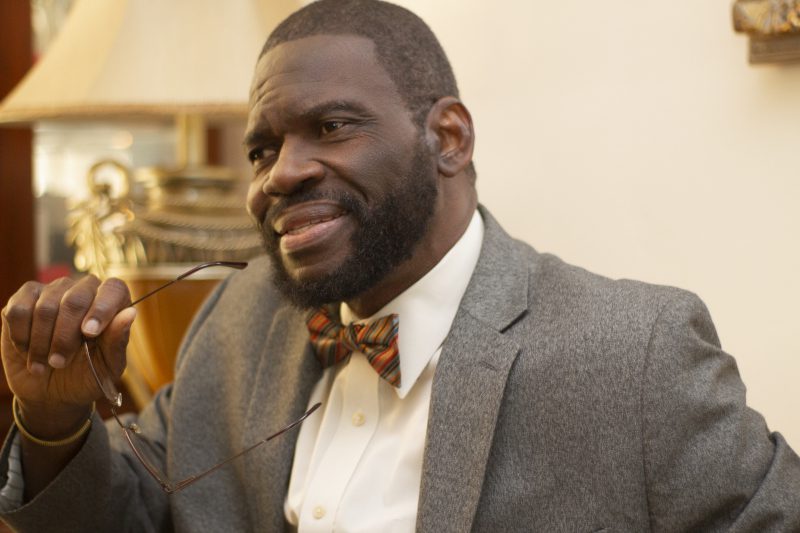
Professor John Egbeazien Oshodi, born in Uromi, Edo State, Nigeria, is an American-based police and prison scientist, forensic psychologist, public policy psychologist, and legal psychologist. He’s a government advisor on forensic-clinical psychological services in the USA and the founder of the Dr. John Egbeazien Oshodi Foundation for Psychological Health. With a significant role in introducing forensic psychology to Nigeria through N.U.C. and Nasarawa State University, he’s also a former Secretary-General of the Nigeria Psychological Association. He’s taught at esteemed institutions like Florida Memorial University, Florida International University, Nova Southeastern University, and more, and is currently an online faculty member at Weldios University, Nexus International University, and Walden University.




























You must be logged in to post a comment Login