
Africa
The Casualties Are Not Only Those Who Are Dead -By Oluwafemi Popoola
Why is President Bola Ahmed Tinubu more visibly invested in consolidating political structures than confronting the insecurity that has swallowed thousands of Nigerian lives? Why does the Commander-in-Chief appear consumed by re-election strategies while vast regions of his country are turning into ungoverned spaces? Why does the safety of Nigerians feel like an afterthought?


The title of this essay is drawn from a piercing line in John Pepper Clark’s haunting war poem, ‘The Casualties’. It is not borrowed for poetic flourish but because no other words so precisely frame the dread that stalks Nigeria today. Written at the height of the Civil War and published in the 1970 collection Casualties: Poems 1966–68, Clark’s verse served as a stark mirror to a nation mangled by conflict, intending it as a mirror held up to a nation disfigured by violence. More than half a century later, those lines echo like a prophecy returned, fulfilled in ways we prayed history had buried.
The horror Clark captured in the poem was meant to freeze a nation before a mirror. It was meant to force us to look at the blood, the fractures, the disintegration of a people at war with itself. Decades after those lines were written, I find myself reading them again, this time, not as relics of history but as if they were crafted to narrate Nigeria’s present agony. What is unfolding across our country today feels frighteningly familiar, chillingly relevant and tragically cyclical. Nigeria has once again become a nation of casualties.
Let’s start with the footage of the attack in Eruku, Kwara State, where worshippers were abducted mid-service. The sad incident looked like something out of an action movie—grainy images of gunmen storming a sacred space and people fleeing in panic. Many Nigerians consume violent films for entertainment but the events of the past week remind us that the line between cinematic horror and real-life terror has vanished. Our screens no longer project fictional dystopias, they replay our own experiences, our own tragedies. Unlike in movies, there is no triumphant rescue scene, even our once celebrated “Nigerian Jack Bauer,” Abba Kyari, the man once praised for nabbing Evans, now eats prison rations behind steel bars. There is no hero bursting in at the last second. Only silence. Only grief. The screen becomes a mirror. We are forced to watch ourselves die.
In Borno State, Brigadier General Uba and three of his men were abducted and publicly executed by Islamist terrorists on Friday. This is a brazen assault on the Nigerian state itself.
Barely 24 hours later, 64 civilians, including women and children, were kidnapped in Tsafe LGA, Zamfara. By Sunday, 25 female students and their principal were taken from a school in Maga, Kebbi State, while the vice principal was killed. Then came Monday’s horror: 38 worshippers abducted from a church in Eruku, Kwara. On that same day, a policeman was killed in an attack in Geidam, Yobe; eight members of the Civilian Joint Task Force were gunned down and three abducted in Gwoza, Borno; fifteen people, including nursing mothers and their infants, were seized in Sabon Birni, Sokoto; and four rice farmers were killed in Edu, Kwara. And just a few days? Over 300 students abducted from a Catholic school in Agwara, Niger State. This is not a month’s tally. It is not a year’s summary.
This is one week in Nigeria.
I have read commentators say that the atmospherics of the past few days feel eerily like 2014 and 2015. They were the years Nigeria spiraled into mass abductions, schoolchildren disappeared in hundreds, villages burned, and the country drifted dangerously close to state failure. I share that sentiment deeply. The déjà vu is suffocating indeed. Once again, we are counting abducted children. Once again, we are watching shaky videos of terrified schoolgirls forced into the bush. Once again, we are listening to federal officials who seem permanently shocked into paralysis.
The helplessness of that era under President Goodluck Jonathan, which many Nigerians believed we had left behind, appears to be creeping back, quietly, steadily, and devastatingly. Nigeria’s psyche is bruised. And every attack deepens the wound.
The abduction of soldiers signals the emboldening of terror groups. The mass kidnapping of schoolchildren is a direct assault on the future of the nation. The killings of farmers, worshippers, civilians and even armed security personnel, signal a country where neither faith, nor labor, nor uniform, nor innocence offers protection.
The young scholar Mojúbàolú Olúfúnké Okome has written extensively on the “psychology of insecurity” in Nigeria, noting how persistent violence normalizes fear and erodes citizen trust. Similarly, Kenyan intellectual Ali Mazrui once described African states as “victims of the gun,” arguing that the legitimacy of governments weakens when non-state actors wield more effective violence. The past week alone seems to prove both arguments true.
But it is not only African scholars who see this pattern. American political scientist Robert I. Rotberg, known for his analyses of state failure, argues that nations collapse not only from economic hardship, but from consistent inability to provide the most basic of public goods, which is security. If Rotberg were watching Nigeria today, he would say the signs are blinking red.
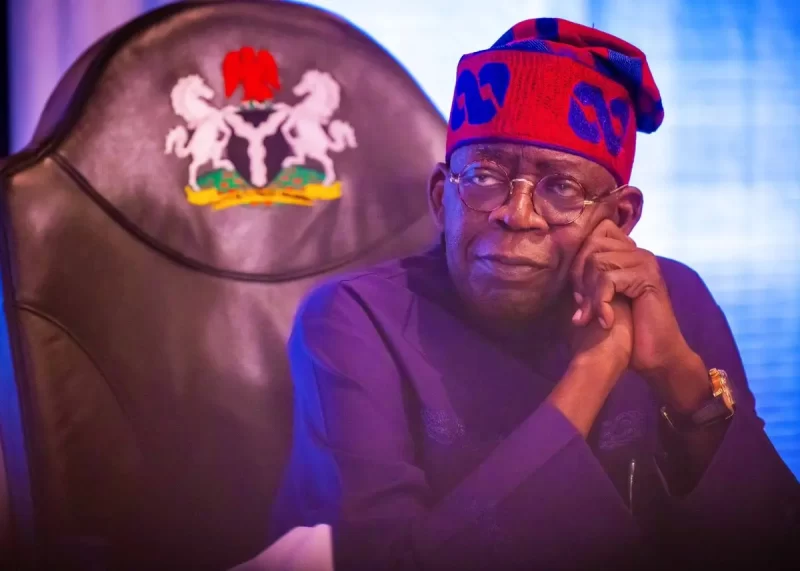
It is against this backdrop that Nigeria suddenly received a rare piece of good news. On Sunday, President Bola Ahmed Tinubu who recently cancelled his trip to the G20 Summit to coordinate security efforts, announced on his social media channels that all 38 worshippers abducted in Eruku, Kwara State, had been rescued, and that 51 of the missing students from the Catholic school in Niger State had also been recovered. For families who had endured sleepless nights and broken hope, this was relief, a brief lifting of the suffocating darkness. Loved ones who feared they might never embrace each other again were reunited. This good news mattered. It softened the edges of a terrible week.
But even in relief, troubling questions linger. What remains sketchy—disturbingly sketchy—is how these rescues happened. Were ransoms paid? Were gunmen confronted? Were any abductors arrested, neutralized, or even identified? Or is the President suggesting that Nigerians do not deserve to know? Silence around such critical details is not harmless. It breeds speculation. And in a country already drowning in distrust, uncertainty becomes another form of terror.
While I leave many Nigerians to chew on these unanswered questions, I will state clearly that the real breakthrough will not come from chasing gunmen alone. It will come from chasing the people who feed them. Nigeria already knows the truth. Violence does not reproduce itself. It is sustained. It is financed. It is protected. The bullets are paid for. The kidnappers are sheltered. The terror economy thrives, not because of ghosts in the forest but because of humans in high places. This is the President’s moment to end it. Pull the plug on the sponsors and watch the fear industry collapse. Pull out the roots and watch the branches wither. The nation is ready. The world is waiting.
Which brings me to the questions haunting many Nigerians, including myself:
What exactly is Nigeria’s game plan?
Why does every election cycle come drenched in blood? Why are innocent Nigerians always sacrificed on the altar of political ambition?
If 2027 is the reason for this escalation, why must the victims be children, farmers, worshippers, teachers, soldiers? Why is the timing so suspicious, just as political tensions over the next presidential election begin to heat up?
Why is President Bola Ahmed Tinubu more visibly invested in consolidating political structures than confronting the insecurity that has swallowed thousands of Nigerian lives? Why does the Commander-in-Chief appear consumed by re-election strategies while vast regions of his country are turning into ungoverned spaces? Why does the safety of Nigerians feel like an afterthought?
Why? Why? Why?
As I write, I am reminded of Chinua Achebe’s haunting observation: “A man who cannot tell where the rain began to beat him cannot know where he dried his body.”
Nigeria has forgotten where the rain began to fall. And so it drenches us again and again.
We are soaking. We are shivering.
We are bleeding.
The casualties are not only those who are dead. They are also those who are alive, wandering through a nation losing its grip on security, sanity, and sovereignty.
And if Nigeria does not act swiftly, decisively and courageously, then future generations will read this moment. It won’t be as a warning, but as the beginning of a tragic national obituary.
Oluwafemi Popoola is a Nigerian journalist, media strategist, and columnist. He can be reached via bromeo2013@gmail.com






















You must be logged in to post a comment Login