
Africa
Who Was Kashim Ibrahim: The Statesman Behind Borno’s New University Name? -By Khadija Suleiman
Perhaps one of Kashim Ibrahim’s most remarkable traits was his reputation for honesty and humility. While many of his contemporaries were accused of corruption or power struggles, he maintained a reputation for integrity. Stories abound of his modest lifestyle and his insistence that public office should be about service, not personal enrichment. This moral compass endeared him to many and set a standard that subsequent leaders often struggled to match.

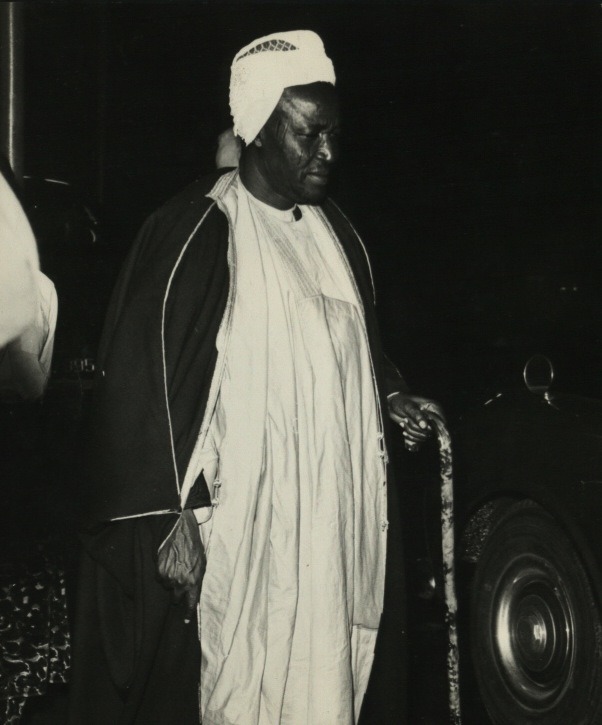
The recent renaming of Borno State University to Kashim Ibrahim University has sparked public curiosity and interest about the man whose name now adorns one of the state’s most important academic institutions. For many Nigerians, especially the younger generation, the name Kashim Ibrahim may sound familiar but distant. Yet, in the history of Northern Nigeria and the nation at large, Kashim Ibrahim occupies a significant place as a political pioneer, administrator, and public servant who shaped the early trajectory of governance.
Born in 1910 in Maiduguri, Kashim Ibrahim rose at a time when educational opportunities for Northerners were extremely limited. He was among the few privileged to receive formal education, which he pursued diligently. His early schooling in Borno Province eventually took him to Katsina College, one of the most prestigious institutions in the North during colonial times. This exposure positioned him to be part of the early educated elite that would later serve as a bridge between colonial authorities and the emerging Nigerian leadership class.
Kashim Ibrahim’s career in public service gained prominence in the 1940s and 1950s, a period that marked the gradual transition from colonial rule to self-governance. He became deeply involved in the politics of Northern Nigeria and was a member of the Northern People’s Congress (NPC), the dominant political party of the region. His political maturity and sense of diplomacy soon set him apart as a leader who valued service above personal ambition.
In 1956, Kashim Ibrahim was appointed the Governor of the Northern Region, a position he held until 1966. As Governor, he worked alongside the late Premier, Sir Ahmadu Bello, the Sardauna of Sokoto, to administer the vast and diverse Northern Region. The duo complemented each other, with Bello often focusing on political leadership while Ibrahim brought in administrative discipline and a knack for reconciling differences among the region’s ethnic and religious groups.
Perhaps one of Kashim Ibrahim’s most remarkable traits was his reputation for honesty and humility. While many of his contemporaries were accused of corruption or power struggles, he maintained a reputation for integrity. Stories abound of his modest lifestyle and his insistence that public office should be about service, not personal enrichment. This moral compass endeared him to many and set a standard that subsequent leaders often struggled to match.
His role extended beyond regional politics. Kashim Ibrahim was also involved in national governance, serving as Nigeria’s Minister for Social Services and later Minister for Education during the First Republic. In these roles, he championed policies aimed at expanding educational access, particularly in Northern Nigeria, where Western education lagged behind the South. His vision was that education would be the key to unlocking opportunities and bridging Nigeria’s regional disparities.
The 1966 military coup that toppled Nigeria’s First Republic marked a turning point in the country’s political landscape. Kashim Ibrahim, like many leaders of that era, was deeply affected by the upheaval. However, unlike some of his contemporaries who were swept away by political turbulence, he remained respected across divides. He spent the later years of his life out of frontline politics, focusing instead on advisory roles and mentoring younger leaders.
Kashim Ibrahim passed away in 1990, leaving behind a legacy that continues to resonate today. In his honor, several institutions and streets across Northern Nigeria have been named after him, including the famous Kashim Ibrahim House in Kaduna, which remains the seat of the state government. His memory symbolizes leadership marked by accountability, inclusiveness, and service to the people.
The decision to rename Borno State University after Kashim Ibrahim is, therefore, not merely symbolic but deeply historical. It connects the present generation of students and scholars to the values of an earlier statesman who believed in education as the foundation of societal progress. It is a reminder that universities are not just centers of learning but also custodians of history, values, and the stories of leaders who came before.
For the people of Borno and Nigeria at large, Kashim Ibrahim’s life serves as a mirror reflecting what leadership can and should be. In a time when political integrity is often questioned, recalling his legacy through an academic institution offers an opportunity for reflection and inspiration. It is a challenge to the youth, educators, and leaders to rise above self-interest and embrace service, humility, and accountability.
Kashim Ibrahim may have lived in a different era, but his principles remain timeless. As Kashim Ibrahim University opens a new chapter in Borno’s educational history, it carries with it the weight of his legacy — a legacy that calls on all Nigerians to remember that leadership, at its core, is about the people.
Khadija Suleiman is a 300 level student from Kashim Ibrahim University (Formerly Borno State University, Maiduguri)






















You must be logged in to post a comment Login