
Politics
Yoruba Nation: Prospects And Perils Post-2031 (1) -By Abiodun KOMOLAFE
Take a damaged vehicle to a mechanic’s workshop in Cotonou or Lome, and it will come out fully refurbished – as good as new. But that’s simply not the case here! Had there been a functional Yaba Trade Centre in the region, these technical deficits would for long have been confined to a narrow field devoid of relations. And, as if the gods are angry, visit our hotels or supermarkets, and you will see that the cumulative effect of structural weakness, the dearth of technical skills, and a lack of political will is nothing short of shattering.

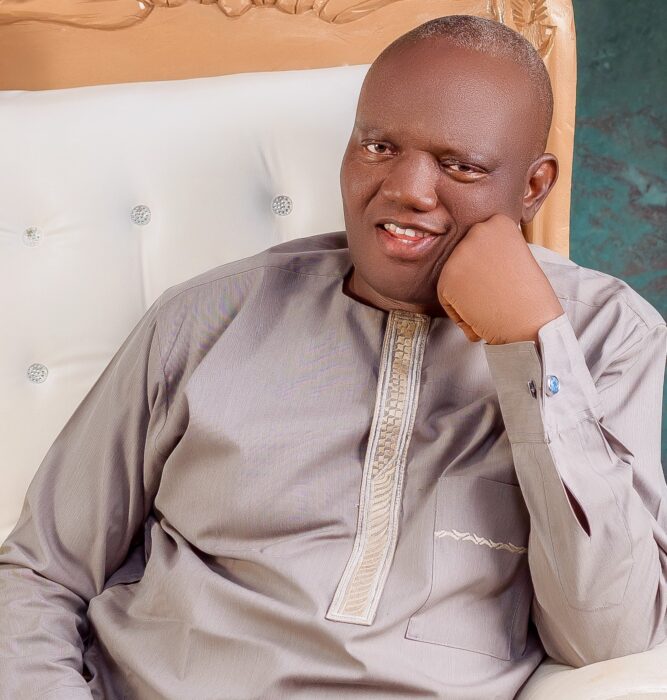
Last week, the Ekiti State Chapter of the Afenifere Renewal Group (ARG) – a body I once served as pioneer Administrative Secretary – gathered in Ado-Ekiti for a colloquium marking former Governor Kayode Fayemi’s 61st birthday. Beyond the celebration, the event was a platform to advance President Bola Ahmed Tinubu’s vision and drum up support for Governor Biodun Abayomi Oyebanji (BAO)’s second-term bid.
With the June 20 Ekiti polls right around the corner, the political temperature in the South West has reached a boiling point. It’s now the talk of the town, and for good reason. Our best wishes go out to BAO as he heads into this contest.
Even though Fayemi and his successor were notably absent at the event, one heavy question dominated the room: what becomes of the Yoruba nation after the Tinubu era, and is the race truly ready for what comes next? As fate would have it, Chief Wole Olanipekun, a Senior Advocate of Nigeria, and one of the country’s most distinguished legal minds, had already put that very issue on the front burner.
Speaking in Akure during the 50th anniversary of Ondo State, the legal titan stripped away the comfort of the present to reveal a sobering reality: the Yoruba nation is living on borrowed time if it remains complacent. Olanipekun’s message was a blunt warning against the ‘Presidency high.’ The Asiwaju of Ikereland reminded the South West that, while Tinubu might hold the reins until 2031, power “is a transient tenant.” He also argued that the nationality cannot afford to sleep on its oars; instead, it must begin an immediate, cold-blooded appraisal of its political and economic future.
Writing for posterity, Olanipekun, Fayemi, and Oyebanji have shown that they are deep thinkers looking beyond the moment – unlike those fixated on immediate advantages. While the danger of the ‘Presidency High’ is that it masks the decay at home, the trouble with cultural hegemony (Omo wa ni e jé ó sé) is that it is, to an extent, the pursuit of an illusion. Therefore, the critical question remains: what happens after ‘omo wa ni’?
Is Tinubu likely to be succeeded by another Yoruba leader, and will that nationality hold the presidency from 2031 through 2050? It is highly unlikely! All the more reason it must prepare for the era after 2031, which is going to be a landscape vastly different from the one we know today. Yes, it will be a brutally competitive environment where, at all levels, the terms of trade and even social life must be navigated through tortuous waters.
Again, where lies the future of the Yoruba nation, and who will lead the charge? Is it the mainstream Afenifere – already “bruised, battered” and factionalized along leadership cleavages; or the Egbe Agba Yoruba, which has long been on an expedition whose direction no one can discern? In the post-2031 era, the Yoruba cannot afford to be mere bystanders. To this end, what specific competence and unique blueprint will the South West Development Commission (SWDC) and the Development Agenda for Western Nigeria (DAWN) bring to the table to truly transform the Western Region?
What are we saying? Whether Tinubu stays until 2027 or 2031, the “home” (the South West) must be made “sweet” through the Social Market model so that the occupants aren’t terrified of the landlord changing. The South West must build the ‘Social Market’ now – not as a compliment to Tinubu’s presidency, but as a hedge against its absence. We need an economy that can breathe without Abuja’s oxygen.
Bí ò’òdè ò dùn, bí ìgbé nì’gboro rí’ (If one’s home is not at peace, the whole town might feel like a wild forest). The tragic truth is that this crisis has evolved beyond being a mere matter of conscience; it is now a question of survival, and the ARG must be central to this struggle. In close collaboration with other serious and well-meaning Yoruba sociocultural groups, the body should fill the existing void and provide the ethical impetus for rebuilding. The political establishment must also set aside individual bickering and jockeying for office to help mobilize civil society across Yorubaland, with a view to initiating a programme of moral rejuvenation for the race. Now is the time to step forward and provide the principled leadership required to drive it!
Today, Chief Obafemi Awolowo is not being remembered for the roles he played as the founder of the Action Group (AG) but how he used the opportunity he had to develop, especially the Western Region. Similarly, Bola Ige is not being remembered for being an orator but for the development he brought to his people. So, the Yoruba nation must remain focused and, across all divides, work towards an agreement for the future. While the Federal Government’s initiative to design a 5-year development programme is laudable, the Yoruba must go further. We must establish a 20-year development agenda to ensure the race returns to its competitive peak and stands once again at the forefront of progress.
Once upon an identity, the Yoruba nationality was remarkably well-prepared for the future. Both the Free Education policy of the AG government and the institution of a higher minimum wage – designed to boost purchasing power and attract investment – were masterstrokes that yielded results across the short, medium, and long term. This success eventually transformed initial opposition into a broad acceptance of taxation as a vital social contract. It was a golden age for the Yoruba! However, following the upheavals of 1966, apart from occasional flashes of brilliance, the Yoruba have lost the collective focus they once maintained as a national group dating back to the 1886 Peace Treaty that ended the Kiriji/Ekitiparapo War.
A clear contrast of our inability to develop a productive economy finds meaning in the absence of technical skills and capacity. A trip to Abeokuta Street in Lagos Mainland Local Government in the country’s commercial capital is revealing and worthy of a treatise. At the crack of dawn every morning, dozens of skilled artisans from Benin Republic and Eastern Togo parade their craftsmanship, ready for hire on construction sites across the metropolis. Their work is refined, indispensable and cost-effective. We can’t do without them. These men likely remit millions of dollars back home every month, further straining the naira. We must commend Benin and Togo for using their brains.
Nigeria once had places like the Yaba Trade Centre which provided precisely this technical mastery and fueled the steady expansion of a lower middle class transiting into a proper middle class. A democracy is consolidated on the basis of a large middle class as its buffer against authoritarianism and a guarantee of a stable, ever-expanding economy. The South West today should be talking of a Yaba-style model of skills acquisition in every local government. Sadly, it is not, because our current system is built, not on production but on the distribution of spoils infamously known as ‘Federal Allocation.’ This model is fundamentally unsustainable and a concerted effort must be made to dismantle it.
Take a damaged vehicle to a mechanic’s workshop in Cotonou or Lome, and it will come out fully refurbished – as good as new. But that’s simply not the case here! Had there been a functional Yaba Trade Centre in the region, these technical deficits would for long have been confined to a narrow field devoid of relations. And, as if the gods are angry, visit our hotels or supermarkets, and you will see that the cumulative effect of structural weakness, the dearth of technical skills, and a lack of political will is nothing short of shattering.
●To be concluded.
Email: ijebujesa@yahoo.co.uk.
Mobile: 08033614419 SMS only.

























You must be logged in to post a comment Login