
Africa
A Nation’s Cruelty Towards Nyesom Wike: What Does It Say About Us? -By John Egbeazien Oshodi
If we continue to indulge in the cruel delight of another’s suffering, we degrade our own humanity and reduce ourselves to hypocrites wearing religious and moral garbs. Let us rise above our weaknesses, confront our biases, and act with the integrity we claim to uphold. Forgiveness, compassion, and the courage to confront our own faults will guide us toward a better society.


A Curious Celebration of Sickness and Death
For at least three to four days, social media platforms like Facebook, YouTube, and others were abuzz with shocking content—videos, posts, and memes celebrating the alleged collapse, sickness, and even death of Federal Capital Territory Minister, Nyesom Wike. Some reports claimed he was paralyzed, while others drew coffins and other symbols of death, spreading like wildfire across various channels. It was as if his political adversaries had been given a reason to rejoice and publicly display their feelings in the most grotesque ways imaginable.
Yes, this is the same Wike who, by his own admission, has used aggressive words, violent rhetoric, and even threats against his perceived political enemies. He is known for his brash style, unapologetic confrontations, and a reputation for decisively dealing with those he dislikes. This public persona, coupled with his controversial political journey, has made him a polarizing figure in Nigerian politics. Yet, despite all of this, there is something profoundly disturbing about celebrating another person’s alleged illness, collapse, or even death.
But this is not about Wike. It is about what we have become as a people. We often profess high moral standards, virtue, and godliness—yet, when it matters most, we demonstrate the darkest parts of ourselves. We have become a people who outwardly worship God, Allah, and ancestral deities, yet behind closed doors and through the anonymity of social media, we rejoice in another man’s pain. This calls for deep reflection, not only about Wike’s words and actions but about our own hypocrisy and lack of compassion.
The Dark Side of Human Nature: Why Do We Rejoice in Misfortune?
Psychologically speaking, the phenomenon of celebrating an enemy’s perceived downfall reveals a deeper issue within our collective conscience. It taps into the human tendency to experience schadenfreude—a German word meaning pleasure derived from another’s misfortune. This emotion is not unique to Nigeria or any particular culture, but it becomes more glaring in a society that outwardly professes religious devotion and moral uprightness.
The roots of schadenfreude often lie in the complex interplay of envy, resentment, and perceived justice. In Wike’s case, his aggressive political style and perceived abuses of power have led many to feel that his suffering would somehow balance the scales of justice. In essence, they believe that a figure who has inflicted verbal and political harm on others now deserves punishment—even if that punishment comes in the form of illness or collapse.
Yet, this widespread celebration of Wike’s alleged illness reflects something deeper—something more troubling. It is a societal sickness. A sickness of the soul. We have allowed the worst parts of ourselves to fester, hidden beneath layers of religious pretense. Many Nigerians walk around with unresolved bitterness, anger, and resentment towards their leaders, and Wike’s alleged suffering became the outlet for those emotions. But such reactions do not heal; they only worsen our collective decay.
Religious Hypocrisy: A Society That Preaches Love Yet Acts with Malice
Nigeria, known for its diverse religious practices, has followers of Christianity, Islam, and African traditional religions—each advocating compassion, empathy, and the sanctity of human life. Yet, when a public figure like Wike is rumored to be ill or facing health challenges, some of these same devout individuals are quick to celebrate his supposed demise. This duality between professed faith and practiced cruelty speaks to a deeper societal hypocrisy.
Religious doctrines across all faiths teach against wishing evil upon others. For instance:
Christianity teaches to pray for one’s enemies and to avoid harboring hatred.
Islam emphasizes the importance of compassion, even towards adversaries.
African traditional beliefs often value community harmony and the spiritual consequences of wishing harm.
So, why then does the social media space, dominated by citizens who practice these faiths, become an arena for callous mockery when a person’s health is in question? How do we call ourselves a God-fearing nation when the sound of a political enemy’s supposed collapse becomes a source of laughter? Nigerians must face their own hypocrisy.
Are we truly living by the values we preach? Or do we merely wear religion as a mask to cover our baser instincts? It is high time we recognize that cruelty in any form—whether physical, verbal, or psychological—violates the very principles of faith we claim to hold dear.
A Lesson for Wike: Growth Beyond Power and Aggression
If there is something Wike himself can take away from this experience, it is the reality that his own words and actions have contributed to the animosity directed towards him. As a public figure, the use of aggressive language and punitive actions may win battles but can also breed deep resentment among opponents and the public alike.
Wike must consider that true leadership is not simply about strength, intimidation, or dominance—it is about understanding, listening, and occasionally making peace with those who oppose him. Genuine power lies in humility, restraint, and the capacity to create allies rather than enemies. For Wike, this moment offers a rare chance for introspection and growth.
But regardless of his flaws, regardless of how many people may feel hurt by his actions or words, it is fundamentally wrong to wish death, sickness, or suffering upon him. Our grievances must be expressed through rightful criticism, not cruel celebration of another’s misfortune. Humanity demands that we separate our disdain for his methods from a desire to see him suffer.
A Reflection for All
In the end, life itself is unpredictable. Sickness and health are not in the hands of men but in the hands of a higher power. Political power, wealth, and influence can shield a man from many things, but not from the universal realities of mortality and vulnerability. If Wike himself truly understands this, he may find the strength to approach his leadership journey with renewed humility, kindness, and compassion. Every leader, at some point, must confront their own humanity, understanding that true greatness lies not in dominance, but in empathy and the ability to inspire reconciliation and healing.
But beyond Wike, this moment of public celebration over a man’s perceived suffering reflects a deeper, darker reality within us all. Nigeria must reflect on its hypocrisy and realize that religion without compassion is nothing but an empty ritual. We cannot continue to call ourselves a religious nation while we gleefully celebrate the supposed downfall of another human being. We must confront the sickness in our hearts, the bitterness that consumes us, and the anger we direct towards those we do not like.
Criticize Wike if you must. Call out his flaws. Challenge his decisions. But do so with integrity and decency. The culture of celebrating another person’s sickness, death, or suffering is morally repugnant. We must grow beyond our pettiness and cruelty. We must understand that wishing evil upon others only brings about further degradation of our moral fabric.
We must remember that the true test of our faith is not how loudly we pray, how often we proclaim our religious devotion, or how fiercely we condemn others. The true measure of faith lies in how compassionately we live, how kindly we speak, and how earnestly we strive to heal rather than harm. Let us hold ourselves accountable and strive for a more humane, compassionate society.
Ultimately, the way a society responds to the perceived downfall of its leaders reveals more about the people than the individual being targeted. No matter how flawed, divisive, or aggressive Wike’s actions may seem to many, the act of wishing him death or sickness is a moral failing on our part. Our duty as a people is not to celebrate perceived tragedy but to seek truth, justice, and healing through humane and constructive means.
If we continue to indulge in the cruel delight of another’s suffering, we degrade our own humanity and reduce ourselves to hypocrites wearing religious and moral garbs. Let us rise above our weaknesses, confront our biases, and act with the integrity we claim to uphold. Forgiveness, compassion, and the courage to confront our own faults will guide us toward a better society.
In the end, if Wike changes, and if we as a society change, it is not just politics that will improve, but our collective moral soul. We must learn to find strength in unity, in compassion, and in the courage to forgive. It is not Wike who must change alone. It is all of us.
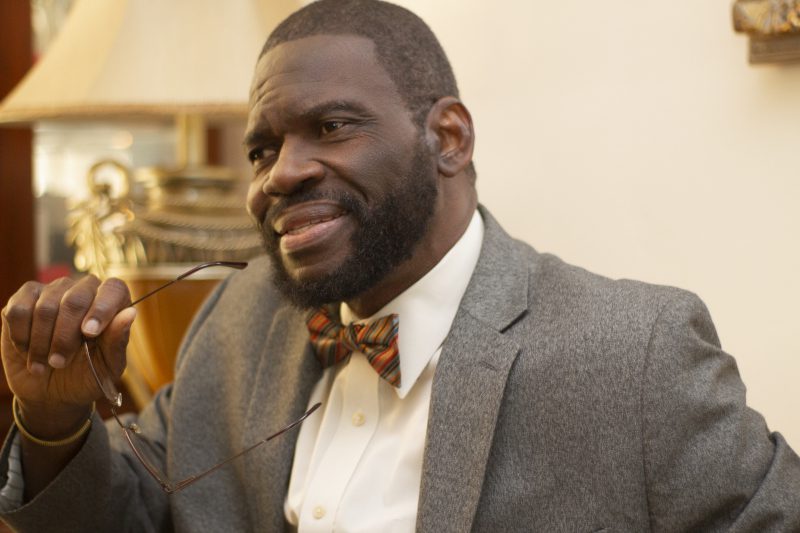
John Egbeazien Oshodi
This writer does not know any of the individuals involved; the focus is solely on upholding democracy, truth, and justice.
Oshodi Open Door Public Training (OOPDT), also known as Oshodi Open Door, is a public awareness initiative dedicated to promoting transparency, accountability, and integrity in Africa. Through educational articles and resources, OOPDT fosters informed discourse on governance, institutional reform, and psychological well-being. It also provides specialized Timely Response Solutions (TRS) training at minimal or no cost, ensuring swift and effective interventions for critical institutional and societal challenges. For more information, contact: jos5930458@aol.com.
Professor John Egbeazien Oshodi is an American psychologist, educator, and author specializing in forensic, legal, and clinical psychology, cross-cultural psychology, police and prison sciences, and community justice. Born in Uromi, Edo State, Nigeria, he is the son of a 37-year veteran of the Nigeria Police Force—an experience that shaped his enduring commitment to justice, security, and psychological reform.
A pioneer in the field, he introduced state-of-the-art forensic psychology to Nigeria in 2011 through the National Universities Commission and Nasarawa State University, where he served as Associate Professor in the Department of Psychology. His contributions extend beyond academia through the Oshodi Foundation and the Center for Psychological and Forensic Services, advancing mental health, behavioral reform, and institutional transformation.
Professor Oshodi has held faculty positions at Florida Memorial University, Florida International University, Broward College, where he also served as Assistant Professor and Interim Associate Dean, Nova Southeastern University, and Lynn University. He is currently a contributing faculty member at Walden University and a virtual professor with Weldios University and ISCOM University.
In the United States, he serves as a government consultant in forensic-clinical psychology, offering expertise in mental health, behavioral analysis, and institutional evaluation. He is also the founder of Psychoafricalysis, a theoretical framework that integrates African sociocultural dynamics into modern psychology.
A proud Black Republican, Professor Oshodi advocates for individual empowerment, ethical leadership, and institutional integrity. His work focuses on promoting functional governance and sustainable development across Africa.


























You must be logged in to post a comment Login