
Breaking News
Ajaokuta lies idle as Nigeria’s steel import bill crosses N1trn
Nigeria’s steel import bill topped N1trn in 2025 despite Ajaokuta’s potential to produce 5.2 million tonnes of steel annually.

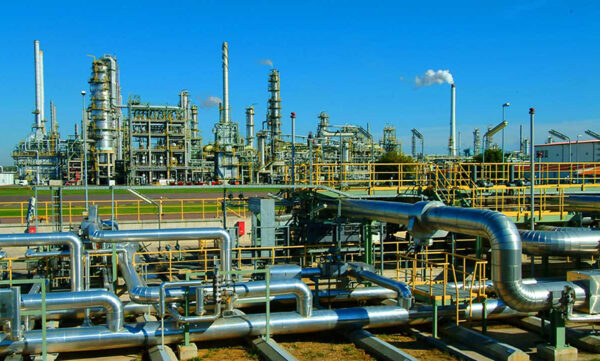
Nigeria’s dependence on imported steel is costing the economy heavily, with the country spending more than N1 trillion on iron and steel imports in 2025 alone, even as the giant Ajaokuta Steel Complex in Kogi State remains largely dormant after more than 40 years.
Figures from the National Bureau of Statistics, NBS, indicate that Nigeria’s iron and steel imports averaged roughly N526 billion annually over the last six years.
That expenditure jumped above N1 trillion in 2025.
The NBS figures cover officially recorded imports and exclude goods that may have entered the country without being captured or were under-reported, meaning the actual import bill could be higher.
The Minister of Steel Development, Prince Shuaibu Abubakar Audu, has put the country’s annual expenditure on iron and steel imports at an estimated $4 billion, equivalent to about N5.6 trillion.
The situation has raised fresh questions about why Nigeria continues to spend huge amounts of foreign exchange importing steel when it possesses the Ajaokuta Steel Complex and substantial raw materials required to support domestic production.
Steel remains a critical foundation of industrialisation. It is indispensable to manufacturing, construction, transportation, infrastructure, defence and several other strategic areas.
Countries that have successfully pursued industrial and economic development have generally treated steel production as a strategic priority.
Nigeria, however, has yet to bring its flagship steel project fully into production.
What Ajaokuta was built to do
The Ajaokuta Steel Complex was designed as an integrated metallurgical facility with the capacity to produce as much as 5.2 million tonnes of liquid and finished steel annually.
Its planned product range included heavy plates, flat sheets, wire rods, bars, structural shapes and industrial chemical by-products.
The original vision went beyond Nigeria’s domestic market. Ajaokuta was expected to supply steel to West Africa and, eventually, other African markets.
A fully operational complex could therefore have positioned Nigeria as a major regional steel producer.
Analysts have also projected enormous employment opportunities, with hundreds of thousands of direct jobs and millions of indirect jobs potentially emerging across mining, engineering, manufacturing, construction, transportation and associated industries.
The economic benefits would extend beyond employment.
Producing steel locally could cut the import bill, conserve foreign exchange and generate export revenue. It could also provide affordable and reliable raw materials for automobile manufacturing, road and rail construction, housing, machinery, fabrication and other industries.
Workers lament value lost
President of the National Association of Steel Workers, Oyabugbe Sunday, told Financial Vanguard that Nigeria’s current model amounts to exporting raw materials and buying back finished steel at far greater cost.
He said the situation was undermining domestic value addition and limiting the country’s industrial development.
Speaking on the cost of imports, Sunday said: “Nigeria spends several billions of US dollars annually importing iron and steel products, resulting in a substantial outflow of foreign exchange.
“Industry estimates indicate that the country’s annual steel import bill is approximately $4 billion, although the exact amount fluctuates, depending on import volumes and global market prices.”
He also spoke about the cost of completing Ajaokuta, saying the last audit of Ajaokuta Steel Company reportedly placed the project at about 95 per cent completion and estimated that approximately $1.5 billion would be required to make it operational.
Four decades, several failed deals
The history of efforts to revive Ajaokuta has been marked by failed concessions, political changes, allegations of misconduct and a prolonged international legal dispute.
Former President Olusegun Obasanjo made one of the earliest major attempts to revive the plant through a private concession.
In June 2003, the Federal Government granted SOLGAS Energy Limited, an American company, a 10-year concession to rehabilitate, complete, commission and operate the complex.
The arrangement did not last. SOLGAS failed to fulfil its obligations, prompting the government to terminate the concession in 2004 for non-performance.
Experts had previously questioned the company’s technical capacity and warned the government against proceeding with the agreement.
The government subsequently handed the complex to Global Infrastructure Nigeria Limited, GINL, which was linked to Indian steel magnate Pramod Mittal’s Global Steel Holdings.
In August 2004, GINL received another 10-year concession to rehabilitate, complete, manage and operate Ajaokuta.
The agreement immediately came under criticism, particularly over its transparency. The Bureau of Public Enterprises, BPE, which had the statutory mandate to privatise government companies, was reportedly not involved.
By 2007, the concession had been converted into a share-sale agreement. The Federal Government agreed to transfer 60 per cent of Ajaokuta Steel Company to GINL for $525 million.
The deal subsequently collapsed amid allegations that the Indian investors had stripped assets from the complex without making the necessary investments.
The late President Umaru Musa Yar’Adua’s administration reviewed the agreement following allegations surrounding the concession.
An administrative panel was established in 2007, after which the government terminated the concession in 2008, citing breaches of the agreement, including alleged asset stripping and failure to provide financing.
It was learnt that Yar’Adua ordered that the matter be referred to the Economic and Financial Crimes Commission, EFCC, for investigation and prosecution.
That directive, however, was reportedly not implemented.
Sources attributed the failure to alleged selfish interests among government officials, particularly after the president became ill and was no longer in effective control of government.
GINL subsequently challenged the termination at the International Arbitration Panel, IAP, in London.
The dispute became a major obstacle to efforts to find a fresh investor for Ajaokuta, lasting through the administrations of Goodluck Jonathan and much of Muhammadu Buhari’s presidency.
Near the end of Buhari’s administration, the Federal Government chose to settle the dispute out of court.
With the advice of then Attorney-General and Minister of Justice, Abubakar Malami, SAN, Nigeria paid $496 million to the Indian investors in a negotiated settlement.
The settlement reportedly brought down the original $5.27 billion legal claim and was intended to end the dispute and allow Nigeria to fully regain control of Ajaokuta.
Russia offered another way out
Another opportunity emerged in 2019 when Nigeria attended the Russia-Africa Summit hosted by President Vladimir Putin in Sochi.
Russia offered to provide $460 million and technical expertise to complete Ajaokuta through the Russian Export Centre.
The offer was particularly significant because the complex had originally been constructed by Russian and Ukrainian engineers under the former Soviet Union.
Afreximbank, then headed by Prof. Benedict Oramah, also agreed to provide the remaining $1 billion.
The proposed arrangement was structured around a Build-Operate-Transfer, BOT, model, meaning repayment would come from revenue generated by the steel company rather than from Nigeria’s general government revenue.
The arrangement appeared to provide a potential solution to the longstanding funding problem.
But despite the Russian commitment and Afreximbank’s readiness to provide the balance, the Buhari administration did not sign the agreement before leaving office.
In May 2020, Buhari’s government established the Ajaokuta Presidential Project Implementation Team, APPIT, to drive the process towards completion and commissioning.
Boss Mustapha, then Secretary to the Government of the Federation, chaired the team, while the then Minister of Mines and Steel Development, Arc. Olamilekan Adegbite, served as Alternate Chairman.
At APPIT’s inauguration, Mustapha acknowledged the decades-long failure to get the complex running.
He said: “The Ajaokuta Steel plant has languished in economic unproductivity for about four decades and previous efforts at reviving it had proved abortive.
“This has resulted in avoidable massive foreign exchange losses at intolerable opportunity cost to the country. The pressing need to redress these avoidable challenges has necessitated this Presidential intervention at this time. This is further underscored by difficulties being witnessed with present challenges in the global oil industry.”
He described Ajaokuta as an opportunity to establish West Africa’s largest fully integrated steel producer and accelerate industrialisation in industries dependent on steel.
Mustapha further stated: “The inauguration of the Ajaokuta Presidential Project and Implementation Team, APPIT, is therefore meant to kick start the process of re-directing the activities of the steel plant, with the aim of bringing the steel project back to life for the growth and economic development of our dear nation.”
APPIT hit by allegations
Vanguard investigations later indicated that APPIT failed to make substantial progress amid allegations of conflict of interest.
According to information gathered by Vanguard, some members were allegedly focused on securing opportunities from the proposed $1.5 billion project.
Attention reportedly centred on the team’s fourth Term of Reference, which required it to “scrutinise and assemble Nigerian Content Engineering, Procurement and Construction, EPC, Special Purpose Vehicle Contractors which will embody the co-concessionaire representing Nigeria’s interest in the Build-Operate-Transfer, BOT, concession.”
Some members were allegedly attempting to nominate a private company associated with them as an SPV contractor responsible for consultancy services to the Nigerian co-concessionaire.
The proposed consultancy fees were reportedly worth hundreds of millions of dollars.
A high-ranking APPIT member was also alleged to have supported the move, creating concerns over conflict of interest.
The disagreement reportedly generated tension within the team and contributed to the failure of APPIT to achieve its objective before the Buhari administration ended.
Adegbite: ‘The Russians promised to do it’
Adegbite had earlier described the Russian proposal as a major opportunity to finally resolve Ajaokuta’s problems.
He said: “It is good that we went to town then, it was something that was worth celebrating. The President went to Russia with a basket of requests, that was the Russia-African summit in Sochi in October (2019). On the sideline of that summit, we had a bilateral meeting with the Russian President.
“One of the requests tabled was for the Russians to come back and complete Ajaokuta, considering the fact that they built it in the first place, when they were in the Soviet Union.
“It was essentially the Russians and the Ukrainians under the Soviet Union- it was a big country then, that built Ajaokuta, to about 95- 98 per cent completion.
“The request we made was we’ve tried some commercial arrangements to complete Ajaokuta in the past which have failed, so now we want to try a government-to-government arrangement. And President Putin acceded to that and promised that the Russian government would do it.
“The beauty of it is that we got funding, the Russian Export Centre, which is akin to what is called EXIM Bank in other countries, pledged a sum of $460million towards this project, while Afrexim Bank which is the bank that we are also shareholders, also pledged billion dollars.
“The beauty of it is that the money is not tied to Nigerian revenue. It is tied to revenue from that company. So Ajaokuta is beholden to pay back the money that is used to complete it. That is why this is a Build-Operate-Transfer.
“It is the details we are going to work out, the kind of money it needs to be running. Ajaokuta is such that we do it properly. There’s a business case for that and it can pay for itself.”
Another concession under Buhari
Despite the proposed Russian-Afreximbank arrangement, Buhari’s administration made another attempt to concession Ajaokuta only months before leaving office.
The decision effectively displaced the earlier government-to-government approach and attracted strong criticism.
The government did not adequately explain why it changed course, while critics questioned the transparency of the proposed concession.
Nigeria’s continuing inability to produce steel domestically has become particularly costly amid persistent foreign exchange pressures.
Completing Ajaokuta could reduce the country’s dependence on imported steel, conserve foreign exchange and create an opportunity for Nigeria to earn revenue from exports.
There have also been allegations of an international conspiracy against the completion of the complex, given the potential impact of Ajaokuta on steel imports in Nigeria and other West African countries.
Some multilateral institutions have argued that the blast-furnace technology installed at Ajaokuta is outdated and should instead be converted into a power plant.
Experts, however, have countered that blast-furnace technology remains relevant and is still used in steel production around the world.
Tinubu’s promise still hanging
The revival of Ajaokuta featured prominently in Bola Tinubu’s 2023 presidential campaign.
While campaigning in Kogi State as the APC presidential candidate, Tinubu promised to revive the steel complex and exploit the state’s mineral resources.
He also pledged to dredge the River Niger to improve shipping and inland water transportation, thereby supporting logistics for the steel industry.
At an APC campaign rally in Lokoja, Tinubu declared: “Hope is here. Ajaokuta resuscitation will be done. Dredging of Niger River will be done. Agriculture will be the source of our prosperity. North Central has the potential for great mineral industrialisation; we will work on that.”
Three years into his administration, however, the Ajaokuta Steel Complex remains largely idle.
For Nigeria, the consequences go beyond the abandoned industrial facility itself.
Every year the plant remains dormant, the country continues to import steel at enormous cost, lose potential industrial jobs, forfeit opportunities for domestic value addition and spend scarce foreign exchange on products it had hoped to manufacture locally.
After more than four decades of promises, concessions, arbitration, settlements and renewed commitments, the central question remains whether Ajaokuta will finally become the industrial catalyst it was designed to be.
Africans Angle News












You must be logged in to post a comment Login