
Forgotten Dairies
Atiku Abubakar: The Politics Behind the Corruption Allegations -By Abba Dukawa
Anything else is simply politics wearing the clothes of justice. Nigeria’s political class would do well to remember that power is temporary. Those who occupy government offices today will eventually leave them. Their allies may become their opponents, and their opponents may become their successors.

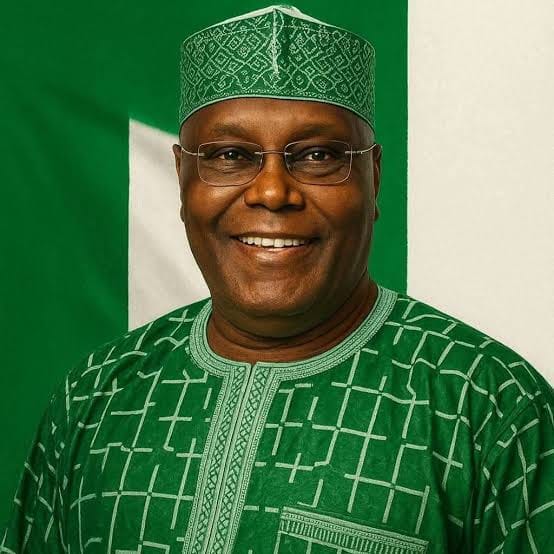
In Nigeria, corruption allegations have increasingly become a tool of political witch-hunting. Old files are routinely dug up, dusted off, and revived at election time, then paraded before the public with such relentless repetition that suspicion is expected to do the work of evidence. Atiku Abubakar has been one of the principal targets of this peculiar political culture.
For almost two decades, the former vice president has faced allegations concerning the source of his wealth and his record in office between 1999 and 2007. These allegations have survived governments, political alliances and election cycles, appearing in political speeches, newspaper reports and increasingly familiar attacks from his opponents.
Yet one fact remains: Atiku has not been convicted by any court of competent jurisdiction of a criminal offence arising from these allegations.
In a constitutional democracy, an accusation remains an accusation until it is established by evidence and tested through due process. Repetition does not transform an allegation into fact. Political enthusiasm does not lower the burden of proof. No politician should be convicted in the court of public opinion before being heard in a court of law. This elementary principle appears particularly inconvenient now that Atiku has once again become a major figure in Nigeria’s presidential politics.
Old accusations dating back to the turbulent administration of former President Olusegun Obasanjo are once again being revived, alongside renewed calls for the Economic and Financial Crimes Commission (EFCC) to reopen investigations and, where warranted, prosecute matters involving former Vice President Atiku Abubakar. These demands include allegations referenced in an EFCC report issued in 2006.
However, the so-called “administrative indictment” of Waziri Adamawa by the EFCC must also be viewed within the political context of that period. Atiku Abubakar was a prominent opponent of the attempt during the Obasanjo administration to amend the Constitution to extend the presidential tenure limit from two terms to a third term. His opposition to the proposed constitutional alteration placed him at odds with powerful political interests within the administration
On several occasions, Waziri Adamawa has expressed his readiness to face any charges arising from the allegations against him in any court of competent jurisdiction. Yet despite the persistence of these accusations, no conviction has been secured against him. If what is being offered to Nigerians is merely the recycling of allegations that have circulated for nearly twenty years, the public is entitled to ask whether this is an exercise in justice or another episode in Nigeria’s increasingly tiresome politics of selective outrage.
The timing matters. Atiku has become increasingly vocal about the failures of government and is positioning himself once again as a formidable presidential contender. Suddenly, allegations dating back to the political warfare of the Obasanjo administration have acquired renewed political life.
But accountability is not synonymous with political persecution. Nearly two decades after these allegations first became prominent, Atiku is a private citizen. He has no constitutional immunity preventing criminal prosecution. If the state possesses evidence of financial crimes, it has both the authority and the obligation to act.
Why, then, continue the ritual of accusation without conclusion? Why keep recycling allegations when the obvious next step is to produce the evidence? This is where Nigeria’s anti-corruption politics repeatedly loses credibility. The country has become accustomed to a strange arrangement in which corruption allegations are treated as devastating when they concern political opponents but somehow become less urgent when they involve allies.
A politician can be celebrated as a reformer by one faction and denounced as a thief by another, depending largely on where the political wind is blowing. That is not an anti-corruption strategy. It is political weaponization.
Those accusing Atiku therefore have a straightforward responsibility: bring the evidence. Not insinuation. Not innuendo. Not another political speech. Not another recycled newspaper headline. Wazirin Duniya has repeatedly challenged his accusers to do precisely that. He has dismissed allegations that he stole public resources and questioned the wealth of some of those who routinely describe him as corrupt.
His political counterattack may itself be dismissed as partisan rhetoric. But it highlights a legitimate problem: why is Nigeria so comfortable demanding financial explanations from political opponents while remaining remarkably reluctant to apply the same standard to friends and allies? That is the hypocrisy at the heart of the country’s corruption debate.
Nigeria cannot credibly claim to be fighting corruption while allowing allegations to become instruments of political warfare. A government that prosecutes opponents while ignoring credible allegations involving its own political camp is not strengthening the rule of law; it is merely giving partisan politics a prosecutorial vocabulary.
The EFCC must therefore be held to a higher standard than political expediency. If there is a case, let the commission make it. If there is evidence, let it be presented in accordance with the law. If a crime has been committed, let the courts determine guilt. And if there is no prosecutable case, Nigerians should be told that too.
What the country does not need is another election-season morality play in which yesterday’s allegations are presented as today’s revelations.
The Nigerian public deserves better.
If there is evidence that Atiku abused public office, misappropriated public resources or committed any other offence, the appropriate response is not to tarnish his reputation at political rallies or in newspaper columns. It is to take the evidence to the relevant authorities and, ultimately, to court.
My position is simple: Atiku should not be subjected to selective scrutiny driven by political expediency. If questions are being raised about his wealth, they should be investigated objectively and on the basis of facts. Atiku has been involved in businesses spanning logistics, manufacturing and other sectors; therefore, his financial history deserves a fair and evidence-based examination, not political insinuation.
The same principle applies to his record in public office. He should be judged by verifiable facts, documented evidence and his actual record—not hearsay, speculation or politically motivated narratives. But here is the bigger question: Why should Atiku face a higher standard of scrutiny than every other politician?
The same level of investigation must apply to those currently occupying government offices and, indeed, to those loudly demanding Atiku’s prosecution. Justice cannot be selective. Accountability cannot be reserved for political opponents. If there is a genuine commitment to transparency and the rule of law, the same standard must apply to everyone—without fear, favour or political affiliation.
Otherwise, the exercise becomes less about fighting corruption than deciding whose corruption matters. The real issue, therefore, is not whether Atiku’s political opponents can shout louder than he can, nor whether his supporters can produce a louder counter-accusation. The question is whether the allegations against him can withstand the discipline of evidence and the scrutiny of the law.
That is the standard a serious democracy must insist upon.
The “day of reckoning” should not be a political slogan reserved for one’s enemies. It should be a principle governing public life.Every public official must account for his stewardship. Every credible allegation of corruption must be investigated on its merits. Every prosecutable case must be pursued without fear or favour. And every accused person must have the right to defend himself before an impartial court.
Anything else is simply politics wearing the clothes of justice. Nigeria’s political class would do well to remember that power is temporary. Those who occupy government offices today will eventually leave them. Their allies may become their opponents, and their opponents may become their successors.
If institutions are built around political revenge, every change of government will merely change the victims.If institutions are built around evidence and the rule of law, nobody needs to fear a change of government.
That is the Nigeria worth fighting for. Atiku Abubakar should be judged by the same standard as every other politician: not by the number of times he has been accused, but by what the evidence ultimately proves. Until then, allegations remain allegations. And in a democracy governed by law, that distinction is not a technicality.
Dukawa can be reached at abbahydukawa@gmail.com.


















You must be logged in to post a comment Login