
Africa
Decolonisation Of Africa Through Environmental Protection and Food Security, by Shmuel Ja’Mba Abm

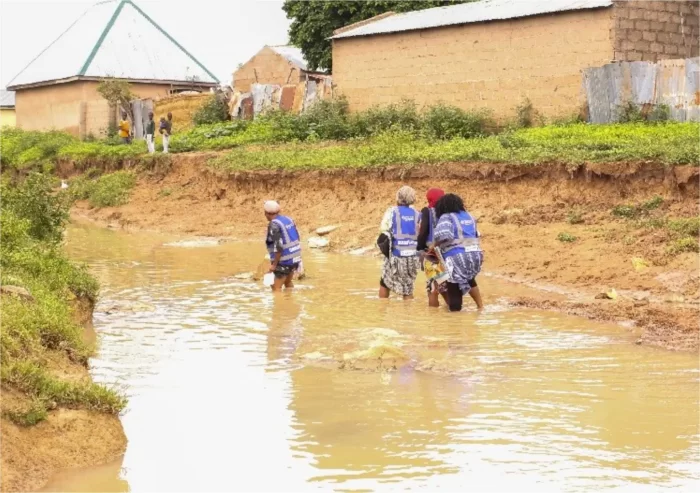
It is sad but true. To date, Africa is presented at various international fora by western governments and its media to the rest of the world as a desolate land filled with deprivation, famine and starvation.
For a protracted period, this picture painting Africa as a poor continent, has received consistent boost in images and imagery of horror. Some of these adorn international news magazine covers. And others are broadcasted and televised as headline news: showing disturbing images of hunger and poverty.
Bob Geldof, the Irish singer-songwriter born Robert Frederick Zenon Geldof, became a global instant icon with his Aid Band Project, when drought and famine hit Ethiopia. That’s how he shot into fame, riding on the surf of misfortune.
That narrative is about to change for the better. And the youth of modern Africa has taken the challenge. One striking difference made recently by the military government in Burkina Faso in the real fight against hunger and poverty, is its commitment and focus in huge investments in agriculture and saving the environment. Savings made from austerity measures in government expenditure have been used to import agricultural machinery and inputs to boost food production and tree growing to green the country.
It is said, he who feeds you control you. For decades, Africa has become the scar on the conscience of Europe through food aid. Sadly, some of these donated or sold food items are either genetically modified organism products, or weevil invested, made unwholesome through long duration of storage in countries of their origin.
The President of the Republic of Ghana recently became the focus of local media attention with his international embarrassment and uproar, when on the sidelines of the Summit on Peace in Ukraine held in Bürgenstock, Switzerland, he made a request to Ukrainian President Volodymer Zelensky for the supply of grains from the war torn country.
The situation in Africa on hunger has always not been so. Prior to the clash of cultures, ancient records show Africa to be self-sufficient in food production. Under colonial rule, Africa exported wide ranging food products, albeit unprocessed and in their raw state.
Today, Africa makes staggering figures in the export of cash crops such as avocado pear, banana, cashew nuts, cassava, cocoa, coffee, groundnuts, mangoes, processed pineapple, and a host of fruits and vegetables.
Significantly, the staple food of most African countries, is bread. Bread is made from wheat, which is imported from Europe and other parts of the world. Bread is baked from a mixture of other imported products such as baking soda, butter/margarine, eggs (until recently), flavours, milk, nutmeg, sugar and yeast.
These acquired foreign taste in sophisticated consumption were bequeathed as a colonial relic, together with other imports which leaves a huge deficit in balance of trade for the continent. Successive generations of Africans remain addicted and dependent on foreign foods and other imports.
The situation is so dire with increasing food imports to most African countries into the future, it appears no possible plan to wean off this dependency, works. These include food items such as cooking or edible oil, pasta/noodles, processed tomatoes (paste) and rice. Largely, protein imports include beef, fish/processed fish, poultry (chicken, ducks/geese, turkey, etc), pork, and more.
In the year 2022, UNDP declared millet as the crop of the year for 2023. Research has established, that millet is not just capable of reversing diabetic cases, but it is preventive. The crop has been cultivated in Africa over 3,000 years.
A drought resistant plant, millet is capable of growing in less fertile land. And this means a lot in modern agriculture with increasing demand for inorganic fertilisers, which don’t come cheap. Also, with climate change due to global warming, erratic and unpredictable rains makes rain-fed agriculture a high risk investment with low returns, and sometimes wiping out the entire savings of several households.
Millet possesses several nutritional values, and rich in minerals. Apart from local dishes, millet is a good substitute to flour in the baking and confectionery industry. Besides, with total quality millet flour, it meets all standards of flour requirements in the preparation of an array of dishes.
Post independent Africa has itself entangled in global economics such that political independence has remained largely ceremonial. Decolonisation of Africa begins with the protection of the environment destroyed by multinational extractive and mining corporations, who flout international safe environment ground rules.
Oil companies flare natural gases into the atmosphere, so as to pave way to pump out raw drilled oil. Mining corporations employ unethical standards in the extraction of minerals, using heavy chemicals such as cyanide and mercury which leaves traces into water bodies and in food chains.
African wood lot is systematically depleted through exports to Europe, especially to countries of former colonial masters. Recently, rosewood and teak from Ghana, providing wood cover and serving as windbreak in the Savanna region to the fast advancing desertification from the sahel region, have been highly sought, hunted and felled for export.
Communities located within heavy extractive activities have seen birth defects and deformities in babies, with some women experiencing changes in menstrual circles.
Some men with erectile dysfunction and low sperm count have joined a list of abnormalities and strange changes affecting the normal life of people before the coming of activities of these extractive corporations.
Due to corruption and weak institutions, statutory regulatory bodies with the requisite state power to prevent such occurrences have proven ineffective and inefficient.
Thus, a strong regime with focus and outlined programmes taking the above into consideration on systematic decolonisation, is the key to the total independence of Ghana, which has been on the trot, since March 6, 1957.
*Shmuel Ja’Mba has extensive scholarly publications that establish him as a leading academic expert in regional geopolitical dynamics and diplomatic relations in Africa. Author of e-monographs on geopolitics, ethnic conflicts, and political philosophy.


























You must be logged in to post a comment Login