
Africa
Food Day As A Reminder To ‘Make Nigerian Farmlands Safe For Farmers’, by Isaac Asabor

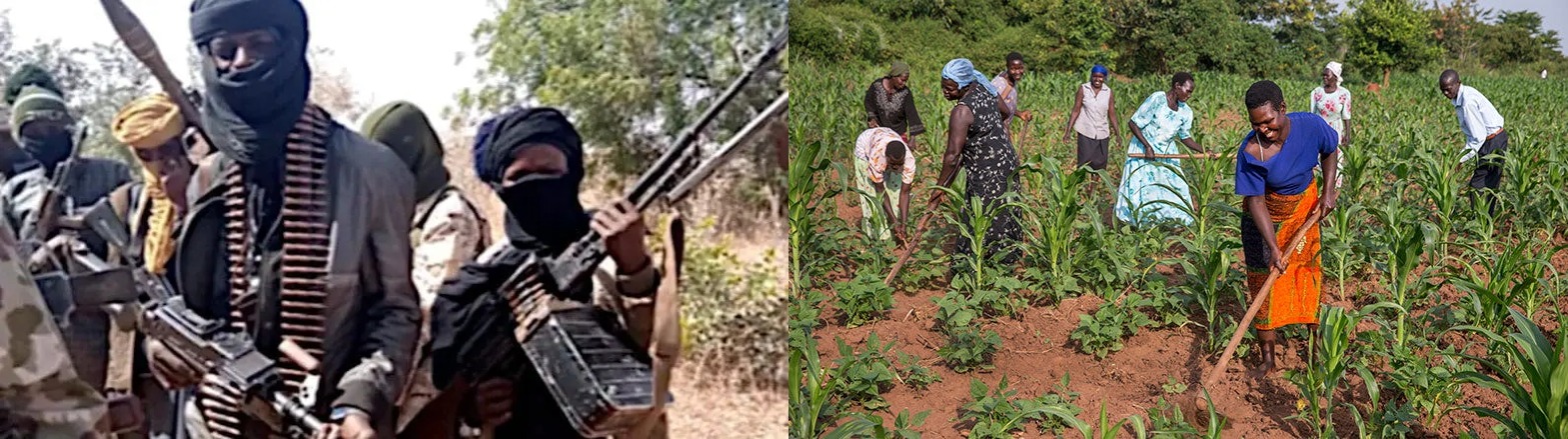
As the world gears up to celebrate World Food Day 2024 on October 16, a day that draws attention to the importance of food security and highlights efforts to eliminate hunger, the challenges faced by Nigerian farmers remain a pressing concern. The theme of this year’s Food Day, “Water is Life, Water is Food, Leave No One Behind”, resonates deeply in Nigeria, where agriculture plays a central role in the nation’s economy, providing employment for over 70% of the rural population. However, despite its vast agricultural potential, Nigeria struggles with food insecurity, exacerbated by one of its most overlooked yet dangerous issues: the safety of farmlands for farmers.
While World Food Day serves as a global platform to raise awareness about food production and distribution, in Nigeria, it must also serve as a reminder that farmers’ safety is crucial to ensuring food availability. The rising insecurity across the country has forced many farmers to abandon their farmlands, leaving vast tracts of fertile land unplanted and contributing to a significant reduction in food supply. Kidnappings, banditry, and herdsmen attacks have turned once-thriving agricultural communities into ghost towns, and if Nigeria’s farmlands are to continue feeding the nation, action must be taken to secure them for those who till the soil.
In the last decade, insecurity in Nigeria has escalated from a localized problem in the northeastern part of the country to a nationwide concern. Farmers, particularly in states like Benue, Kaduna, Zamfara, and Plateau, live under constant fear of being kidnapped, attacked, or killed. Armed bandits, herdsmen, and criminal groups have targeted these communities, robbing them of their means of livelihood and the country of its food security. According to a report by the International Crisis Group, agricultural production has suffered severe setbacks due to these security challenges, with thousands of farmers abandoning their farmlands to seek safety elsewhere.
The once-thriving Benue Valley, known as Nigeria’s “food basket,” has seen a marked decline in agricultural output due to incessant attacks by herdsmen and other militant groups. Farmers in this region have not only lost their crops but also their lives and homes. This insecurity has resulted in the displacement of rural populations, with many families now relying on humanitarian aid instead of producing their own food.
In Nigeria, the safety of farmlands is not merely a rural issue but one that affects the entire nation’s food supply chain. When farmers are too scared to tend to their lands, the ripple effect is felt in urban markets where food prices soar due to scarcity. This has led to a significant increase in the prices of staple foods such as rice, maize, and yam, further deepening the country’s food insecurity crisis.
The agricultural sector in Nigeria is a cornerstone of the economy, contributing about 22% to the nation’s Gross Domestic Product (GDP) and employing millions of Nigerians. Any threat to agriculture, therefore, poses a direct threat to the economic stability of the country. In 2023, the National Bureau of Statistics (NBS) reported a 30% decline in food production in Nigeria due to the worsening security situation. This decline, coupled with inflation, has made food increasingly unaffordable for the average Nigerian.
Farmers who have been forced off their lands often have no alternative sources of income, creating a vicious cycle of poverty and hunger. Moreover, Nigeria’s dependence on food imports has increased as local production declines, putting additional strain on the nation’s foreign reserves. The importation of essential food commodities like rice and wheat has become a temporary solution to the shortfall in domestic production, but it is not sustainable in the long term.
Beyond the economic losses, the human toll of insecurity on farmers is staggering. Many have lost their lives or been maimed in violent attacks. Those who have survived are traumatized, often lacking the motivation or resources to return to farming. The attacks also result in the destruction of infrastructure, including irrigation systems, silos, and farm equipment, further crippling the agricultural sector.
The Nigerian government has made various efforts to address the insecurity facing farmers, including deploying security forces to some of the worst-hit areas. However, these measures have proven largely ineffective in stemming the tide of violence. The problem is complex and requires a multi-faceted approach that addresses not just the immediate security concerns but also the underlying socio-economic issues.
One major factor fueling insecurity in Nigeria’s rural areas is the lack of basic infrastructure. Many farming communities are isolated, lacking access to roads, healthcare, and education. This isolation makes them vulnerable to attacks, as security forces find it difficult to respond quickly to emergencies in these areas. To make farmlands safe for farmers, the government must prioritize the development of rural infrastructure. Building roads that connect remote farming communities to urban centers can facilitate quicker security responses and enable farmers to transport their produce to markets more easily.
Furthermore, conflict resolution mechanisms must be strengthened to address disputes between herdsmen and farmers, which are a major source of violence in many parts of the country. In recent years, competition for land and water between pastoralists and farmers has intensified due to climate change and population growth. The government must invest in sustainable land management practices that accommodate both agricultural and pastoral needs. Programs that promote ranching and controlled grazing can help reduce clashes between these two groups.
In addition to government intervention, technology can play a vital role in making Nigerian farmlands safer for farmers. The use of drones for surveillance in high-risk areas can help security forces monitor farmland and respond to threats in real time. Similarly, early warning systems that use satellite imagery to detect unusual movements or encroachment on farmland can alert farmers and security agencies to potential dangers before they escalate.
Mobile phone applications that allow farmers to report security incidents to local authorities have already shown promise in some parts of the country. These apps provide a platform for farmers to communicate directly with security forces and other farmers, sharing information about potential threats. Expanding the use of these technologies can significantly improve the safety of farmlands.
While ensuring the physical safety of farmers is critical, it is equally important to provide them with the financial and technical support they need to rebuild their lives and livelihoods. Many farmers affected by insecurity have lost everything and need assistance to return to farming. The government, in collaboration with private sector partners, must offer grants and loans to help farmers purchase seeds, equipment, and fertilizers.
In addition, extension services that provide farmers with training on modern farming techniques can help increase productivity and resilience in the face of future challenges. These services should be extended to areas hardest hit by insecurity, where farmers may need additional support to recover from the losses they have incurred.
As World Food Day 2024 approaches, it is a time to reflect on the importance of food security and the critical role that farmers play in feeding the nation. However, in Nigeria, this reflection must go beyond celebrating agricultural achievements and focus on addressing the security challenges that threaten the very foundation of the country’s food system. Farmlands must be made safe for farmers, or the nation will continue to face worsening food insecurity.
The government, security agencies, and all stakeholders must prioritize the safety of Nigerian farmers, ensuring that they can work their lands without fear. As long as farmers are afraid to tend their crops, the dream of a food-secure Nigeria will remain elusive. On this World Food Day, let us be reminded that a nation’s strength lies in its ability to feed its people, and that can only happen when our farmers are safe.


























You must be logged in to post a comment Login