
Africa
From Courtyard To Global Stage: Sociology Of Ojude Oba -By Abdulrofiu Muhammed Temitayo
The shared benefit across groups is cultural preservation, where all participants contribute to and benefit from the preservation of Ijebu traditions and history. With the entertainment and relaxation, it offers a period of joy and festivity for everyone, creating a break from routine and stress as well as intergenerational bonding when it strengthens ties between the older and younger generations through shared cultural practices. The Ojude Oba festival is a multidimensional event that enriches the lives of all participants while boosting the socio-economic and cultural fabric of the region.

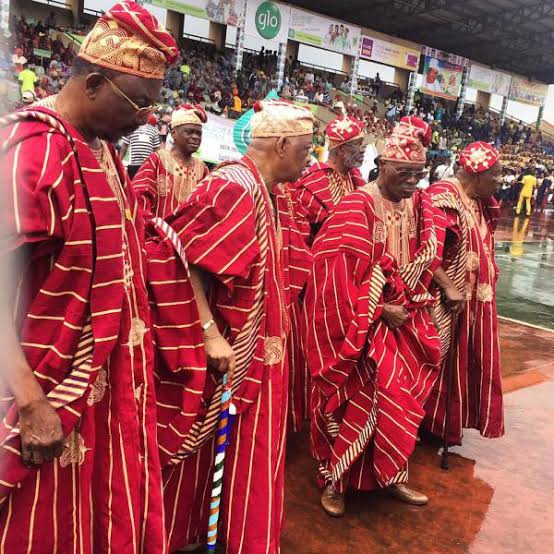
Ojude Oba is an iconic and rich culture-heritage festival celebrated by the Ijebu home and abroad indigenes of Ogun State, Nigeria. The term “Ojude Oba” simply means ‘the king’s courtyard’ in Yoruba, and it is also a colourful convergence of tradition, religion, and modernity. Its origins date back to the late 19th century, during the reign of Oba Adesumbo Tunwase, an Awujale of Ijebuland. The jamboree at the king’s palace was initiated to be a Muslim-centric affair, but it was expanded to integrate participants of other faiths and groups, making it a broader cultural and social engagement rather than a purely religious event. It becomes more intriguing with the inclusion of diverse regberegbe (age-grade groups) in the parades and other performances constituting a hallmark of the festival, showcasing unity and communal pride. Even at the time of the British colonial period, the festival became an opportunity for the Ijebu elite and professionals to reconnect with their roots. It evolved in the post-colonial era into a grand event exhibiting the cultural complexity and enthusiasm of the Ijebu people. It has grown into a major economic and tourism event, attracting dignitaries, visitors, and corporate sponsors, providing to serve as a platform for networking, philanthropy, and the preservation of Ijebu traditions. Ojude Oba remains a vivid expression of Ijebu identity, resilience, and adaptability, embodying the people’s respect for their monarch and love for their heritage.
The transformation of the Ojude Oba Festival from a small, localised gathering to a grand, globally recognised event is the result of cultural evolution, deliberate community efforts, and modern influences. In due time, the festival started to embrace Christians and practitioners of traditional religions; this gestalt harmonised coexistence of different faiths in Ijebuland. It added more groups to join; traditional dances, music, and attire became part of the celebrations, increasing vibrancy and attracting wider interest. The regberegbe (age-grade groups) were momentous in expanding the festival, especially where the groups are integral to Ijebu social structure, and their participation brought organisational strength and increased numbers. The age-grade groups created an avenue to compete in areas like attire, horse-riding displays, and cultural presentations, making the festival more engaging and competitive for the Ijebu indigenes who had migrated to other cities or countries and returned home for the festival, leading to a natural increase in attendance. The exposure to urban and international cultures brings in new elements to the festival, such as modern fashion, music, and entertainment; even social media platforms (through live streaming) played a critical role in publicising the festival to a global audience at large. Also, the involvement of celebrities, musicians, and comedians modernised the festival by attracting younger generations with modern elements, such as music concerts, beauty contests, and cultural expos, which have broadened its appeal.
Islam began to spread in Ijebuland in the early 19th century, and a significant number of Ijebu people embraced the faith. During this period, many Muslim converts desired a special occasion to express gratitude to the Awujale for his support and religious tolerance. It embodied gratitude to the king for an enabling environment where Islam could thrive and for his role in maintaining harmony among different religious groups. The festival began primarily as a platform for the Ijebu Muslim community to pay homage to the Awujale (the king of Ijebu). As time passes, it has evolved to include people of all faiths and backgrounds. It is traditionally held two days after Eid al-Adha (Ileya festival) in the Islamic calendar, making its timing variable in the Gregorian calendar. Different age groups (called regberegbe) and prominent individuals visit the Awujale’s palace to pay their respects. There are elaborate parades featuring traditional attires, dances, and music. Families and groups (mostly of noble lineage) showcase their equestrian skills with decorated horses, and awards are often given for the best-dressed groups, performances, and overall participation. Modern elements like music performances and celebrity appearances complement the traditional festivities. The festival strengthens communal bonds among the Ijebu people and preserves their heritage. It serves as a platform for economic and tourism opportunities, drawing visitors locally and internationally.
The sociology of Ojude Oba analyses the festival through the lens of social structures, cultural practices, collective identity, and societal dynamics. In the form of a cultural phenomenon, it provides insights into how traditions influence social cohesion, hierarchy, and the intersection of religion, culture, and modernisation. As a symbol of social cohesion, it shows community bonding, which Ojude Oba serves as a platform for the Ijebu people to come together and strengthen communal ties. Also, as an intergenerational linkage, the festival bridges the gap between generations by preserving traditional customs and ensuring younger members understand and appreciate their heritage. By way of an expression of identity, the Ijebu cultural identity, which the festival is a key marker of, showcases their unique traditions, attire, and values, where it unites people under a shared sense of belonging and pride. On religious pluralism, it is rooted in Islamic traditions; Ojude Oba has become inclusive of Christians and traditional worshippers, indicating the religious diversity and tolerance of the Ijebu people The age-grade system and social organisation – regberegbe (age groups) – and the participation of regberegbe emphasise the significance of the age-grade system in Ijebu society, which organises individuals into groups based on their ages, with friendly competition among these groups, often in displays of attire, dance, or horse-riding, reinforcing group solidarity and encouraging collective participation.
In place of power and authority, the festival reinforces the centrality of the Awujale (the Ijebu monarch) as a unifying figure and symbol of authority. Paying homage to the king underscores the respect and allegiance the people have toward traditional leadership. And social hierarchies where the occasion mirrors the social stratification within Ijebu society; the nobles, age groups, and commoners interact within a structured system of mutual respect and mechanism for social integration for many Ijebu indigenes in urban areas and abroad return home for the festival, fostering social integration and reconnection with their roots. The inclusivity alongside the evolution of Ojude Oba from a Muslim-centred event to the one involving people of all faiths shows how cultural festivals can be used to integrate diverse social groups in the communities. On the part of preservation of tradition in the midst of modernity, the festival maintains practices such as horse-riding, traditional attire, and drumming, ensuring that these cultural elements are not lost in the face of modernisation. In the same lieu, adaptation to change started with modern elements, such as corporate sponsorship, digital media coverage, and celebrity performances, reflecting how the festival has adapted to contemporary influences while retaining its essence.
Besides the economic and social capital, tourism and the economy in Ojude Oba have become major tourist attractions, contributing to local and regional economic growth. Using social networking where the event provides a platform for Ijebu elites, business people, and politicians to network, thus reinforcing social capital and strengthening collective progress. Through rituals and symbolism, paying homage symbolises respect, unity, and continuity of cultural values, and also cultural displays in the attire, horse-riding, and music symbolise the rich heritage and unique identity of the Ijebu people. As well as functioning in social stability, mainly the conflict resolution which the festival fosters, a sense of shared purpose and pride, reducing conflicts and promoting harmony. At the same time, it legitimises authority, as it reaffirms the cultural and social legitimacy of Awujale as the central figure of Ijebu unity and stability.
Ojude Oba can be analysed through several sociological theories of functionalism, where it serves as a social institution that maintains cultural continuity, reinforces shared values, and integrates various social groups. With symbolic interactionism, the rituals, symbols, and interactions at the festival reflect deeper meanings about identity, tradition, and unity. And conflict theory, in which the festival may also highlight social stratifications and disparities in wealth, power, and influence within Ijebu society. The sociology of Ojude Oba reveals its importance as a mechanism for cultural preservation, social integration, and the reinforcement of communal and monarchical ties. It is a living example of how tradition evolves to accommodate modern influences while remaining rooted in its original purpose.
The Ojude Oba festival brings a range of benefits to various social strata, including the government, wealthy individuals, middle-class professionals, and low-income earners. The benefits to the government comprise tourism revenue, cultural diplomacy, economic growth, community unity, employment opportunities, and promotion of public-private partnerships. Whereas the benefits to the wealthy (elites and nobles) are prestige and recognition, networking opportunities, cultural leadership, and economic returns. The benefits to the middle class are business opportunities, social mobility, cultural engagement, exposure, and marketing. Also, the benefits to the poor are economic opportunities, temporary employment, community solidarity, support from elites, and skill development. The shared benefit across groups is cultural preservation, where all participants contribute to and benefit from the preservation of Ijebu traditions and history. With the entertainment and relaxation, it offers a period of joy and festivity for everyone, creating a break from routine and stress as well as intergenerational bonding when it strengthens ties between the older and younger generations through shared cultural practices. The Ojude Oba festival is a multidimensional event that enriches the lives of all participants while boosting the socio-economic and cultural fabric of the region.
Nigeria, with its rich and diverse cultural heritage, is home to many festivals similar to Ojude Oba. These festivals often celebrate culture, religion, and communal identity while honouring traditional rulers. Some of the comparable events across the country are the Argungu Fishing Festival (Kebbi State), Osun-Osogbo Festival (Osun State), Eyo Festival (Lagos State), Durbar Festival (Northern Nigeria), New Yam Festival (Eastern Nigeria), Igue Festival (Edo State), Ofala Festival (Anambra State), Sharo Festival (Northern Nigeria), Calabar Carnival (Cross River State) and Egungun Festival (Yoruba States). While outside Nigeria, numerous festivals around the world shared the similarities with Ojude Oba in terms of cultural expression, communal bonding, homage to leaders, and the celebration of heritage. Some notable examples are Rio Carnival (Brazil), Durga Puja (India), Inti Raymi (Peru), Naga New Year Festival (Myanmar), Gion Matsuri (Japan), Naadam Festival (Mongolia), Mardi Gras (USA, New Orleans), Fiesta de la Vendimia (Argentina), Carnival of Venice (Italy), and Thaipusam (Malaysia/India/Sri Lanka).
Temitayo writes from Benin city, Edo State and can be reached on muhtay99@gmail.com
























You must be logged in to post a comment Login