
Africa
Guinea-Bissau’s PlayBook: Sustainable Development and Accountable Leadership -By Kestér Kenn Klomegâh
At least, in line with its mandate, its necessary to empower the working force, while showing readiness working in close coordination with ECOWAS and other key international partners, to support internal stability and solidarity with the people of Guinea-Bissau during this critical period.

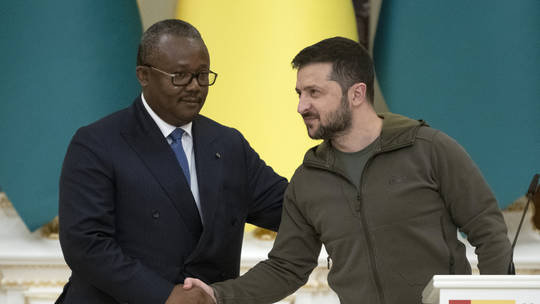
The sudden unconstitutional change of government in the Portuguese-speaking Guinea-Bissau, in late November 2025, was condemned in an uncertain terms, by the African Union and Regional Economic blocs, the West African Elders Forum as well as individual heads of state across Africa. The military removed Umaro Sissoco Embaló, who was elected president in 2019. He became the first president to be elected without the backing of the African Party for the Independence of Guinea and Cape Verde (PAIGC), and ultimately took office in February 2020.
The arguments were based on the fact that the military take over of power was not in accordance of normative instruments, including the Constitutive Act of the African Union (2000), the Lomé Declaration on Unconstitutional Changes of Government (2000), the African Charter on Democracy, Elections and Governance (2007), and the Ezulwini Framework (2009).
What happened in Guinea-Bissau underlines how fragile political systems remain in majority of African countries, and how quickly authority can be contested in environments where trust in government is thin. Whether executed by the military or engineered through constitutional manipulation, coups—of any form—signal the same root failure: leadership that loses legitimacy by failing to govern effectively, for decades some experts believe in such trends.
Political Differences
Throughout his administration, opposition figures have seriously criticized Umaro Embaló’s rule as increasingly authoritarian, dissolved parliaments which were dominated by the opposition twice during his presidency; one in 2022, and another in 2023. In May 2022, Umaro Embaló dissolved Guinea-Bissau’s parliament, citing “persistent and unresolvable differences” with parliament. For the second time, in December 2023, Umaro Embaló dissolved parliament, citing allegations of an attempted coup d’état.
Following an another coup attempt in which the opposition criticized Umaro Embaló for attempting to carry a constitutional coup and consolidate power, just before the November elections. At the same time, disputes arose over his term, as opposition groups said his term expired on 27 February 2025. He had continued to hold the presidency following the legal expiry of his term. Earlier, Umaro Embaló announced that he would not seek a second term in the upcoming presidential elections scheduled for November 2025. As a Bissau-Guinean politician and former military officer who served as the sixth president of Guinea-Bissau from 2020 until he was deposed in a coup d’état in 2025. Currently, he conveniently sought political exile in Dakar, Senegal.
Economic Weaknesses
Guinea-Bissau’s population was 2.1 million in 2023. With its arable land and water surfaces, agriculture is the backbone of the country. The economy depends mainly on agriculture; fish, cashew nuts, and ground nuts are its major exports. Guinea-Bissau under Umaro Embaló, substantial part of the economic and social infrastructure are in ruins, with rising youth unemployment and widespread poverty. An estimated 80% of the population lives in abject poverty.
After several years of economic downturn, Guinea-Bissau has started to show some economic advances with a packages of an IMF-backed structural reform program backed by investible loans. But, during the past few years, Umaro Embaló shifted its policy, with hopes of securing economic support from China and Russia, as he forged unwavering solidarity and friendship within the context of multipolar world.
Guinea-Bissau has experienced numerous coups and coup attempts since gaining independence from Portugal in 1974. Uganda-based Security Analyst, Freddie David Egesa, attributes Umaro Embaló’s overthrow to ‘perennial weaknesses in institutions’ as well as partisan politics and insensitivity towards development. It is, however, expected that the military may be able to consolidate power over the next year by appointing favorable members to strategic positions such as the defense, foreign, and finance ministries.
Future Pathway
As Guinea-Bissau under the new constituted governance structure enters 2026, the country would still be burdened by contradictions of of combining state administration with economic development. The main concern to exercise the utmost restraint in order to prevent any further deterioration of the situation.
It is imperative to underline that, while the African Union and ECOWAS insist on respecting and upholding a constitutional order, the new government has to prioritize multilateral policy, indiscriminately search for foreign investors to mechanize agriculture to ensure food security, further focus on basic industrializing the economy and create, to some degree, employment for the youth.
At least, in line with its mandate, its necessary to empower the working force, while showing readiness working in close coordination with ECOWAS and other key international partners, to support internal stability and solidarity with the people of Guinea-Bissau during this critical period.
Nonetheless, the country holds young vibrant population, and untapped natural resources which are critical for undertaking systematic development, for improving living standards. Yet decades after its independence, and like many other African countries, the gap between potential and reality still remains wide. While reshaping the local politics and national economics, there are complex challenges to take cognizance of and address in totality. Analysis indicates that, in addition to above, the best pathway under present circumstances could be strengthening both regional and international partnerships for economic recovery in Guinea-Bissau.

Continue Reading
















You must be logged in to post a comment Login