
Africa
Inflation In Nigeria: Will Relief Ever Come? -By Isaac Asabor
It will come when the government finally treats inflation not just as a statistical figure, but as a real and present danger to the quality of life of its citizens. It will come when citizens are no longer forced to choose between food and dignity.

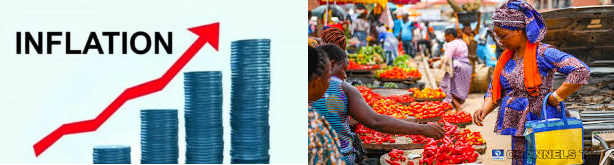
Inflation is often described as a silent thief, it does make headlines with a bang, but it steadily robs citizens of their purchasing power. In Nigeria, this economic scourge has become a near-permanent fixture, tightening its grip on households, businesses, and the broader economy.
As of March 2025, Nigeria’s inflation rate soared to 24.23%, a troubling rise from the 23.18% recorded in February. This persistent upward trajectory not only underscores the structural weaknesses in the country’s economic architecture but also raises a fundamental question that echoes from boardrooms to market stalls: Will relief ever come?
Without a doubt, Nigeria’s inflation crisis is not a coincidence. It is the outcome of a complex blend of domestic inefficiencies and global economic headwinds. A major culprit is the country’s dependence on imports, from petroleum products to basic food items. As the naira continues its free fall against the dollar and other major currencies, the cost of importing goods has ballooned.
The removal of fuel subsidies, while touted as a long-overdue reform, has exacerbated the inflationary trend. Similarly, the Central Bank of Nigeria’s (CBN) adoption of a floating exchange rate has further destabilized prices, pushing the cost of goods and services beyond the reach of average Nigerians.
Perhaps the most alarming trend is the spike in food inflation, which stood at 21.79% in March 2025. In a country where a large portion of the population spends over 60% of its income on food, this is a death sentence to the aspirations of many. The prices of staples such as rice, garri, beans, yam, and tomatoes have surged dramatically, eroding food security and exacerbating hunger.
Inflation in Nigeria is no longer an abstract economic indicator confined to economic reports; it is now a daily reality that dictates how millions of Nigerians live. Families are forced to make painful choices: food or medicine, rent or school fees. The middle class, once the emblem of Nigeria’s rising aspirations, is fast disappearing as more people slide into multi-dimensional poverty.
Meanwhile, Small and Medium Enterprises (SMEs), the lifeblood of Nigeria’s economy, are struggling to stay afloat. Rising input costs, inconsistent power supply, and poor infrastructure have increased operational costs, leaving many businesses teetering on the brink. Layoffs and closures are becoming more common, feeding into a vicious cycle of unemployment and reduced consumer spending.
The Nigerian government and the Central Bank have not been idle in the face of these challenges. The CBN has raised the monetary policy rate multiple times in a bid to rein in inflation, and fiscal authorities have implemented targeted interventions. However, these measures have mostly served as band-aids rather than cures.
The truth is, Nigeria’s inflation is structural, not just cyclical. The country’s economic model, heavily dependent on oil revenues and import consumption, is unsustainable. Despite Nigeria’s status as Africa’s largest oil producer, the lack of significant investment in sectors such as agriculture,
manufacturing, and technology has left the economy exposed to global oil price volatility and external shocks.
While the road ahead is undeniably rough, the situation is not without hope, if the right steps are taken.
True and lasting relief from inflation will require bold economic diversification. Agriculture, in particular, holds immense potential not only to reduce food imports but also to generate employment, boost exports, and ensure food security. Encouraging mechanized farming, improving access to credit for farmers, and investing in agro-processing industries are key strategies.
In fact, inflation is partly driven by the high cost of logistics and power. Therefore, investing in roads, railways, seaports, and power infrastructure will reduce production and distribution costs. This, in turn, will make locally produced goods more competitive, discourage overreliance on imports, and help stabilize prices.
Without a doubt, economic policies must be people-centered. Expanding and properly targeting social protection programs, such as food assistance, conditional cash transfers, and subsidized healthcare, can shield the most vulnerable from the worst effects of inflation. These interventions must be transparent and corruption-free to achieve maximum impact.
A significant contributor to inflation is policy flip-flopping and poor coordination between fiscal and monetary authorities. Nigeria needs coherent and consistent policies that create a stable environment for investment and economic planning. Confidence, both domestic and foreign, will not return until policy signals are clear and predictable.
The question remains: Will relief ever come? The honest answer is that relief will not come through empty promises, patchwork policies, or political gimmicks. It will come when there is a genuine alignment of will and action across all levels of leadership, from the executive to the legislature, from technocrats to civil society.
It will come when the government finally treats inflation not just as a statistical figure, but as a real and present danger to the quality of life of its citizens. It will come when citizens are no longer forced to choose between food and dignity.
Until then, Nigerians must continue to endure. But they also continue to hope, hope that those in power will rise to the challenge and that Nigeria will someday overcome the grip of this economic malaise.


























You must be logged in to post a comment Login