
Africa
Is Democracy An Illusion As State of Emergency Declarations Are Dragging Nigeria Back In Its Democratic Journey? -By Isaac Asabor
Another strategy is addressing the root causes of crises. Whether it is insurgency, ethnic clashes, or political instability, the focus should be on addressing the root causes rather than imposing emergency rule. Investments in education, economic empowerment, and social justice are more sustainable solutions.


Since Nigeria’s return to democratic rule in 1999, the country has been bedeviled by a recurring phenomenon that contradicts the very essence of democracy, the declaration of a state of emergency. While such measures are typically reserved for dire national crises, in Nigeria, they have become a political tool that undermines democratic principles, weakens institutions, and further erodes the fragile trust citizens have in governance. Rather than serving as a stabilizing mechanism, the imposition of a state of emergency has repeatedly proven to be a retrogressive development that blights Nigeria’s democratic trajectory.
A dispassionate recall of Nigeria’s troubled past reveals instances of state of emergency since 1999. The Nigerian Constitution, under Section 305, grants the President the power to declare a state of emergency in situations where national security or public safety is threatened. However, the implementation of this provision has been marred by controversy, political expediency, and overreach.
Some notable instances include that of Plateau State in 2004 under the administration of then-President Olusegun Obasanjo, who declared a state of emergency in the state following violent ethno-religious clashes. Governor Joshua Dariye was suspended, and an unelected administrator was installed to oversee governance. The move was widely criticized as excessive and undemocratic, as it ignored other viable conflict resolution mechanisms and subverted the will of the electorate.
Similarly, in October 2006, President Obasanjo declared a state of emergency in Ekiti State amid political turmoil and an impeachment crisis involving then-Governor Ayo Fayose. Instead of resolving the political crisis through democratic dialogue and legal means, the federal government opted for an authoritarian approach by suspending the state government and appointing a retired military officer to oversee affairs.
Also, the administration of President Goodluck Jonathan declared a state of emergency across Adamawa, Borno, and Yobe States in May 2013 in response to the escalating Boko Haram insurgency. While security concerns justified extraordinary measures, the move did little to curb the insurgency, raising questions about the effectiveness of emergency rule. Instead, it facilitated human rights abuses by security forces and further alienated local populations. In 2014, Governor Murtala Nyako was controversially impeached, leading to a renewed state of emergency in Adamawa, which was widely seen as a political maneuver rather than a genuine attempt to restore security and stability.
Now, under the administration of President Bola Ahmed Tinubu, the specter of emergency rule is once again haunting Nigeria’s democracy, with the recent declaration of a state of emergency in Rivers State. The political crisis in the state, marked by the intense rift between Governor Siminalayi Fubara and his predecessor, now Minister of the Federal Capital Territory, Nyesom Wike, has led to a situation where democratic institutions are at risk of being overridden. Instead of allowing the state’s political actors to resolve their differences through democratic means, the federal government’s intervention raises concerns that emergency rule is being used as a political weapon rather than a genuine effort to stabilize governance.
While the rationale behind a state of emergency may be national security or political stability, its execution in Nigeria has often proven counterproductive.
Key reasons why this measure has been a drawback to Nigeria’s democratic journey include the weakening of democratic institutions, suppression of civil liberties, politicization of emergency declarations, failure to address root causes of conflict, and emboldening authoritarian tendencies.
Every time an emergency is declared, duly elected officials are sidelined or suspended, and their constitutional duties usurped by federally appointed administrators. This undermines the principles of democratic governance and erodes confidence in electoral processes. Citizens begin to see democracy as an illusion where their votes do not truly matter.
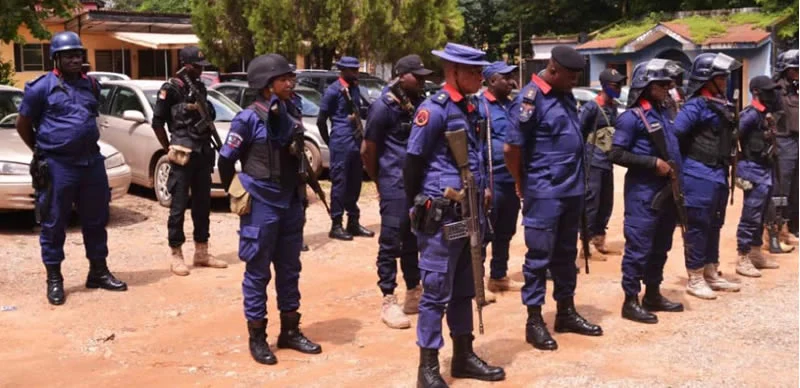
Under emergency rule, civil liberties such as freedom of speech, movement, and assembly are often curtailed. Security agencies are given excessive powers, leading to arbitrary arrests, detentions, and even extrajudicial killings. This contradicts the democratic values Nigeria professes to uphold.
In some cases, states of emergency have been declared not necessarily for security reasons but for political advantage. The cases of Ekiti, Adamawa, and now Rivers State illustrate how emergency powers were wielded to destabilize political opponents rather than addressing governance issues. Such actions set dangerous precedents and deepen distrust in government.
Declaring a state of emergency is often a superficial response to deep-seated issues. For example, in the northeast, the Boko Haram insurgency thrived even under emergency rule. This is because the underlying factors, such as poverty, poor governance, and lack of development, were never truly addressed. Instead, emergency rule often results in militarization without meaningful socio-economic interventions.
Frequent recourse to emergency rule creates an environment where authoritarian tendencies flourish. Leaders who become accustomed to suspending democratic structures may develop an appetite for bypassing constitutional governance altogether. This is evident in how successive Nigerian leaders have used emergency powers without making long-term democratic reforms.
Be that as it may, there is an urgent need for a new course to be charted on the one hand and, on the other hand, to eschew retrogressive development. If Nigeria truly aspires to be a leading democracy in Africa, it must rethink the use of state of emergency as a governance tool. Instead of relying on emergency rule, the government should adopt alternative strategies to address security and political crises.
Some of the alternative strategies to adopt include strengthening democratic institutions. Rather than sidelining elected officials, governments should empower democratic institutions to resolve conflicts. The judiciary, electoral bodies, and security agencies must operate independently and with integrity.
Another strategy is addressing the root causes of crises. Whether it is insurgency, ethnic clashes, or political instability, the focus should be on addressing the root causes rather than imposing emergency rule. Investments in education, economic empowerment, and social justice are more sustainable solutions.
Additionally, security sector accountability should be enhanced. Security forces must be trained to operate within democratic norms, and emergency measures should not provide a cover for human rights abuses. Nigeria needs reforms that ensure security operatives respect the rule of law, even in conflict situations.
Political maturity and conflict resolution mechanisms are also key. Political crises should be resolved through dialogue, negotiations, and legal frameworks rather than emergency declarations. Nigeria’s democracy must mature beyond using force to settle disputes.
Without a doubt, preserving democracy beyond emergency rule is expedient. Nigeria’s democracy has come a long way since 1999, but the frequent invocation of a state of emergency has tarnished its credibility. If democracy is to thrive, Nigeria must move beyond reactionary governance and adopt forward-thinking policies that strengthen democratic institutions rather than weaken them. The government must recognize that a state of emergency is not a sustainable solution; it is a band-aid approach that often exacerbates the problems it seeks to address. A commitment to true democracy requires eschewing emergency declarations and embracing long-term solutions that foster national stability, unity, and progress.
Given the foregoing, it is germane to ask, is democracy an Illusion as state of emergency declarations are dragging Nigeria back in its democratic journey?























You must be logged in to post a comment Login