
Africa
Mr. President, Don’t Let the Cry from Rivers Eclipse Your Legacy -By John Egbeazien Oshodi
Because the people have tried. They’ve voted. They’ve protested. They’ve petitioned. And now, when nothing moves, they turn to God. To the ancestors. To the spiritual foundations that predate colonizers and constitutions. These prayers, rising from Rivers State and beyond, are not religious extremism. They are the collective cry of a population whose psychological boundaries have been broken by betrayal.

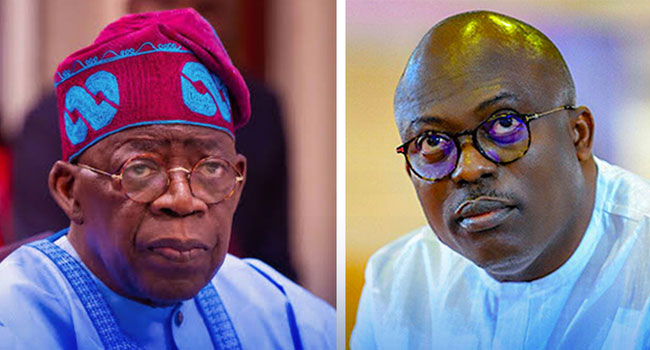
There are moments in a nation’s history when silence does more damage than speech. When a single phrase, uttered carelessly or with quiet calculation, reveals the power dynamics that shape a country more honestly than any official address. In Nigeria today, that moment has arrived.
When a prominent figure in the federal government publicly implied that the President is not the sole architect of national power—that the elected Commander-in-Chief is, in essence, politically subordinate—the country paused. It was not simply a political gaffe. It was a psychological unveiling. And when there was no public rebuttal from Aso Rock, no clarification from Tinubu’s spokespeople, no immediate disavowal from the ruling party, the pause turned to a question. And the question turned into a cry: Who is truly in charge?
The psychological implications of this moment are enormous. The presidency, long understood to be the final authority in national affairs, suddenly felt empty. Overshadowed. Eclipsed—not by an election, but by implication. Power, in its truest form, is not always declared. It is perceived. And what Nigerians perceived in that silence was the fragility of elected authority when placed side-by-side with unfiltered political dominance.
The comment in question was made while President Bola Tinubu was in France. The timing was not accidental—it was symbolic. In the President’s absence, another voice assumed presence. And it wasn’t a whisper. It was a proclamation. As if to say: “While he is away, I remain.” This was not about logistics. This was about control. And when the President returned, he stepped into a country not only watching—but spiritually alert. He did not return to fanfare. He returned to protests. To mourning women wrapped in black. To chants in spiritual spaces. To tears, yes—but also to resistance.
This is no longer political commentary—it is a psychological and spiritual trial. Tinubu, trained in American civic traditions, understands political optics. He understands the deep resonance of silence after provocation. And yet, his prolonged silence has created a leadership vacuum. In Nigeria, silence from power is never empty—it is a signal. And right now, that signal says: the imbalance is real.
Perhaps on that return flight from Europe, the President had a moment of private clarity. A realization that the machinery that once helped him may now be overtaking him. That a friend in politics can become a force. That proximity to power can mutate into dominance. Maybe he thought: “Yes, I needed your strength during the elections. But now, your shadow has become my ceiling.” That moment of realization is the first step toward reclaiming control—not from a man, but from the narrative that now defines the presidency as a secondary seat.
And that narrative is not forming in isolation. It is being reinforced by institutions meant to safeguard democracy. The most alarming display of this came during the press conference where the remark was made. A room filled with journalists—watchdogs of public accountability—sat in silence. Smiling. Nodding. Not one challenged the claim. Not one pushed back. The fourth estate became a footstool. Not journalism, but servitude.
This was a missed opportunity for national correction. A moment when the media could have said: “No. The people deserve clarity.” Instead, they handed the microphone to hubris and took notes in compliance. This is not a minor failure—it is a collapse of civic duty. And it’s one of the reasons the people no longer cry to press rooms or legislative halls. They cry to the heavens.
Because the people have tried. They’ve voted. They’ve protested. They’ve petitioned. And now, when nothing moves, they turn to God. To the ancestors. To the spiritual foundations that predate colonizers and constitutions. These prayers, rising from Rivers State and beyond, are not religious extremism. They are the collective cry of a population whose psychological boundaries have been broken by betrayal.
When a public servant begins to be perceived not merely as influential, but as untouchable, the people lose more than trust—they lose belief. The idea that the system can still correct itself begins to die. And when people stop believing in democracy, they turn to older truths. Spiritual truths. Cultural justice. Divine intervention.
That’s where we are.
It’s why you hear women calling on Amadioha, Ani, Egbesu, and Ogun.
It’s why communities invoke ancestors to speak where courts have gone silent.
It’s why chants echo across Rivers, across markets, across churches, across ancestral shrines.
It’s why international observers must pay attention—not just to elections, but to the signs of institutional fracture manifesting in spiritual resistance.
For many, Wike is no longer seen as merely a minister. He is perceived—fairly or not—as a man who commands the levers of justice, finance, security, and narrative. One man. Multiple arms. No resistance. And the people are asking, trembling: Is this a government or a kingdom?
President Tinubu must now rise, not just as a politician, but as a steward of psychological balance and constitutional clarity. The Presidency cannot be a shared illusion. It must be a seat of accountability. Of leadership. Of assured autonomy.
He must speak—not to defend himself from slander, but to restore belief in the institution he leads.
He must separate loyalty from dependency.
He must restore Governor Fubara, whose struggle now represents more than a state crisis—it has become a metaphor for stolen mandate, for public humiliation, and for the erasure of dignity.
This is Tinubu’s moment—not to retaliate, but to reestablish.
Because if the Presidency remains silent, if it allows its image to remain eclipsed, the people will stop looking to it entirely.
And once that happens—once the citizens of a republic stop believing in the President—the nation becomes ungovernable.
To the world, the signs are clear.
To those who have ears to hear, the cries are loud.
And to every institution built on paper but not on principle—be warned.
The next wave of cries may not be calm.
They may not come with ballots.
They may not be broadcast.
They may come in ways no one can predict.
Because the people of Nigeria are not just demanding political clarity.
They are crying out for deliverance.
President Tinubu, I say—call him back. Restore Governor Siminalayi Fubara.
This is no longer a matter of political negotiation.
This is now a choice between the will of the people and the will of one man.
Between a republic and a sect of personality.
Between constitutional order and political captivity.
Your silence has given space to chaos.
Your return must now bring correction.
Because the longer Wike stands unchallenged, the deeper Nigeria descends into democratic mockery.
You do not owe the nation explanations. You owe it action.
Call him back, Mr. President. The people have chosen. Now choose them back.
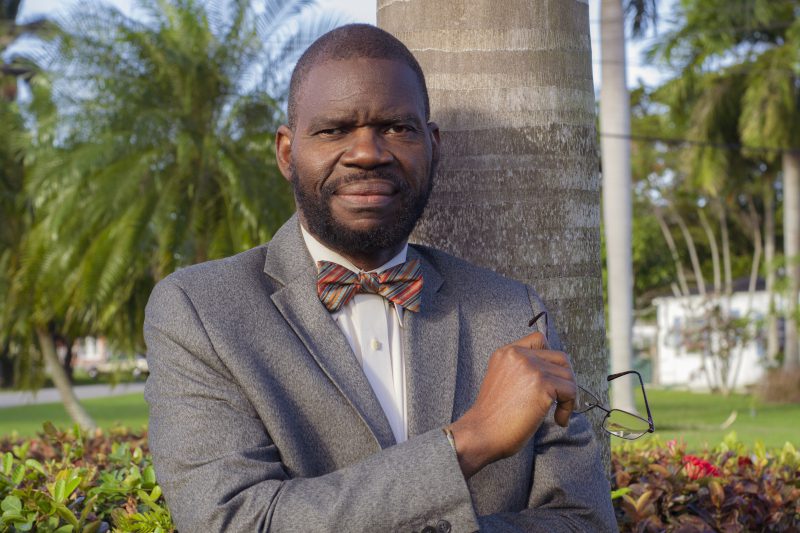
This writer does not know any of the individuals involved; the focus is solely on upholding democracy, truth, and justice.
Oshodi Open Door Public Training (OOPDT), also known as Oshodi Open Door, is a public awareness initiative dedicated to promoting transparency, accountability, and integrity in Africa. Through educational articles and resources, OOPDT fosters informed discourse on governance, institutional reform, and psychological well-being. It also provides specialized Timely Response Solutions (TRS) training at minimal or no cost, ensuring swift and effective interventions for critical institutional and societal challenges. For more information, contact: jos5930458@aol.com.
Professor John Egbeazien Oshodi is an American psychologist, educator, and author specializing in forensic, legal, and clinical psychology, cross-cultural psychology, police and prison sciences, and community justice. Born in Uromi, Edo State, Nigeria, he is the son of a 37-year veteran of the Nigeria Police Force—an experience that shaped his enduring commitment to justice, security, and psychological reform.
A pioneer in the field, he introduced state-of-the-art forensic psychology to Nigeria in 2011 through the National Universities Commission and Nasarawa State University, where he served as Associate Professor in the Department of Psychology. His contributions extend beyond academia through the Oshodi Foundation and the Center for Psychological and Forensic Services, advancing mental health, behavioral reform, and institutional transformation.
Professor Oshodi has held faculty positions at Florida Memorial University, Florida International University, Broward College, where he also served as Assistant Professor and Interim Associate Dean, Nova Southeastern University, and Lynn University. He is currently a contributing faculty member at Walden University and a virtual professor with Weldios University and ISCOM University.
In the United States, he serves as a government consultant in forensic-clinical psychology, offering expertise in mental health, behavioral analysis, and institutional evaluation. He is also the founder of Psychoafricalysis, a theoretical framework that integrates African sociocultural dynamics into modern psychology.
A proud Black Republican, Professor Oshodi advocates for individual empowerment, ethical leadership, and institutional integrity. His work focuses on promoting functional governance and sustainable development across Africa.

























You must be logged in to post a comment Login