
Africa
Mr. President, If Police Officer Baba Ali Had Been Held Accountable and Removed from Service, He Would Still Be Alive Today -By John Egbeazien Oshodi
President Bola Tinubu must address this directly. Not with vague words or half-hearted promises, but with action. The deaths of both Abdullahi Musa and Baba Ali are linked by a common failure: the refusal of the Nigerian state to take accountability seriously. Mr. President, if you truly believe in law and order, then show it. Order a full review of all police officers who have been subject to adverse court judgments. Make police accountability retroactive. Fund psychological screening for officers. Demand disciplinary transparency from the Police Service Commission. And make it clear to every security agency that court rulings are not suggestions—they are commands. If you do not act now, then this tragedy will repeat again and again—until the streets, not the courts, become Nigeria’s primary place of judgment.

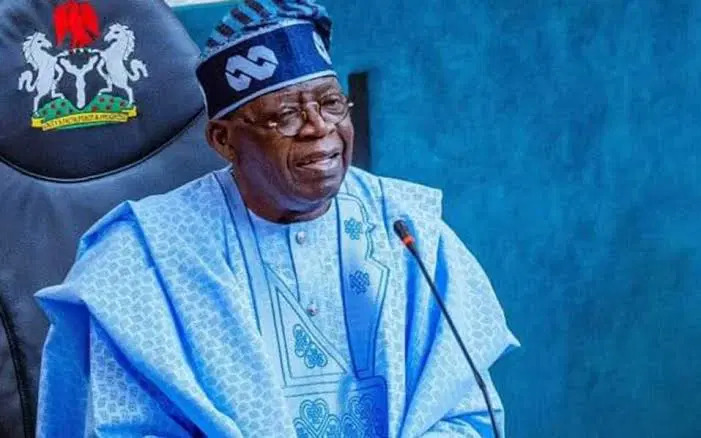
According to Sahara Reporters in a May 28, 2025 article titled “Kano DPO Killed By Angry Youths Over Suspect’s Death Had Previously Tortured Two Friends To Death In Bauchi, Left Another Badly Injured,” on May 26, 2025, the Rano Divisional Police Headquarters in Kano State was engulfed in chaos and violence. An enraged crowd of youths stormed the station following the death in custody of a suspect, Abdullahi Musa. The police claimed the suspect fell ill in custody and died at the hospital, but local residents alleged torture and abuse. In the fury that followed, the station was set on fire, vehicles were destroyed, and Divisional Police Officer (DPO) Baba Ali was dragged, beaten, and ultimately killed. His death is tragic. But the deeper tragedy lies in the fact that his presence in that position—still serving as a commanding officer—was never supposed to happen. Baba Ali was not a man without a past. He carried with him a record soaked in violence, condemned by courts, but forgiven by a police system addicted to impunity.
A History of Torture the Nation Chose to Ignore
Baba Ali’s name was already etched in the public record of extrajudicial police violence in Nigeria. In July 2020, while serving as DPO in Bauchi Township, he and his team arrested three young men—Abdulwahab Bello, Ibrahim Babangida, and Ibrahim Samaila—over an accusation of chicken theft. What followed was a chilling act of state-sponsored brutality. The suspects were tied to a tree behind the police station and beaten with a pestle across their legs, arms, chests, and ankles. Two of them—Babangida and Samaila—died from the injuries. The third, Bello, barely survived but was left physically and psychologically scarred. This wasn’t rumor. It was proven in a court of law. In March 2021, the Federal High Court in Bauchi awarded ₦210 million in damages against Baba Ali, the Inspector General of Police, the Bauchi State Commissioner of Police, and others. Justice Hassan Dikko described the act as “callous, cruel, and uncivilized.” The Court of Appeal upheld the ruling in 2023. The record is there. The judgment is public. The legal truth was established. Yet, Baba Ali was not dismissed. He was not prosecuted. He was transferred. Recycled. Reinforced by the same system that should have held him accountable.
Viral Footage and the Morality of Memory
Now, with the nation still reeling from his death, a disturbing video has surfaced online. It shows Baba Ali being lynched by a mob in Rano. The footage is raw and horrifying—a man in uniform, begging, struggling, and eventually falling under the weight of an enraged crowd. It is an image no society should ever grow numb to, and no human being—regardless of their past—should suffer such a fate. Let it be said clearly: no one wishes death upon anyone. Baba Ali was a man, not just a uniform, and whatever judgment history or the courts may have rendered about his actions, his death is still a tragic event. Our hearts go out to his family, who are now forced to grieve under the shadow of public fury and private loss.
But this moment must also be viewed for what it reveals. In Nigeria, this footage is more than just a viral clip—it is a visual echo of a long-suppressed truth: when justice is repeatedly denied, violence returns—not as law, but as vengeance. This is not merely the fall of one officer. It is the fall of public trust in the very institutions meant to protect. The tragedy captured on video is the product of years of ignored court rulings, unsanctioned officers, and a justice system that too often chooses silence over consequence. The people did not just see Baba Ali as an individual. In their eyes, he represented a system—one that seemed untouchable, unaccountable, and unreachable. That is what makes this footage not just a disturbing record, but a national indictment. It is not a moment to be consumed and forgotten. It is a warning. One that, if unheeded, will return again—and again.
Psychological Breakdown Within the Force and the Public
This is more than a failure of policy—it is a full-blown psychological collapse. Officers like Baba Ali, who have participated in extreme violence, are never subjected to mental health evaluations. There is no psychological rehabilitation, no ethical retraining, and no public accountability. The result is that officers return to duty more hardened, more detached, and more dangerous. Meanwhile, the public—especially young Nigerians—live in a climate of fear, humiliation, and chronic exposure to police abuse. When such a DPO is posted to a community already on edge, already grieving its own internal wounds, the spark of violence needs only the smallest flame. Rano was that spark. The Nigerian public is not just angry—they are traumatized. And the Nigerian police are not just failing—they are also broken from within.
The System That Recycled Baba Ali
Let us not be mistaken: Baba Ali should never have been posted to Rano or anywhere else. After the 2020 killings, he should have been permanently removed from duty. The Police Service Commission, whose mandate includes disciplinary oversight, failed to enforce the court ruling. The Inspector General of Police allowed a convicted officer to retain power. The Ministry of Police Affairs, and even the presidency, showed no active concern. This is how Nigeria operates: the law speaks, but the system whispers. The court ruled. The families mourned. But Baba Ali carried on in uniform, holding authority, armed not just with weapons, but with the confidence that he was above consequences. That confidence is a toxin in the bloodstream of law enforcement in Nigeria.
The Predictable Excuses of Leadership
And now, we are seeing the usual pattern unfold. Police officials are saying the matter is “under investigation.” Reports of “on-the-spot assessments” are circulating. The Commissioner of Police has visited the burned station. Statements of condemnation are being drafted. But we all know what comes next. No one will resign. No one will be prosecuted for institutional negligence. The government will deflect. They will say they didn’t know about Baba Ali’s past. They will speak in soft bureaucratic tones while another officer with a violent record takes command somewhere else. This is the national script. A cycle of deferral, distraction, and denial that Nigerians have watched repeat itself for decades. It is no longer a response. It is a ritual. But this time, it cannot be allowed to pass without fundamental change.
Mr. President—This Is Your Moment to Break the Pattern
President Bola Tinubu must address this directly. Not with vague words or half-hearted promises, but with action. The deaths of both Abdullahi Musa and Baba Ali are linked by a common failure: the refusal of the Nigerian state to take accountability seriously. Mr. President, if you truly believe in law and order, then show it. Order a full review of all police officers who have been subject to adverse court judgments. Make police accountability retroactive. Fund psychological screening for officers. Demand disciplinary transparency from the Police Service Commission. And make it clear to every security agency that court rulings are not suggestions—they are commands. If you do not act now, then this tragedy will repeat again and again—until the streets, not the courts, become Nigeria’s primary place of judgment.
Final Reflection: The Death That Should Never Have Happened
What happened in Rano was not justice. It was not law. It was desperation turned to violence. But what makes it unforgivable is the fact that it was entirely preventable. Baba Ali’s name should never have appeared on a police roster again after 2020. But he was returned to duty, and now he is dead. Another young man—Abdullahi Musa—is also dead. The police station lies in ashes. Twenty-seven people have been arrested. And the public, once again, is left traumatized and voiceless. This is not sustainable. This is not governance. This is not protection. This is failure. And this time, the blood lies not only on the hands of the mob—but on every desk that signed Baba Ali back into power. Nigeria must remember: when the state forgets justice, the people remember pain. And if this cycle is not broken now, it may one day consume everything—including the very idea of a nation governed by law.
This writer does not know any of the individuals involved; the focus is solely on upholding democracy, truth, and justice.
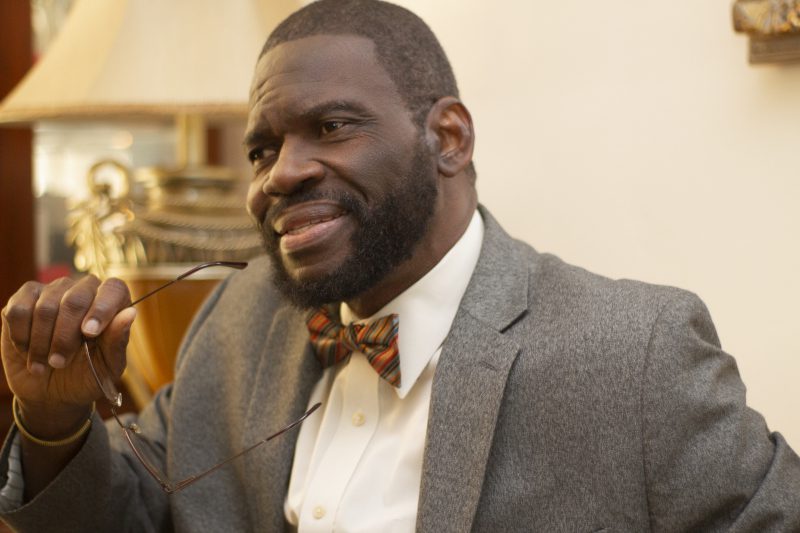
Psychologist John Egbeazien Oshodi
Professor John Egbeazien Oshodi is an American psychologist, educator, and author specializing in forensic, legal, and clinical psychology, cross-cultural psychology, police and prison sciences, and community justice. Born in Uromi, Edo State, Nigeria, he is the son of a 37-year veteran of the Nigeria Police Force—an experience that shaped his enduring commitment to justice, security, and psychological reform.
A pioneer in the field, he introduced state-of-the-art forensic psychology to Nigeria in 2011 through the National Universities Commission and Nasarawa State University, where he served as Associate Professor in the Department of Psychology. His contributions extend beyond academia through the Oshodi Foundation and the Center for Psychological and Forensic Services, advancing mental health, behavioral reform, and institutional transformation.
Professor Oshodi has held faculty positions at Florida Memorial University, Florida International University, Broward College, where he also served as Assistant Professor and Interim Associate Dean, Nova Southeastern University, and Lynn University. He is currently a contributing faculty member at Walden University and a virtual professor with Weldios University and ISCOM University.
In the United States, he serves as a government consultant in forensic-clinical psychology, offering expertise in mental health, behavioral analysis, and institutional evaluation. He is also the founder of Psychoafricalysis, a theoretical framework that integrates African sociocultural dynamics into modern psychology.
A proud Black Republican, Professor Oshodi advocates for individual empowerment, ethical leadership, and institutional integrity. His work focuses on promoting functional governance and sustainable development across Africa.

























You must be logged in to post a comment Login