
Africa
Neglected and Forgotten: The People Behind the Crisis -By Jiret Manu
The people behind the crisis are not asking for pity they are asking for justice. They want to live with dignity, contribute to society, and see their children thrive. That is not too much to ask in a country as rich in talent and potential as Nigeria.

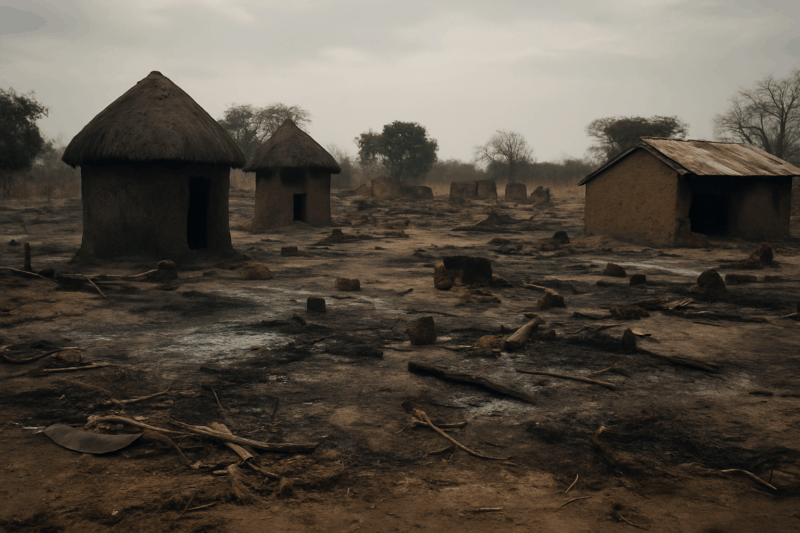
Across Nigeria, countless lives remain hidden behind the noise of daily headlines. While political debates dominate the airwaves and urban elites argue over reforms, millions of ordinary Nigerians live in silence neglected by the system and forgotten by society. Their suffering doesn’t make the front pages, yet it defines the true state of the nation.
These are not abstract statistics; they are human beings children, mothers, fathers, the elderly who face hunger, homelessness, and hopelessness every single day. They live in the cracks of society, in rural villages without basic healthcare, in urban slums without clean water, and in conflict zones where schools are a memory.
One of the most heartbreaking examples is the plight of the Almajiri children in northern Nigeria. These young boys are often sent far from home to study religious teachings but end up begging on the streets. Exposed to hunger, disease, and sometimes abuse, they are failed by the very system that was meant to educate and protect them.
Equally troubling are the countless families displaced by floods, communal violence, or insurgency. Living in overcrowded and under-resourced IDP camps, they have little access to healthcare, education, or employment. What was meant to be a temporary refuge becomes a permanent reality of suffering.
In many places, women walk for miles to access poorly equipped health clinics. Pregnant women give birth in unsafe conditions, while preventable diseases kill children before their fifth birthday. The elderly are left in crumbling homes with no care, their contributions forgotten.
Neglect isn’t always violent or loud often, it’s quiet and systematic. It shows up in the form of a broken school building, a dry borehole, a clinic without medicine, or an uncompleted government project abandoned for years. Over time, these failures accumulate and define a generation.
And while these crises fester, leaders speak of progress of GDP growth, mega-projects, and international partnerships. But what does development mean when millions can’t eat, access education, or live with dignity?
The cost of this national neglect is massive. It weakens the country from within, breeding insecurity, unemployment, and instability. Communities that feel abandoned are more vulnerable to crime, radical ideologies, and unrest. Neglect fuels the very problems the government claims to be fighting.
Yet, amid the hardship, there is resilience. Across the country, volunteers, faith groups, NGOs, and community leaders work tirelessly to fill the gaps. They organize food drives, run makeshift schools, and advocate for the forgotten. Their efforts are heroic but they are not enough.
A country cannot rely on charity to solve structural problems. Real change requires policy, commitment, and compassion. Government at all levels must wake up to the reality of these neglected citizens. Investments must go beyond roads and bridges to reach the people who need them most.
We must shift from announcements to action. Budgets must reflect the needs of the vulnerable, not just the desires of the powerful. Social welfare systems, education reform, rural development, and job creation must be prioritized not as slogans, but as national imperatives.
Media has a vital role to play as well. These stories must be told not as occasional features but as constant reminders of our collective responsibility. The more we highlight these forgotten voices, the harder it becomes to ignore them.
Citizens, too, must raise their voices. We must question injustice, demand accountability, and support those working at the grassroots. Our silence is complicity.
The people behind the crisis are not asking for pity they are asking for justice. They want to live with dignity, contribute to society, and see their children thrive. That is not too much to ask in a country as rich in talent and potential as Nigeria.
Until we see and serve the neglected, true progress will remain a mirage. The strength of a nation lies not in how it treats its powerful, but in how it uplifts its forgotten.
Across Nigeria, countless lives remain hidden behind the noise of daily headlines. While political debates dominate the airwaves and urban elites argue over reforms, millions of ordinary Nigerians live in silence neglected by the system and forgotten by society. Their suffering doesn’t make the front pages, yet it defines the true state of the nation.
These are not abstract statistics; they are human beings children, mothers, fathers, the elderly who face hunger, homelessness, and hopelessness every single day. They live in the cracks of society, in rural villages without basic healthcare, in urban slums without clean water, and in conflict zones where schools are a memory.
One of the most heartbreaking examples is the plight of the Almajiri children in northern Nigeria. These young boys are often sent far from home to study religious teachings but end up begging on the streets. Exposed to hunger, disease, and sometimes abuse, they are failed by the very system that was meant to educate and protect them.
Equally troubling are the countless families displaced by floods, communal violence, or insurgency. Living in overcrowded and under-resourced IDP camps, they have little access to healthcare, education, or employment. What was meant to be a temporary refuge becomes a permanent reality of suffering.
In many places, women walk for miles to access poorly equipped health clinics. Pregnant women give birth in unsafe conditions, while preventable diseases kill children before their fifth birthday. The elderly are left in crumbling homes with no care, their contributions forgotten.
Neglect isn’t always violent or loud often, it’s quiet and systematic. It shows up in the form of a broken school building, a dry borehole, a clinic without medicine, or an uncompleted government project abandoned for years. Over time, these failures accumulate and define a generation.
And while these crises fester, leaders speak of progress of GDP growth, mega-projects, and international partnerships. But what does development mean when millions can’t eat, access education, or live with dignity?
The cost of this national neglect is massive. It weakens the country from within, breeding insecurity, unemployment, and instability. Communities that feel abandoned are more vulnerable to crime, radical ideologies, and unrest. Neglect fuels the very problems the government claims to be fighting.
Yet, amid the hardship, there is resilience. Across the country, volunteers, faith groups, NGOs, and community leaders work tirelessly to fill the gaps. They organize food drives, run makeshift schools, and advocate for the forgotten. Their efforts are heroic but they are not enough.
A country cannot rely on charity to solve structural problems. Real change requires policy, commitment, and compassion. Government at all levels must wake up to the reality of these neglected citizens. Investments must go beyond roads and bridges to reach the people who need them most.
We must shift from announcements to action. Budgets must reflect the needs of the vulnerable, not just the desires of the powerful. Social welfare systems, education reform, rural development, and job creation must be prioritized not as slogans, but as national imperatives.
Media has a vital role to play as well. These stories must be told not as occasional features but as constant reminders of our collective responsibility. The more we highlight these forgotten voices, the harder it becomes to ignore them.
Citizens, too, must raise their voices. We must question injustice, demand accountability, and support those working at the grassroots. Our silence is complicity.
The people behind the crisis are not asking for pity they are asking for justice. They want to live with dignity, contribute to society, and see their children thrive. That is not too much to ask in a country as rich in talent and potential as Nigeria.
Until we see and serve the neglected, true progress will remain a mirage. The strength of a nation lies not in how it treats its powerful, but in how it uplifts its forgotten.



















You must be logged in to post a comment Login