
Africa
Nigerians and Their Priorities, by Zayd Ibn Isah

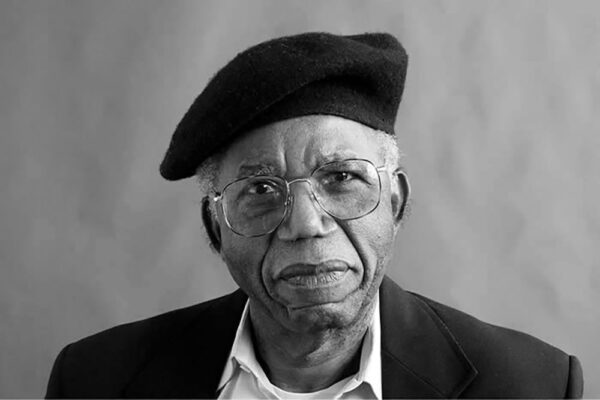
The winner of the 2024 Nigerian Prize for Literature has emerged, and it’s none other than Olubunmi Familoni. The name sounds unfamiliar, right? That’s exactly the point. Despite the prestige of the Nigerian Prize for Literature—the most prestigious literary award in the country, and the biggest in Africa—many Nigerians are unfamiliar with both current and past winners. How many Nigerian writers do we actually know? If you ask a university graduate today to list the names of Nigerian writers, they would likely stop at Professor Wole Soyinka, Chinua Achebe, Chimamanda Ngozi Adichie, and Doctor Habiba Yahaya. A surprising number of undergraduates, particularly Zoomers (Gen Z), would probably claim not to have heard of such names, not to talk of their works.
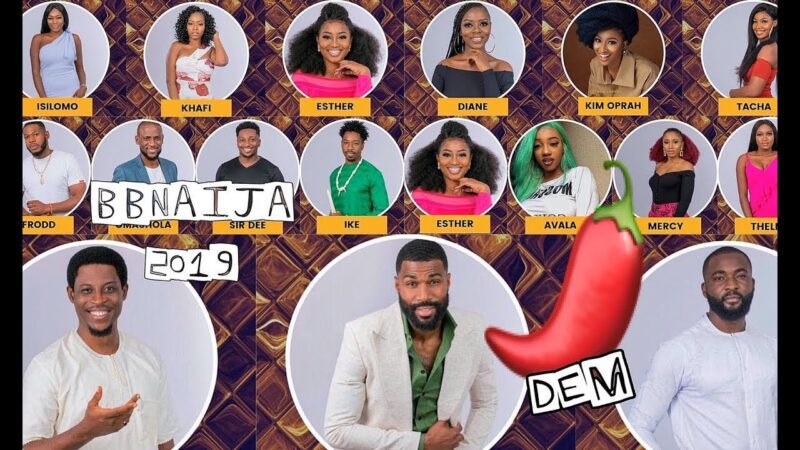
I was surprised when I asked a young friend, who studies English and Literature at one of the oldest universities in the country, if he knew Abubakar Adam Ibrahim. His response made me question the type of books he was reading or those recommended by his lecturers. Abubakar Adam Ibrahim is one of the finest writers of his generation. He won the Nigerian Prize for Literature in 2016 with his stunning book, Season of Crimson Blossoms, and his works have been translated into more than three foreign languages. Yet, if you asked this same student to list the names of musicians, actors, and actresses, including BBNaija housemates, yauwa! The list would be endless.
As Mahatma Gandhi once said, “A nation’s culture resides in the hearts and in the soul of its people.” If we look at what dominates our conversations, we must ask ourselves: what does it say about the soul of our nation?
Now, back to the main issue. The Nigerian Prize for Literature is an annual award sponsored by NLNG, established in 2004. It operates on a four-year cycle, rotating through four genres: prose, poetry, drama, and children’s literature. Initially, the prize stood at twenty thousand dollars, later increasing to fifty thousand dollars, and today, the award comes with a whopping cash prize of one hundred thousand dollars.
Since its inception, the Nigerian Prize for Literature has produced over ten winners. Yet, these fine writers remain far less known than the winners of Big Brother Naija and other reality shows.
It’s no secret that our society often places more emphasis on celebrity culture, politics, and social media trends than on intellectual achievements. Familoni’s remarkable work, which portrays the complexities of Nigerian life and culture, should have captured national attention long before this recognition. Yet, how many Nigerians have heard of his books, let alone read them? How many Nigerians have even heard of others who have also won the coveted prize?
As a nation, we seem to prioritize fleeting trends over lasting influence, and the sensational over the substantial. Political scandals, social media trends, and celebrity culture often dominate conversations, while achievements in literature, science, sports and other fields often go unnoticed by the majority. This raises the question: What are our priorities as a nation, and are they aligned with the progress we want to achieve?
A few days ago, the Nobel Prize for Literature in 2024 was awarded to South Korean author Han Kang, for “her intense poetic prose that confronts historical traumas and exposes the fragility of human life.” Even up till now, Kangʼs native South Korea is still abuzz with the news of her triumph and glory. South Koreans, both old and young, have been expressing their delight at Kangʼs win, which they see as a national achievement in itself. Some of them even trooped to bookstores in Seoul to take pictures with her books! And as expected, there has since been a surge of interest in Kangʼs oeuvre of novels, not just in her homeland but across the globe as well.
How I wish Olubunmi Familoni’s win of the Nigeria Prize for Literature would have been greeted with a similar response nationally. But alas, if wishes were horses, even beggars would ride. News of Familoni’s win only resonated within literary circles, as literary enthusiasts congratulated him on social media platforms. Outside of that, many Nigerians were unaware that a new winner of the prize had emerged, and it is safe to say that many more would be unaware that such a prize even exists.
Presently, Nigeria is among countries with the lowest reading cultures in the world, according to World Culture Statistics. Experts have blamed the decline of a reading culture in the country to factors like the proliferation of the Internet and online media, which have even overtaken older media forms like television and radio. I remember vividly as a young child—and I’m sure older people can remember too, how there used to be an abundance of classics by Charles Dickens, William Shakespeare, Chinua Achebe, Cyprian Ekwensi and many other writers. Such things are no longer common nowadays.
The saddening truth of this matter is that many Nigerians do not read, and rarely even see the act of reading as a leisurely activity. Apart from reading within an academic context, Nigerians fail to see any benefit from indulging in the magic of words unless it guarantees them marks towards a grade. And if one doesn’t care for books at all, he or she would care less about the people who write them in the first place. As such, we end up producing educated illiterates as thousands of graduates emerge from our universities.
I read an article on Pulse NG not too long ago that highlights the issue of declining reading culture in Nigeria, and I noted the views of one Komolafe Ajayi, an entrepreneur and book enthusiast. Ajayi said that nowadays, most GenZ and GenAlpha (and millennials as well) do not read like previous generations. In the article, Ajayi also narrated how he conducted a social experiment on Facebook. For the experiment, he asked young people to choose between 10GB of mobile data and an interesting book worth five thousand naira. Unsurprisingly, more than 90% of the respondents chose mobile data.
Between TikTok, Facebook, YouTube, WhatsApp, Instagram and Snapchat, Nigerian youths spend too much time on their mobile devices, and rarely get to use that time for meaningful pursuits. At the end of the day, they might appear sophisticated with their designer clothes, high-end smartphones and expensive wigs, but once you try to engage them in a reasonable conversation, you might be shocked at their shallow level of reasoning and enormous ignorance of the world they live in.
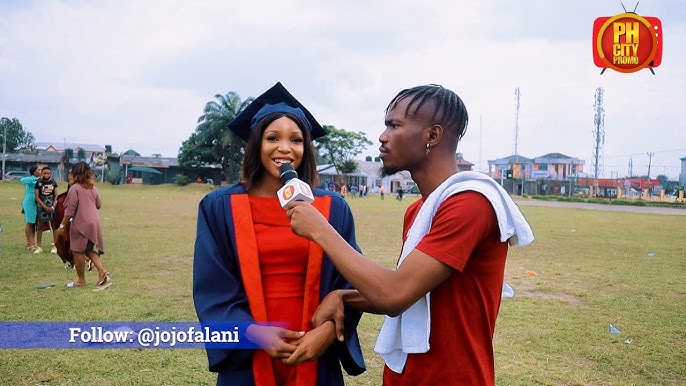
From time to time, I watch clips from a YouTube channel owned by a content creator, Jojo Falani. Jojo Falani often goes to select campuses in the country, along with cameras and a small crew, to conduct a game show called “Double-It Friday”. Students approached by Jojo Falani are usually tasked with answering simple questions in order to win cash prizes. And let me just say how embarrassing it is to realize that a lot of Nigerian students, undergraduates for that matter, cannot answer simple questions that the average primary school student in the early 2000’s would have aced. In one episode of the show, a young man was asked who the author of Things Fall Apart is, only to answer that it was Bill Gates. In a different episode, another youth did not even know who the current Vice-President of Nigeria is.
Mind you, these weren’t planned jokes or skits or anything of the sort. You can still find these videos on YouTube. In fact, the video with the highest number of views on this particular YouTube channel is one where matriculating students in a certain university could not correctly give the full meaning of JAMB and WAEC, which are the bodies responsible for the examinations one must pass before gaining admission into the university. Is there still hope for the future leaders of our country like this?
In the article which I mentioned earlier, educationists warned that poor reading culture is depriving the younger generation of becoming well-rounded individuals who can think critically and analytically. If we are not careful and strategic about getting Nigerians, especially the youths, to lean away from vapid online activities, we risk having in the nearest future a mass of adults with poor attention spans, ignorant understanding of the world itself, and a deficiency of critical life skills.
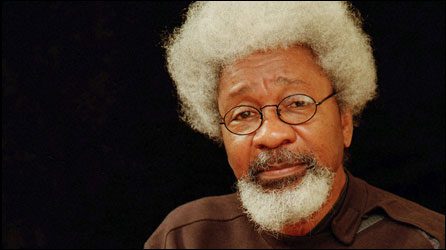
It is sad that whenever the season of the Nobel Prizes arrives, Nigerians who understand its significance cannot predict the possibility of anyone from this country winning in any of the categories. It is sadder that Literature seems to be the only category from which a Nigerian winner can emerge, as the only Nobel Laureate we have is the living legend of Prof. Wole Soyinka. As a friend of mine noted, we have not developed the necessary structures to anticipate Nobel Prize triumphs in Medicine, Chemistry, Physics, and Economic Sciences. After all, we place more value on visual entertainment and music, with our strongest cultural exports being our comedic, theatrical and musical talents/products.
And yet, the saddest tragedy lies in the fact that our literature, the one thing which gives our writers fame abroad, is not cherished or recognized enough at home. Our strongest bet for another Nobel Prize Laureate comes from the literary star of Chimamanda Ngozi Adichie, and one can only hope that if she eventually wins the prize, our people will care enough to celebrate such an achievement.
Congratulations again to Olubunmi Familoni, winner of the Nigeria Prize for Literature 2024, and to Han Kang, winner of the Nobel Prize in Literature 2024.
Zayd Ibn Isah can be reached at lawcadet1@gmail.com

















You must be logged in to post a comment Login