
Africa
Nigeria’s Infrastructure Deficit: A Nation Stuck On The Road To Development -By Timothy Ali Samuel
Nigeria’s infrastructure deficit is not insurmountable. With the right policies, transparent governance, and sustained investment, the country can transform its roads, power, water, and transport systems. The benefits would be far-reaching: lower business costs, increased trade, job creation, and improved living standards. But unless bold steps are taken, Nigeria will remain a nation stuck on the road to development—moving, but never arriving.


Across Nigeria, the signs of a deep infrastructure crisis are impossible to ignore. From pothole-ridden highways and epileptic power supply to congested ports and inadequate rail networks, the country’s physical backbone is crumbling. While citizens struggle daily with the consequences, promises of massive infrastructure renewal have remained more rhetoric than reality. For a nation seeking to attract investment, create jobs, and lift millions out of poverty, the failure to provide reliable infrastructure is a heavy weight dragging progress backward.
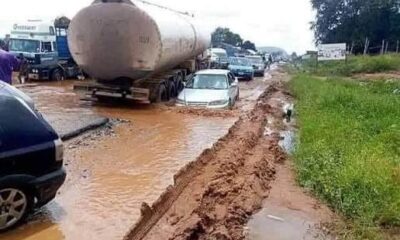
Perhaps the most visible symbol of this crisis is Nigeria’s road network. Federal and state highways are riddled with potholes, many barely passable during the rainy season. Road accidents claim thousands of lives annually, many of them avoidable if proper maintenance were carried out. Truck drivers spend days stranded on roads leading to Lagos ports, creating bottlenecks that drive up the cost of goods. Rural communities remain cut off because feeder roads are either nonexistent or in terrible condition, preventing farmers from bringing produce to markets and worsening food insecurity.
The power sector tells a similarly grim story. Despite billions of dollars spent on reforms, Nigeria continues to generate far below the electricity its citizens need. Frequent blackouts cripple industries, forcing businesses to rely on expensive generators. For small businesses and households, the cost of fueling these generators eats deep into income. Meanwhile, renewable energy opportunities remain largely untapped, even though solar and wind could help close the gap. Without reliable power, the dream of industrial growth will remain a mirage.
Water and sanitation infrastructure are equally inadequate. Millions of Nigerians lack access to safe drinking water, relying instead on boreholes, wells, or unsafe streams. Urban centers face recurring water shortages, while sewage systems are either broken or nonexistent. The result is frequent outbreaks of waterborne diseases such as cholera, which claim lives that could easily be saved with proper investment in sanitation. In rural areas, women and children walk long distances daily to fetch water, reducing time that could be spent on education or productive work.
The state of Nigeria’s rail system further highlights the neglect. Although some progress has been made with the Abuja–Kaduna and Lagos–Ibadan lines, the network remains grossly inadequate for a country of over 200 million people. Cargo transport by rail, which could ease pressure on the roads and reduce accidents, is minimal. Instead, trucks dominate long-distance haulage, worsening road degradation and increasing costs for businesses. A modern, expansive rail system would not only transform trade but also integrate regions and boost national unity.
Airports and seaports, gateways to international commerce, also suffer from inefficiency. Delays, bureaucratic bottlenecks, and outdated facilities discourage foreign investors and frustrate local businesses. The high cost of moving goods through Nigerian ports has driven many importers to neighboring countries such as Benin and Ghana. The result is a loss of revenue, jobs, and prestige. A country with Nigeria’s resources should be a regional hub for trade, but poor infrastructure ensures otherwise.
The consequences of this infrastructure deficit are profound. Without reliable roads, power, water, and transport systems, businesses cannot thrive, jobs cannot be created, and citizens cannot enjoy a decent quality of life. Investors, both local and foreign, are discouraged, choosing instead to take their capital to environments where infrastructure supports productivity. The gap between Nigeria’s potential and its reality continues to widen, leaving citizens frustrated and disillusioned.
Addressing this challenge requires not just more funding, but better planning and accountability. Infrastructure projects are often announced with fanfare but abandoned midway due to corruption or political changes. To break this cycle, government must prioritize continuity, ensuring that projects are completed regardless of political transitions. Public-private partnerships should be encouraged, allowing private capital and expertise to complement government efforts. In addition, maintenance culture must be institutionalized, as infrastructure is not just about building new projects but sustaining existing ones.
Nigeria’s infrastructure deficit is not insurmountable. With the right policies, transparent governance, and sustained investment, the country can transform its roads, power, water, and transport systems. The benefits would be far-reaching: lower business costs, increased trade, job creation, and improved living standards. But unless bold steps are taken, Nigeria will remain a nation stuck on the road to development—moving, but never arriving.
Timothy Ali Samuel is a 300 Level Student From Mass Communication Department University Of Maiduguri.




















You must be logged in to post a comment Login