
Africa
“Oga Jimoh Abeg, Nor Teach Nigeria How To Become Chronic Debtor”, by Isaac Asabor

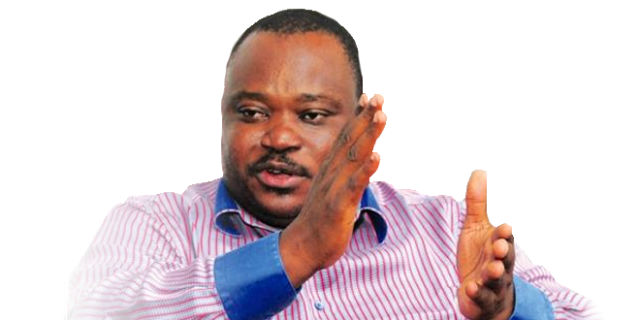
It is not an exaggeration to opine that Senator Jimoh Ibrahim’s recent remarks on Nigeria’s borrowing strategy during an interview on Channels TV have sparked heated debate. The billionaire-turned-politician advocated for the country to take on substantial loans of at least $50 billion to address infrastructure deficits and economic stagnation. While he passionately defended his stance, likening it to Dubai’s $168 billion infrastructure-driven transformation, this proposal is worrisome for many Nigerians already grappling with the crushing effects of excessive borrowing.
Senator Ibrahim’s argument, though seemingly bold, raises critical questions about Nigeria’s debt culture, the track record of managing borrowed funds, and the implications for future generations. Before we plunge headlong into further debt, it is essential to critically analyze the senator’s suggestions and the broader implications of his proposals.
Comparing Nigeria’s borrowing needs to Dubai’s experience is flawed. Dubai’s debt-fueled development was guided by visionary leadership, meticulous planning, and stringent accountability. It was also supported by a relatively small population and a thriving tourism sector capable of generating substantial revenue to service its debts.
Nigeria, on the other hand, faces systemic challenges, including widespread corruption, lack of accountability, and a history of mismanaging borrowed funds. Despite decades of loans from institutions like the World Bank and IMF, critical sectors like health, education, and infrastructure remain in disarray. Senator Ibrahim’s suggestion of borrowing $50 billion is akin to pouring water into a leaking bucket unless these systemic issues are first addressed.
As of now, Nigeria’s debt profile is already staggering, with external debts exceeding $40 billion. Servicing this debt consumes a significant portion of the nation’s revenue, leaving little room for developmental projects. The recently approved $2.2 billion loan, which Ibrahim dismisses as “insignificant,” adds to this burden. If we were to follow his advice and borrow $50 billion or more, future generations would inherit a mountain of debt, with little guarantee of corresponding economic returns.
Senator Ibrahim’s assertion that loans will be used exclusively for transformative infrastructure projects is, unfortunately, hard to believe. Nigeria’s history is littered with instances of poorly executed or abandoned projects despite hefty loans. The Ajaokuta Steel Plant, for instance, consumed billions of dollars over decades but has yet to deliver on its promise.
Without stringent safeguards, transparency, and accountability, there is no assurance that new loans will be used effectively. The senator’s call for legislative oversight and penalties for fund mismanagement is laudable, but Nigeria’s weak institutions and the politicization of oversight functions make such measures difficult to implement in practice.
Given the foregoing backdrop, it is germane to opine in this context that Nigeria should begin to look towards alternatives to Borrowing. Rather than saddling the nation with more debt, Nigeria should prioritize harnessing its vast resources to generate revenue. The country boasts abundant natural resources, a large and youthful population, and untapped sectors like agriculture, technology, and renewable energy.
In fact, there is the need to expand revenue generation. Therefore, the government should focus on diversifying its revenue streams beyond crude oil. By investing in agriculture, manufacturing, and technology, Nigeria can create jobs and boost exports.
In a similar vein, there is the need to cut wasteful spending. This is as a significant portion of the nation’s revenue is lost to corruption, inefficiency, and excessive government spending. Reducing wasteful expenditures and plugging revenue leaks can free up funds for critical projects.
Also, instead of borrowing, the government should explore Public-Private Partnerships (PPPs) to fund infrastructure projects. PPPs have proven effective in many countries and can provide the necessary expertise and funding without burdening the nation with debt.
Also in a similar vein, Foreign Direct Investment (FDI) should be encouraged. In fact, creating a conducive business environment can attract foreign investors, who can fund infrastructure projects and drive economic growth.
It is crucial to reflect on Nigeria’s borrowing history before embarking on another borrowing spree. The Structural Adjustment Program (SAP) of the 1980s, introduced under heavy borrowing conditions, left a legacy of economic hardship. The same pattern has repeated itself with recent loans, intended for development but diverted or mismanaged, leaving the masses worse off.
At this juncture, it is expedient to say a word to Senator Jimoh Ibrahim. Oga Jimoh, while your intentions may be good, your proposal ignores the harsh realities of Nigeria’s economic and governance challenges. Borrowing “good money” is not a panacea; it is a recipe for chronic dependency if not paired with robust economic reforms and strict accountability measures.
Your comparison of Nigeria to Dubai overlooks the unique circumstances that made Dubai’s borrowing strategy successful. Nigeria cannot afford to gamble its future on a debt-driven model without first fixing its systemic issues.
Moreover, your suggestion that Nigeria negotiate debt forgiveness after accumulating more debt raises ethical and practical concerns. The global financial system is not a charity, and such an approach risks tarnishing the nation’s reputation and creditworthiness.
Nigeria’s path to economic prosperity lies not in reckless borrowing but in prudent financial management, strategic investments, and leveraging its immense human and natural resources. While infrastructure development is critical, it must be achieved sustainably without mortgaging the future.
Oga Jimoh, Nigeria does not need lessons in becoming a chronic debtor. What it needs are leaders who can think innovatively, act decisively, and prioritize the long-term well-being of the nation over short-term gains. The solutions to our economic challenges lie within us, not in the coffers of foreign creditors.


























You must be logged in to post a comment Login