
Africa
Pathologies of the Nigerian Healthcare System -By Patrick Iwelunmor
Healing will demand more than rhetoric; it will require repentance. Nigeria must treat healthcare not as a privilege for the wealthy but as the right of every citizen. It must fund its hospitals, equip its primary centres, and pay its health workers a living wage that reflects their sacrifice. It must cleanse its procurement systems of rot and make medicines affordable, accessible, and locally produced. Above all, it must enlighten its people — through schools, media, and pulpits — about the dangers of unregulated herbal mixtures and faith-based healings that defy scientific principles.

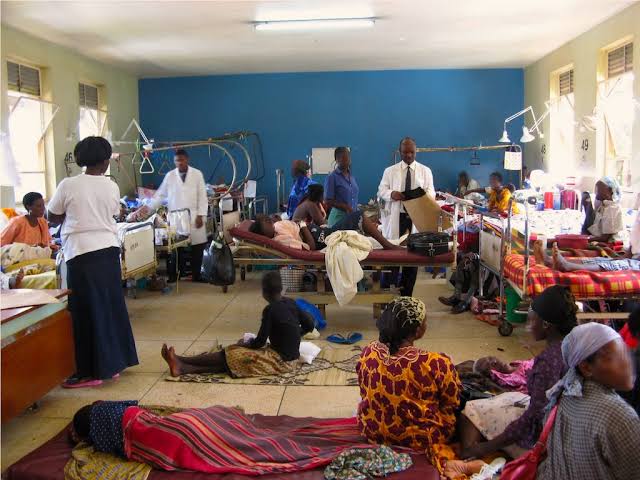
Nigeria is a country that keeps its miracles and its tragedies in the same pocket. We celebrate surgical triumphs and condemnable losses with equal fervour, sometimes in the same breath. Yet few national tragedies are as quietly pervasive as the slow collapse of our healthcare architecture. This is not a single scandal but a catalogue of dysfunction: collapsing primary healthcare centres, restless doctors on strike, medicines priced out of reach, hospitals turned into dens of graft, and a growing recourse to prayers and herbal brews. It is a system that treats symptoms but never heals itself.
Nigeria is said to have about 30,000 Primary Healthcare Centres, but only between 10 and 20 percent are fully functional. This statistic is not just a policy failure; it is a moral indictment. In many communities, the “centre” exists only as a signboard. No midwife. No drugs. No power. No running water. Mothers give birth by candlelight, and children die of treatable fevers. Recent government data indicate that over 900 PHCs have been refurbished, but these pockets of progress are a drop in an ocean of neglect. The local governments that should sustain these centres are too politically weak and fiscally broken to maintain them.
To his credit, the current Minister of Health and Social Welfare, Dr. Muhammed Ali Pate, has displayed rare energy and clarity of purpose. His ministry has reintroduced accountability language into health governance and engaged professional bodies directly. His meeting with the pharmacy community in Lagos, and his ongoing push to halt the brain drain, reflect a sincere desire to reconnect policy with practice. Through the Nigeria Health Sector Renewal Investment Initiative (NHSRII) and partnerships with donors, Dr. Pate has signalled that healthcare should be treated not as charity but as economic infrastructure. Yet even genuine reformers encounter the wall of Nigerian inertia — a bureaucracy allergic to speed, a fiscal regime allergic to health investment, and a political culture that rewards optics over systems. The minister’s intent is clear, but the system’s capacity to absorb reform is not.
Resident doctors have gone on strike so often that industrial action has become an unofficial part of the medical calendar. Their grievances — poor pay, unsafe conditions, unpaid allowances — are not greed but despair. In a bitter irony, the same system that trained them is driving them away. Between 2008 and 2021, an estimated 36,467 Nigerian-trained doctors relocated to the United Kingdom alone. Thousands more have moved to North America, the Middle East, and Europe. In just two years, over 7,000 pharmacists also left the country. Each departure is not merely a statistic; it is a broken link in the national care chain. The result is a vicious cycle of fewer doctors, longer queues, lower morale, and weaker supervision. When professionals leave, counterfeiters, quacks, and opportunists move in.
Even for those who remain in Nigeria, illness has become a form of financial punishment. Despite President Bola Tinubu’s Executive Order intended to reduce the cost of medicines and medical supplies, prices continue to rise. Pharmacies have become temples of anxiety where patients negotiate survival. The cost of antihypertensives, insulin, and antibiotics fluctuates daily with the exchange rate. As legitimate drugs become unaffordable, the market floods with counterfeits. The National Agency for Food and Drug Administration and Control (NAFDAC) and the Pharmacy Council of Nigeria (PCN) continue to battle this scourge. In recent years, they have destroyed tonnes of fake medicines seized from markets in Lagos, Kano, and Onitsha. Just recently, 498 premises were sealed for various infractions in Lagos alone, while 29 others were issued compliance directives to correct identified irregularities, according to the PCN’s Head of Enforcement, Dr. Suleiman Chiroma, during a press briefing with journalists in Lagos. Yet the problem persists — a hydra-headed trade thriving on porous borders, compromised supply chains, and complicit retailers.
In the vacuum left by a collapsing public system, Nigerians are turning to faith-based healing homes and unregulated herbal concoctions. These alternatives sometimes comfort, often harm, and always reflect a loss of trust. Social media “miracle healers” now market potions with the same digital sophistication used by big pharma. The real tragedy is that these pseudo-remedies flourish because the state has failed to make credible healthcare accessible. Faith fills the vacuum that governance creates.
Corruption within hospitals further corrodes what little public faith remains. Patients are asked to buy gloves, syringes, and even electricity tokens. Admissions and transfers are lubricated by envelopes. Procurement leakages and the theft of consumables have become so normalised that many health workers barely see them as wrong. In this moral economy, the hospital becomes less a sanctuary and more a marketplace. Trust, the invisible currency of healthcare, collapses.
The truth is that Nigeria does not lack ideas or expertise; it lacks political stamina. Dr. Pate’s initiatives must be insulated from bureaucratic decay through structural reforms that go beyond press statements and donor briefings. Health funding should be treated as a national security imperative, because a sick population cannot defend itself or sustain productivity. The regulatory institutions, NAFDAC, PCN, and the professional councils, must be strengthened with digital surveillance, forensic tracking, and real enforcement powers. The human resource crisis must be addressed through better pay, protection, and career progression for health workers. Retention is cheaper than replacement. And at the community level, health committees should be empowered with oversight and budgetary roles, not just ceremonial relevance.
Nigeria’s healthcare crisis is a metaphor for the nation itself — intelligent, resourceful, and resilient, yet chronically under-treated. We have diagnosed our diseases for decades but refused the discipline of treatment. The nation’s future will not be measured by GDP alone but by the number of lives saved from preventable deaths. That is the quiet arithmetic of civilisation. Until we fix the system that heals us, every other reform remains cosmetic. The body politic cannot thrive when the national bloodstream itself is infected.
Healing will demand more than rhetoric; it will require repentance. Nigeria must treat healthcare not as a privilege for the wealthy but as the right of every citizen. It must fund its hospitals, equip its primary centres, and pay its health workers a living wage that reflects their sacrifice. It must cleanse its procurement systems of rot and make medicines affordable, accessible, and locally produced. Above all, it must enlighten its people — through schools, media, and pulpits — about the dangers of unregulated herbal mixtures and faith-based healings that defy scientific principles. For in medicine, as in nationhood, faith may console, but only truth can cure. When science and sincerity finally meet at the bedside of policy, perhaps this unhealed nation will begin, at last, to recover its pulse.























You must be logged in to post a comment Login