
Africa
Police Cannot Be Your Friend, Even If They Wanted To Be… -By Prince Charles Dickson Ph.D
Until we confront these structural demons head-on, the Nigerian Police Force will remain an institution struggling against impossible odds, unable to be the friend, protector, or servant of the people it was meant to be. They are trapped in a system that sets them up to fail, and in failing, they fail us all. We must break the cycle. The safety of 229 million lives depends on it. A gba a kpa, a gba a kpa, mana odi nma ka ahu mmadu na ndu (Whether rich or poor, it is good to see a person alive). Security is the bedrock; without it, nothing else stands—May Nigeria win!

(And They Probably Can’t)
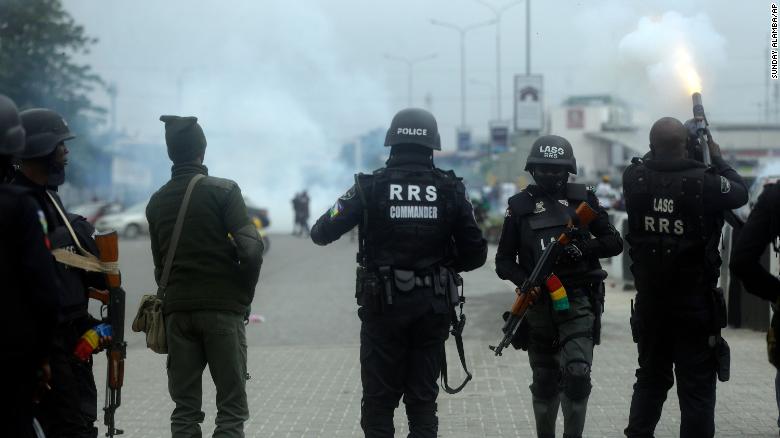
Look around. Hear the sirens wail, sometimes close, often far. See the black-and-white patrol vans, sometimes sleek, often battered. We know the police. We fear them, distrust them, sometimes curse them, rarely praise them, and almost never feel they are truly with us. The bitter truth, my people, is this: The Nigerian Police cannot be your friend, even if they desperately wanted to be. And the reasons are etched not just in our collective experience of harassment and extortion, but in the cold, hard numbers that paint a picture of a force structurally crippled, hopelessly overstretched, and fundamentally misdirected.
Consider the sheer, staggering arithmetic of neglect. We are 229 million souls, a teeming ocean of humanity. Standing guard? Approximately 371,800 police officers. Break that down: One officer for every 615 Nigerians. The United Nations says a minimally functional police force needs one officer for every 450 citizens. To meet even that modest benchmark, we need at least 508,889 officers – a shortfall of 137,089 today. The government talks of recruiting 280,000 to reach 650,000. While welcome, this still only brings the ratio down to about 1:352 – barely scraping the UN standard, not exceeding it for a nation drowning in complex security challenges. It’s like trying to bail out the ocean with a teacup.
Now, where are these officers stationed? We have 1,579 police stations and 3,756 police posts. Spread across 774 Local Government Areas, that averages roughly 2 stations and 5 posts per LGA. Think about your LGA – its size, its population (often hundreds of thousands), its towns, villages, and vast rural expanses. Can 2 stations and 5 posts, manned by a handful of officers, possibly provide effective, responsive policing? It’s a cruel joke. The Hausa have a proverb: “Ido daya ba ya gani gaba da baya” (One eye cannot see front and back). How can a force so thin on the ground see the crimes brewing in every corner?
But the numbers reveal an even uglier distortion. While communities starve for police presence, a significant portion of the force is hijacked by the political elite. How many officers are permanently attached to “escorting” politicians, guarding their lavish homes, carrying the handbags of their spouses, or acting as glorified domestic staff? This isn’t policing; it’s patronage. It’s a monumental diversion of scarce resources from public safety to personal security for the powerful. As the Igbo say, “Onye na-eche onwe ya, ọ naghị eche ụwa” (He who guards himself does not guard the world). This VIP culture cripples the force’s ability to serve the citizenry. Each officer carrying a “big man’s” bag is an officer not patrolling your street, not investigating that burglary, not preventing that kidnapping.
This diversion is compounded by the crushing weight of poor conditions. The average police officer earns about ₦118,000 per month. In today’s Nigeria, ravaged by inflation, what dignity can this pittance provide? What hope can it inspire? When an officer struggles to feed his family, pay rent in the dilapidated barracks often lacking basic amenities, or afford transport to his poorly equipped duty post, the temptation of the “roadside toll” becomes immense. Poor remuneration breeds corruption as surely as stagnant water breeds mosquitoes. The Pidgin truth hits hard: “Hungry man, him no dey hear word.” How can we expect unwavering integrity from men and women pushed to the brink of survival?
The lack extends far beyond salaries. Modern policing demands modern tools. Where is the integrated database to track criminals across state lines? Where are the forensic labs? Where is the reliable communication network? Many stations lack basic computers, let alone advanced crime-fighting technology. Outdated weaponry faces sophisticated criminals. Poor intelligence gathering cripples proactive policing. The Igala wisdom resonates: “Ene oga alu, ene ebi aje” (What the eye doesn’t see, the heart doesn’t grieve over). But when the police lack the “eyes” – the technology and intelligence – to see the criminals, the people grieve endlessly from the violence they suffer.
So, what is the answer? Throwing 280,000 new recruits into this broken system without fundamental reform is like pouring fresh water into a leaking, rusty bucket. We need a complete overhaul, pivoting towards Community Policing and embracing the inevitable necessity of State Police.
Community Policing isn’t just a slogan; it’s a fundamental shift. It means officers embedded in and known to their communities, walking beats, understanding local dynamics, solving problems with the people, not just to them. It leverages local knowledge. It builds trust. It’s the Pidgin principle: *”Monkey dey work, Baboon dey chop, but when community and police dey work together, thief no go fit chop.” Officers become familiar faces, accountable partners, not distant, feared figures in a passing van. This requires decentralizing command, empowering local divisions, and retraining the entire force philosophy.
However, Community Policing within the current monolithic federal structure has limits. The sheer diversity and size of Nigeria demand State Police. Policing needs in Sokoto are not identical to those in Port Harcourt or Enugu. State Police, properly established within a robust national framework to prevent abuse, would allow for:
1. Localized Deployment: Resources focused on local priorities.
2. Faster Response: Command chains shortened within the state.
3. Greater Accountability: Closer oversight by state assemblies and communities.
4. Cultural Sensitivity: Officers recruited locally, understanding local languages and customs.
This framework needs ironclad safeguards: clear constitutional delineation of powers, independent oversight bodies at state and federal levels, rigorous training standards, and mechanisms for inter-state cooperation on cross-border crime. It’s complex, but necessary. As the Igbo also say, “Egbe bere, Ugo bere, nke si ibe ya ebela, nku kwaa ya” (Let the kite perch, let the eagle perch; whichever says the other shall not perch, may its wing break). Federal and State Police must find a way to coexist for the nation’s safety.
The title stands: The Police cannot be your friend. Not when they are spread thinner than butter on a soldier’s bread. Not when a chunk of them are bodyguards to the powerful while your community bleeds. Not when they are demoralized, underpaid, and ill-equipped. Not within a structure designed for control, not service.
The path to changing this grim reality isn’t easy. It demands courageous political will to dismantle the VIP security racket. It demands massive, sustained investment in recruitment (with proper vetting), training, equipment, technology, and welfare. It demands embracing Community Policing as a core philosophy, not a PR stunt. And it demands the mature, carefully crafted establishment of State Police within a strong national security architecture.
Until we confront these structural demons head-on, the Nigerian Police Force will remain an institution struggling against impossible odds, unable to be the friend, protector, or servant of the people it was meant to be. They are trapped in a system that sets them up to fail, and in failing, they fail us all. We must break the cycle. The safety of 229 million lives depends on it. A gba a kpa, a gba a kpa, mana odi nma ka ahu mmadu na ndu (Whether rich or poor, it is good to see a person alive). Security is the bedrock; without it, nothing else stands—May Nigeria win!
—
Prince Charles Dickson PhD
Team Lead
The Tattaaunawa Roundtable Initiative (TRICentre)
Development & Media Practitioner|
Researcher|Policy Analyst|Public Intellect|Teacher
234 803 331 1301, 234 805 715 2301
Alternate Mail: pcdbooks@yahoo.com
Skype ID: princecharlesdickson

























You must be logged in to post a comment Login