
Africa
Ramadan, School Closure and Nigeria’s Education Crisis -By Muhammad Auwal Ibrahim
Another disturbing report alleged that five students died from hunger here in Gombe state, a story that has received little attention. Even though the commissioner for education has debunked the claim, there is still hunger in schools. I am sure you all don’t know simply because none of your family members are involved or it’s not an area you are interested in calling for change. Why are critics, or say Islamophobes, silent on such urgent matters but vocal about school holidays?

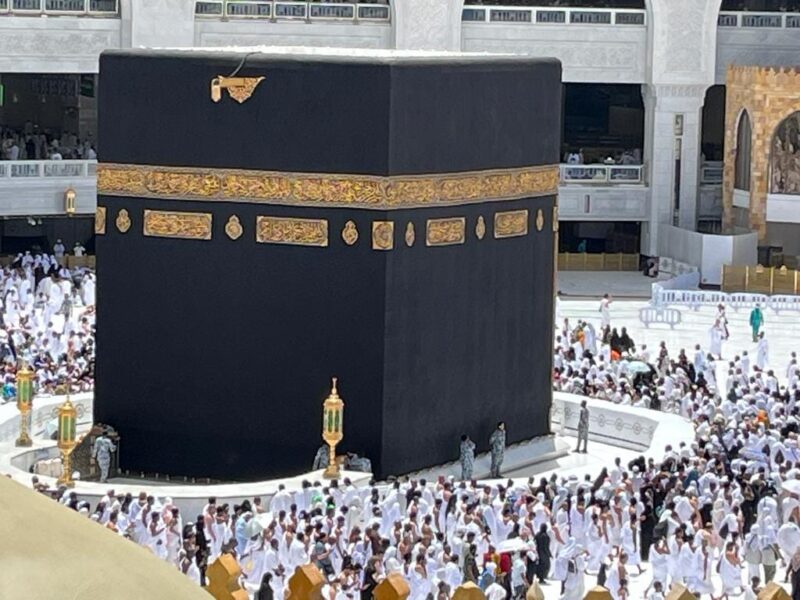
Once again, Nigerians have found a new topic to debate. This time, it’s not about anything but rather the decision of some states to close schools during Ramadan. However, much of the discourse seems to be driven by sensationalism rather than a genuine concern for education.
Recently, states like Bauchi, Kano, Katsina, Kebbi, and Jigawa announced the closure of schools for a month, allowing Muslim students and their families to observe Ramadan fasting comfortably.
As a result, the Christian Association of Nigeria and some activists were seen shouting on top of their voices that this decision must be reversed or challenged in the court of competent jurisdiction.
Surprisingly, even Suwaiba Ahmad, a Minister of State for Education also criticized the decision, as if she had suddenly developed a deep concern for Nigeria’s education sector.
Critics argue that the school closure will negatively impact students’ academic performance while their peers in other parts of the country continue learning. However, this argument ignores the more pressing education crises facing these states and Nigeria as a whole. This is what this piece intends to address.
Islamophobia or activism?
It’s baffling how some critics seem neither aware nor serious about where they should direct their energy and concerns. Take, for instance, the Minister of State for Education, someone who should be focused on policy making, yet, she appears more interested in noise-making. Otherwise, why should the issue of Ramadan school closure preoccupy a whole Minister of State?
In a country where many states lack an education sector plan to guide budgeting and policy direction, it is disappointing that the debate revolves around when schools should go on break. Are we truly serious in this country? The way some people act, you’d think school closure is the only issue facing our education system.
If they were genuinely concerned about quality education, Ramadan break wouldn’t be an issue. The real questions should be: What is the student-teacher ratio in our schools? How well are our students performing in WAEC/NECO? What measures are in place to address staff shortages? What about the provision of nutritional meals for boarders? Are instructional materials sufficient? Is education truly inclusive? What is being done for nomadic education? The list of pressing issues goes on.
Yet, no one seems to be asking these critical questions. Instead, the focus is on whether or not schools should take a break in Ramadan. The reality is that whether schools take a break during Ramadan or not, breaks are inevitable. Or are we now suggesting that schools should abandon breaks altogether? That is not the tradition anywhere in the world. Schools everywhere have termly and sessional breaks.
When will we, as a country, start prioritising the real issues in education, if only for a moment?
In a secular and tolerant society, this issue would not even arise. The focus would be on improving the quality of education rather than debating the scheduling of school breaks. Yet, CAN and some activists seem more interested in stirring controversy or displaying islamophobia than engaging in meaningful discussions about Nigeria’s education.
Muslims in Nigeria have never opposed Christian holidays or school breaks that align with Christian festivities. Why, then, should a break in predominantly Muslim states be a problem? Tolerance and mutual respect are essential for peaceful coexistence. If we genuinely want to build a better nation, we must focus on what truly matters, quality education, not religious divides.
During my primary school years, Ramadan often coincided with terminal breaks, and it had no impact on my academic performance. As I write, many schools already align their academic calendars with Ramadan to avoid disruptions. There is no evidence to suggest that this affects learning outcomes.
Furthermore, some states, like Gombe, did not declare a Ramadan break. But has that made Gombe’s education system any better? The answer is a resounding no. As an investigative journalist covering education for years, I can say with confidence that the core problem is not when schools go on break but rather the lack of political will to fix the education sector.
Gombe State Education Crisis
Gombe State provides a clear example of the deeper challenges facing education in Nigeria. The last time the state had an Education Sector Plan was in 2010. The absence of a guiding framework has resulted in dire consequences for the sector.
According to data from the State Ministry of Education, 624,416 children are out of school. Reports indicate that many school-age children are engaged in child labour, like farm work, rather than attending school. Do you know the cause? Not Ramadan school closure. But government negligence.
Another factor among the challenges is inadequate WASH facilities. Data from the Ministry of Education reveals what it describes as “extremely” high pupil-to-toilet ratio: 287:1 in primary schools; 112:1 in junior secondary schools; and 92:1 in senior secondary schools.
Moreover, beyond the high ratio of pupils-to-toilet, there is water poverty in rural areas. Access to safe drinking water is limited in many schools. This makes the toilets unhygienic for female students to use as they risk disease contamination.
Only 75.1% of pre-primary and primary schools have access to safe drinking water, while this figure drops to 58.8% in junior secondary schools and further declines to 47.9% in senior secondary schools. This trend portrays the alarming inadequacy of WASH facilities in public schools across Gombe State. As students progress to higher classes, the percentage of those with access to safe water continues to decrease, which is particularly concerning as adolescents require not only more water but also safe drinking water to maintain their health during this critical stage of development.
Adding to these challenges, most public schools depend on crude toilet systems, such as pit and bucket latrines, which are unsuitable for adolescent girls. This situation discourages attendance, especially during menstruation, and significantly contributes to high dropout rates.
A comprehensive analysis of the data reveals that there are 1,960 crude toilet systems (98%) in public pre-primary and primary schools, 775 (89%) in junior secondary schools, and 662 (83%) in senior secondary schools.
Not only this, a total of 156 schools across the 11 LGAs of Gombe state have been impacted by windstorms, according to a report from the ministry of education.
One should ask: should the people of Gombe dance and celebrate not closing schools during this period as an achievement? Rather they should ask for better education for all.
Starving for education
Another overlooked issue is the dire condition of students in public boarding schools. Do you know how students fast during the month of Ramadan? No one cares right? In my forthcoming investigation, I uncover how students in Gombe State are fasting during Ramadan without access to nutritious meals. Would you allow your child to endure such conditions? I don’t know why these guys, including a minister, act as if they are visitors in Nigeria.
Another disturbing report alleged that five students died from hunger here in Gombe state, a story that has received little attention. Even though the commissioner for education has debunked the claim, there is still hunger in schools. I am sure you all don’t know simply because none of your family members are involved or it’s not an area you are interested in calling for change. Why are critics, or say Islamophobes, silent on such urgent matters but vocal about school holidays?
A question for minister of state
If the Minister of State for Education is genuinely concerned about education, she should answer this: What did she do when the Almajiri Commission received a very low budget despite its critical mandate?
Gone are the days when office holders make noise. The time for this has passed. It is time for action/governance.
To this end, Nigeria’s education crisis is not about the timing of school breaks. If anyone is serious about fixing the sector, he should go back to the drawing board and do the needful by addressing issues like out-of-school children, poor infrastructure, teacher recruitment, and lack of proper nutrition in schools.
Instead of engaging in divisive debates, we should unite to demand real solutions. The focus must shift from distractions to action, because education is too important to be politicised.
Muhammad Auwal Ibrahim is multiple award-winning journalist and 2024 Change Reporting Fellow at ImpactHouse Centre for Development Communication. He can be reached via awwalbinibrahim@gmail.com.



























You must be logged in to post a comment Login