
Africa
Reason for rising insecurity in South-East region
In his remarks before the report was unveiled, the Executive Director of Rule of Law and Accountability Advocacy Centre, RULAAC, Okechukwu Nwanguma, explained that the report was an attempt to document and “project the correct narrative about the roots, drivers, actors, patterns, dimensions, and effects of insecurity in the South-East”. The report, he further explained, was the product of various stakeholders meeting and brainstorming on insecurity in the South-East.

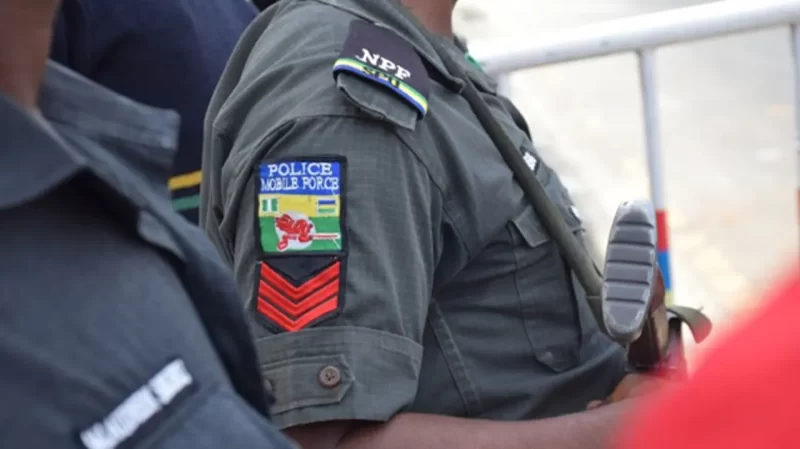
It is no longer news that the South-East area of Nigeria has been experiencing a significant security issue for the last three years.
This has decimated the area. The catastrophe has wreaked havoc on the region’s residents, claiming both human lives and property.
It has claimed thousands of lives, destroyed billions of naira’s worth of property, and uprooted thousands from their ancestral homes. Many attempts have been made to assign blame for the reason, but none have successfully narrowed it down to a single issue.
As part of the quest for the core cause of the crises, a report on the region’s security dilemma was released last week in Enugu, attempting to pinpoint some of the issues driving the conflict. Human rights groups blamed the region’s unfortunate situation on a complex web of issues, including a corrupt political class’s mishandling of pro-Biafra agitation, insurgency, gun proliferation, and criminal politics; cultism and occultism; and impunity in the region’s law enforcement and criminal justice system. It further stated that these internal issues are exacerbated by external reasons such as state-sponsored vigilantes, plundered funds, and political-crime connections.
The report, titled: Unveiling the Roots of Insecurity, healing the Wounds of Human Rights Violations in South-East Nigeria: A Path towards Peace, open democratic space, and a prosperous future, was put together by Rule of Law and Accountability Advocacy Centre, RULAAC, in partnership with Action Group on Free Civic Space, AGFCS.
One of the factors, according to the report is that “elections are routinely rigged, silencing dissent and denying millions their voices”, which it said is not good for democratic competition, but promotes “political violence, with gangs clashing for control.”
According to the report, the consequences of rigged elections in the region go beyond just stolen elections but leads to “mismanaged resources and squandered potential thereby robbing the people of their future,” saying that “this rampant corruption leaves communities mired in poverty, suffocated by the greed of people in power.”
“The 2023 elections offered no respite, sinking to new depths of depravity. Politicians, emboldened by impunity, openly armed and recruited gangs to terrorize opponents and citizens alike. These gangs, emboldened by their role in rigging the polls, further spread violence and insecurity across the region.
The cost of these unchecked gangsters is staggering. Scores, including women and children, have been killed or injured in gang clashes. Yet, no one has been held accountable, leaving victims and families to grapple with trauma and loss without justice.th trauma and loss without justice.
“Impunity also pervades the criminal justice system. Basic rights are routinely disregarded, particularly towards those associated with pro-Biafra groups. Torture, enforced disappearances, and extrajudicial killings are commonplace in the region, with estimates suggesting over 2,000 people executed or disappeared since 2015.
“The economic toll of this insecurity is severe. Capital flight, business closures, and skilled worker emigration cripple the regional economy. Sit-at-home protests championed by factions of the Indigenous People of Biafra, IPOB, in cahoots with elements of organised crime, further amplify the decline, pushing it to its lowest point,” the report said.
Other identified root causes of the security crises
According to the report, understanding the insecurity in the South-East demands a detailed examination of historical grievances, economic hardship, institutional weaknesses, and the interplay between state actors, armed groups, and communities. The roots of this issue run deep, intertwined with the complex challenges of governance and responsible political leadership in the region as well as weak institutions and corruption that are conducive to thriving illicit arms production and trafficking.
Also, failure to deliver good governance fuels grievances and fosters distrust in state authorities, leaving communities vulnerable to exploitation by armed groups. To break this cycle, the report suggests, requires a multifaceted approach that tackles not only the immediate threat of armed violence but also addresses the underlying issues of poverty, inequality, and weak governance.
It notes that a major reason for the region’s violence lies in the restricted space for political participation and expression. “Citizens are often robbed of making informed electoral decisions through a cocktail of tactics like vote-buying, intimidation, violence, and even blatant rigging, leaving them feeling disenfranchised and unheard. This political frustration fuels social unrest and creates fertile ground for violence and militancy to flourish”.
The report further notes that addressing pro-Biafra insurgency is crucial but it must be accompanied by tackling these deeply rooted internal conflicts such as dismantling the influence of cults, curbing the flow of illegal arms, and mediating disputes over land and community leadership and initiating a comprehensive solution approach for them is the way to a secure a prosperous future for the region and urged the Tinubu administration “to take a significant step towards restoring peace, justice, and accountability in the region.”
What is the way forward?
The big task in the region now is how to dismantle criminal organisations, sever their political connections, and tackle the root causes of poverty and suffering of the people. Also, there is a need to address the issue of misinformation that attributes all crimes in the zone to insurgency. What is required are efforts and support from stakeholders including government, security agencies, monarchs, community leaders, and civil rights groups, among others, to seek deeper insights into the root causes and drivers of insecurity, and make effective recommendations to curb them.
A de-escalation strategy that prioritizes dialogue and respect for human rights is urgently needed. Investigating and holding accountable perpetrators of abuses, both within the military and civilian spheres, is essential to restore trust and prevent further violence.
In his remarks before the report was unveiled, the Executive Director of Rule of Law and Accountability Advocacy Centre, RULAAC, Okechukwu Nwanguma, explained that the report was an attempt to document and “project the correct narrative about the roots, drivers, actors, patterns, dimensions, and effects of insecurity in the South-East”. The report, he further explained, was the product of various stakeholders meeting and brainstorming on insecurity in the South-East.
“What came out very clearly in all the conversations was that the Federal Government is simply not interested in listening to the voices of reason in or about the South-East. It is not paying attention to the plight of the people and is not interested in sincerely addressing or solving the problems of the people of the zone,” even as he squarely blamed the Federal Government “for its failure to adopt an open-minded and holistic approach in responding to insecurity in the South-East.”
The Federal Government, Nwanguma said, is simply driven by the mindset- as revealed by President Buhari during his interview with Arise TV in 2021: ‘’To speak to the people in the language that they understand.”
He lamented their findings in the course of their investigation, saying it “paints a bleak picture of public security policies in the region that is heavily reliant on repressive police and military action, often with excessive force,” adding: “The police in the South-East have acted in compliance with reckless directives such as the ‘’shoot at sight” order by President Buhari in 2021 and the then Inspector-General of Police’s subsequent order on them to go after IPOB, kill them and not worry about shouts of human rights violation.”
According to Nwanguma, “Not a few people of conscience were shocked to receive the information that no less than 107 citizens were indiscriminately arrested from different locations in Owerri, Imo State, labelled IPOB members and arraigned, not in any court, but at the car park of the Shell Camp Police Division, Owerri, and later shifted to the Conference Hall of the Commissioner of Police, Imo State, with some magistrates presiding. They were charged with offences of treason, including plots to overthrow President Buhari and Governor Hope Uzodinma, and remanded at the Owerri Prisons.
“The sheer number of persons arrested and arraigned in one day by the police in Imo State for purportedly conspiring to overthrow President Buhari and Governor Hope Uzodinma was outlandish. Police did not show what weapons with which the people, including women and children, were going to carry out the overthrow. That was nothing more than a malicious declaration of war against innocent and law-abiding residents of Imo State going about their legitimate businesses.
“Another worrying dimension is the increasing control of media outlets by state governments in the region, especially the Governors of Imo and Ebonyi states, who made monitoring human rights abuses difficult, which allowed the government and security agencies to control the narratives and conceal their abuses. Thus, the state government media also succeeded in pushing a single narrative by blaming every single incident of insecurity or killings in the region on the pro-Biafran separatists.
“While RULAAC rightly identifies pro-Biafra agitation and insurgency as significant contributors to insecurity in the South-East, attributing the problem solely to these factors paints an incomplete picture; a lasting solution demands acknowledging the intricate web of additional forces fuelling the flames of violence.”
SOURCE: Vanguard

























You must be logged in to post a comment Login