
Africa
Reuben Abati and Davido as “Cockroaches”, by Festus Adedayo

In 1992, Leon Mugesera, a senior politician in the then Rwanda ruling party, gathered a crowd of supporters at a rally held in the town of Kabaya. At the rally, Mugesera labeled the minority Tutsi “cockroaches,” who must be eliminated. He then asked this East African ethnic group to go back to its place of birth. He was quoted to have said: “Anyone whose neck you do not cut is the one who will cut your neck.” This “cockroach” typecast glued to the Tutsi ethnic group. Two years later, about 800,000 of them got brutally slaughtered, hacked to death and raped in a 100-day period of genocide. Twenty years later, a Rwandan Judge, Antoine Muhima, sentenced Mugesera to a life term in prison for “public incitement to commit genocide, persecution as crime against humanity, and inciting ethnic-affiliated hatred.”
You may think the inconsequential is not consequential. In Mugesera’s Rwanda of 1994, a dirty, tiny insect that many don’t reckon with became the tinder that lit the whole country. It was the cockroach. The Hutu and Tutsi ethnic groups have so many things in common like the Igbo and Yoruba of Nigeria. Hutu and Tutsi were its major ethnic groups and respectively account for more than four-fifths and about one-seventh of Rwanda’s total population. Unlike the two Nigerian ethnic groups, Hutu and Tutsi, together with the one percent population-Twa ethnic group, speak Rwanda, also called Kinyarwanda. This indicates that the tripod ethnic groups of Rwanda have lived together even before the 5th century.

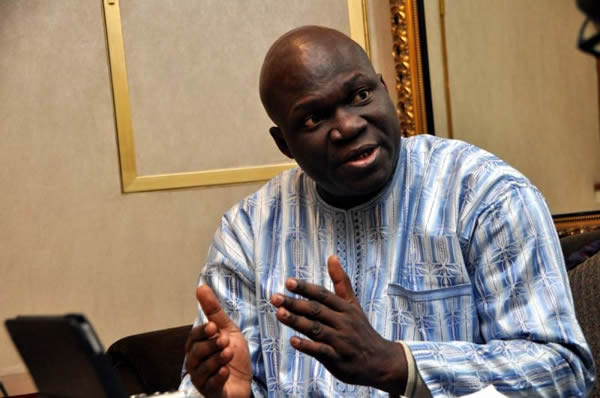
Dr. Reuben Abati, one of Nigeria’s foremost public intellectuals, has faced a gaslight of Hiroshima and Nagazaki proportion simply because he made an otherwise very innocuous statement about land purchase in Igbo land. In the course of this, Abati has suffered an unprecedented harangue. The attacks were seemingly coordinated, like the convocation of ants on a diabetic’s pee. From home and abroad, this famous member of the Arise TV commentariat received cudgels and arrows that were obviously beyond his harmless commentary. For any watcher of Nigerian ethnic relations, it will be clear that Abati’s “sin” was not the TOS Benson statement but the “sins” of his Yoruba forebears.
The barbs had hardly subsided when singing sensation, David Adeleke, known professionally as Davido, also got caught in this war of attrition. Davido is a Nigerian-American songwriter and record producer regarded as one of the most important Afrobeat artistes of the 21st century and who helped popularize the genre globally. He has gone down in history as one of Africa’s most influential artistes and an ambassador. Last week, Davido’s head was caught in the barbed wire of ethnic hate that was erected over a century ago. While appearing on The Big Homies House podcast, Davido caught the ire of ethnic warlords masquerading as patriots when he advised Black Americans not to relocate to Nigeria. He cited bad leadership, an inchoate exchange rate, and rising oil prices as reasons for the warning. He had said: “It is not cool back home. The economy is in shambles. It is not cool back home. The economy is in shambles. I do my part, I am an ambassador. When I go home and I am filming, I am not going to show the bad parts. I am talking about the situation in the country. Now the exchange rate is messed up, a lot of stuffs are not going well. The economy is just not good enough. The oil price is too high. Imagine the country that produces oil, paying more for it than a country importing oil.” He and Abati received confetti of inhuman labeling similar to Hutu’s typecast of Tutsis as “cockroaches”.
The first noticeable schism between the Hutu and Tutsi came in 1990. The downing of an aeroplane flying over Kigali which had the country’s second president, Juvénal Habyariman and Burundian President Cyprien Ntaryamira, on the evening of April 6, 1994 burst the bubble. Hutu extremists were allegedly behind it. “Cockroach” then sneaked into conversations between the two ethnic groups in the next few months. Intense Hutu propaganda which fueled hate and fear in the country’s Hutu population began. Rwandan politicians now latched on this for the extinction of Tutsis.
Tutsis were referred to as cockroaches which must be exterminated. Matters came to a head in 1994 when the whole Rwanda exploded in a total anarchy of mass killings, arson and rape. The army and Hutu militia groups named the Interahamwe (“Those Who Attack Together”) and Impuzamugambi (“Those Who Have the Same Goal”) helped in the chaos and bloodshed. As it is currently happening in Nigeria today between Igbo and Yoruba, the social media is being massively used to reinforce hatred between the two ethnicities. It was the same way, in Rwanda, radio broadcasts were used to fuel what eventually became genocide. Hutu civilians were urged to kill “cockroaches,” their Tutsi neighbours. Over 200,000 Hutu were said to have been part of the genocide.
I went into narration of how the Rwandan genocide began to show that ethnocide does not begin with a bang. It starts like the unnoticeable crawl of an insect. Ethnic animosities between Igbo and Yoruba started on the basis of fear and suspicion. It was reflected in the three political parties. The Northern Peoples Congress (NPC) was dominated by the Hausa-Fulani and, pari passu, the National Convention of Nigerian Citizens (NCNC), by the Igbo, as well as the Action Group (AG), Yoruba. Three Nigerian leaders also emerged through that ethnic prism: Sir Ahmadu Bello, the Sardauna of Sokoto, who represented the Hausa-Fulani north and the NPC, Dr. Nnamdi Azikiwe of the NCNC, the Igbo stock and Chief Obafemi Awolowo, a Yoruba of the AG. Even the establishment of newspapers of the period reflected ethnicities.
Two events during this period clearly revealed that the ethnic rivalry between Igbo and Yoruba was going to last for long. One was how the disaffection between the two, in February 1941, caused a great split which occurred in the Nigerian Youth Movement (NYM) a main nationalist organ for fighting colonial rule. The split occurred over the contest for the Legislative Council seat between Samuel Akisanya and Ernest Ikoli and the place of the NYM in the said election. It fanned embers of tribal disunity within the Yoruba which swayed Yoruba votes against Ikoli. By then, a highly beloved Azikiwe had begun to scoop the resentment of the Yoruba over his alleged divisive politics. It prompted Yoruba to rally round Ikoli who then ensured that he won the legislative seat. After the election, the remaining NYM members showed open hatred for Zik and his Pilot newspaper which led to his eventual resignation from the NYM. The bitter hostility against him was not only because they felt he was solely responsible for the Akisanya crisis in the movement, they also felt that Zik’s Pilot, during the crisis, damaged the reputation of the NYM and its leadership beyond reasonable doubt. He was alleged to be mirroring and trumpeting, in his newspaper, intra-divisions and fissures which were detrimental to the well-being of the movement.
The second was Zik’s attempt to become the Premier of the Western region in 1951. Azikiwe, with his charisma and widespread popularity, was poised in the March of that year to capture not only western Nigeria but southern Nigeria in totality. Yoruba believed it was an insult for Zik to contest to conquer their region. This was what was carried over to the civil war period where hate against each other was manufactured by both Igbo and Yoruba to sustain the theory of ethnic domination earlier touted.
Since then, ethnic relations animosities between Igbo and Yoruba have been marked by the saying that the hen which perches on a rope will sustain double inconveniences between it and the rope. As it is now, the ethnic relations are comparable to a spectator watching rough trades of tackles on a football field. Gradually, relations between the two ethnicities are becoming frightening rough tackles. They may not be visible to the eyes but bruises decorate the legs of the two teams. And now, the tackles are bringing out blood. Yet, spectators are enjoying the brutal blood spillage. Psychologists describe this love for blood spillage as hemomania. It is a clinical disorder where personal excitement hallmarks one’s own oozing blood. And just as Rome was not built nor destroyed in a day, the trade of tackles worsens by the day. In its description of ‘gradual destruction’, Yoruba liken it to the plantain (ogede). When the plantain gradually ripens and human beings beam with joy, Yoruba ask if human beings also realize that as it ripens, the plantain is also rotting? “Ògèdè ńbàjé, e l’ó ńpón,” they say.
If you do a thematic analysis and ethnic assessment of commentators on Davido’s statement, you will find the same Abati ethnic lens in it. Davido’s mother was Igbo. Since the 2023 Lagos election when the Igbo-dominated Labour Party had taken the shine off the ruling APC, the Igbo and especially its LP gubernatorial candidate, Gbadebo Rhodes-Vivour, whose mother is also Igbo, have been literally declared personae non gratae for their “political impudence.” While Yoruba commentators, especially those in alignment with the ruling APC, have been gas-lighting Davido, his “mother’s people” – the Igbo – have supported him tremendously. Today, when you make comments on national affair, you will get positive or negative review based on your ethnicity, not the content of your comment, and the ethnic group the person making the review is from. The question to ask is, in what way was Davido wrong? What did he say that is unreal about Nigeria and its despicable leadership? Should Davido tell lies about Nigeria because he is an ambassador? So, what was that character called Patrick Doyle saying when he dragged his senescence into the fray, rather than being bothered about his most pressing family issues?
Among Igbo and Yoruba today, just as you had in 1994 Rwanda among Hutus and Tutsis, there is a high dosage of collective ethnic categorization. Each sees/saw the other as enemy. While Tutsis lost their individual identities, Yoruba and Igbo have lost theirs too in the ethnic war that is fought, not with bullets and swords, but with the tongue. As reflected by Janine Clark in her “Learning from the Past: Three Lessons from the Rwandan Genocide” (African Studies, 68, 1, April 2009) when Hutus were hacking Tutsis to death, their refrain was, “Unwanzi ni umwe ni umutusi” – the enemy is one. In an interview with a Hutu genocide perpetrator, on account in the article, he said “we no longer looked at them (Tutsis) one by one; we no longer stopped to recognize them as they had been, not even as colleagues” while another said, “I don’t remember my first kill, because I did not identify that one person in the crowd. I just happened to start by killing several without seeing their faces.”
Scholars have tried to find out why there had to be such inhuman labeling by the Hutu of Tutsi as “cockroaches” before their mass murders. One said the reason is that, “people do not ordinarily engage in extraordinary evil until they have justified to themselves the morality of their actions.” He said that in the Rwandan genocide, the génocidaires had to justify their actions on the basis of their belief that the Tutsis were enemies. Another justification is to see your erstwhile brother as “the other.” In Rwanda, victims were seen by the perpetrators of genocide as “the others” who must be dehumanized. According to Waldorf, “perpetrators of mass atrocity are far more likely to dehumanize their victims” and this “involves categorizing a group as inhuman either by using categories of subhuman creatures (that is, animals) or by using categories of negatively evaluated inhuman creatures (such as demons and monsters)”.
This was exactly what Nazis also did when they branded the Jews as parasites. In Rwanda, Tutsis were labeled ‘cockroaches’ (inyenzi) as a precondition for killing them. Some Rwandan génocidaire were also quoted as saying “we no longer considered the Tutsis as humans or even as creatures of God.” Igbo and Yoruba have devised similar labels for each other. Their own “cockroaches” today are “Ofe manu, Yibo, Ajòkútamámumi” weaponized to describe “the other.” Some of these were used for Davido and Abati.
Wherever genocides occur, whether in Rwanda, in Pol Pot’s Cambodia or extermination of Jews, there is always an over-preferencing of ethnic identity. Yoruba and Igbo are today overpricing the primacy or supremacy of their ethnic identities. As a Yoruba, I have lived with both ethnic groups enough to know that there are evil and good people among them in equal proportion.
Any discerning mind following the exchange of vitriol by the two ethnic groups will discover that you only need a pin to burst this bubble of ethnic hatred. And arrive in Rwanda. The tensions are already gathering. Even people you would expect to know, among the two ethnicities, see things from ethnic prism. Their close to a century of animosities has wiped off mileages they made in ethnic relations in the past. Igbo no longer remember that Yoruba Francis Adekunle Fajuyi was assassinated in a counter coup led by northern officers when he volunteered his life for Igbo Aguiyi Ironsi. Ironsi was alleged to have been killed by top northern soldiers. Yoruba also forget today that it was to Dr. Michael Okpara that the Awolowo rump of AG ran to for alliance when S. L. Akintola attempted to worst it.
Elders of Igbo and Yoruba ethnicities must anticipate that Rwanda is afoot. They must find ways of changing this hate-laced narrative. The time bomb is ticking.



























You must be logged in to post a comment Login