
Africa
Rivers Crisis: Does Wike Not Deserve Any Punishment? -By Isaac Asabor
Justice must not be one-sided. If the federal government is truly committed to peace and order, it must ensure that all parties involved in the Rivers State crisis are held accountable, not just those who are politically expendable. Anything short of this would be a clear case of double standards, one that undermines the credibility of Tinubu’s administration and threatens the foundations of Nigeria’s democracy.

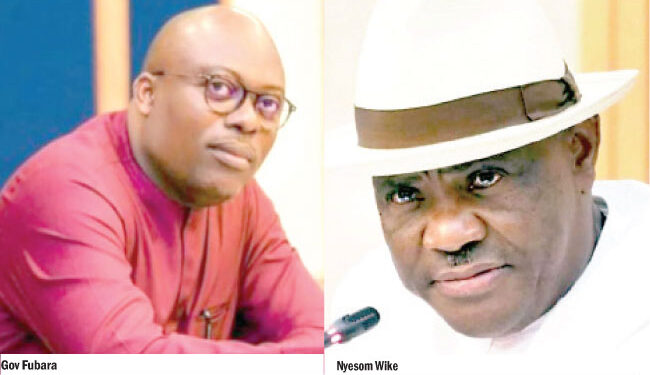
President Bola Tinubu’s declaration of a state of emergency in Rivers State has sent shockwaves across Nigeria’s political landscape. The decision, which led to the suspension of Governor Siminalayi Fubara, his deputy, Mrs. Ngozi Odu and the state’s House of Assembly members, has raised fundamental questions about fairness, justice, and the true motivations behind the move. While it is clear that the state has been engulfed in a prolonged crisis, one cannot ignore the elephant in the room, Nyesom Wike, the Minister of the Federal Capital Territory (FCT), whose role in the turmoil has been undeniable. If Fubara is being penalized, why is Wike, an undisputed rabble-rouser in the conflict, walking free?
Looking at the crisis from its genesis, it is not a misnomer to opine that the political feud between Wike and Fubara has been a ticking time bomb since the latter assumed office as Governor of Rivers State. Once a trusted protégé of Wike, Fubara soon found himself in an all-out battle for political control. The infighting became so intense that the state legislature split into factions, with one group loyal to Wike and the other standing by Fubara. The chaos reached its peak with reports of pipeline vandalism and civil unrest, prompting President Tinubu’s drastic intervention.
However, in assessing the situation objectively, it is impossible to ignore the fact that Wike has been a major catalyst in this crisis. From his days as governor, he ruled Rivers State with an iron fist, silencing opposition and ensuring that his political machinery was firmly in place. His attempt to extend his influence over the state’s affairs post-tenure is what triggered the power struggle that has now resulted in the state of emergency.
Against the backdrop of the foregoing view, one may be tempted to ask, “Is it a one-sided punishment? The reason for asking the preceding question cannot be farfetched given the fact that in suspending Fubara and the House of Assembly, Tinubu has effectively sidelined one faction of the conflict while leaving the other unscathed. Wike, despite being a key player in the chaos, remains in his position as FCT Minister, free to wield power and influence. This selective justice is deeply troubling and raises concerns about the impartiality of the federal government’s actions.
If the reason for the state of emergency is to restore peace and order, then all those responsible for the crisis should be held accountable. Why should Fubara bear the brunt of the punishment while Wike, whose aggressive political maneuvering exacerbated the situation, continues to enjoy the privileges of federal office? If one party is to be punished, then both should be subjected to the same scrutiny and consequences.
Bluntly put, it is a dangerous precedent. This is as the declaration of a state of emergency in Rivers State sets a troubling precedent for Nigeria’s democracy. While Section 305 of the Constitution empowers the President to take such action in cases of national danger, it has historically been reserved for extreme situations such as terrorism or severe civil unrest. The last major instance was in 2013 when President Goodluck Jonathan declared a state of emergency in Borno, Yobe, and Adamawa due to the Boko Haram insurgency. The situation in Rivers State, while serious, does not compare to the scale of that crisis.
By invoking emergency powers in this manner, Tinubu’s government risks normalizing the practice of using constitutional provisions as a tool for political intervention. If a political crisis within a state can justify the suspension of an elected governor and legislature, what stops future presidents from doing the same in other states where political rivalries become heated? This move could be the beginning of a dangerous pattern where the federal government selectively intervenes in state matters under the guise of maintaining order.
One silver lining in Tinubu’s declaration is that the judiciary in Rivers State remains intact. This provides a potential avenue for legal redress. Governor Fubara and other suspended officials should challenge the decision in court, testing the validity of the President’s interpretation of Section 305. If the courts find that the declaration was excessive or politically motivated, it could set a legal precedent that curtails the misuse of emergency powers in the future.
Furthermore, the judiciary must also probe Wike’s role in the crisis. If Fubara is being held accountable for the disorder in Rivers State, then Wike must also answer for his actions. The legal system should ensure that justice is not one-sided and that all individuals responsible for the breakdown of law and order face appropriate consequences.
From the perspective of the bigger picture that is inherent in the issue, and Tinubu’s political calculations, it is germane to opine that beyond the immediate crisis, Tinubu’s decision carries significant political implications. By intervening in Rivers State in this manner, he has effectively sidelined Fubara, a move that may be interpreted as a show of support for Wike. This would not be surprising, given Wike’s role in helping Tinubu secure crucial votes in the South-South region during the 2023 elections.
However, this strategy could backfire. Rivers State is a politically strategic state, and any perception of bias or unfair treatment could erode Tinubu’s support base. If Fubara’s supporters feel that their leader has been unjustly targeted, it could lead to further unrest and political realignments that may not favor the ruling administration in the long run.
In fact, there is the need for a balanced approach to the issue. Aptly put, restoring stability in Rivers State requires a more balanced and inclusive approach. Rather than using emergency powers to sideline one faction, Tinubu should take a broader view of the crisis and ensure that all responsible parties are held accountable. This means investigating and, if necessary, disciplining Wike for his role in the state’s political turmoil.
Additionally, a more diplomatic solution should be explored. Political conflicts are best resolved through dialogue and negotiation, not through unilateral federal interventions. The people of Rivers State deserve a leadership that prioritizes their welfare over personal political battles.
Without a doubt, the declaration of a state of emergency in Rivers State marks a critical moment in Nigeria’s democratic journey. While the need for stability is undeniable, the selective nature of the punishment raises serious concerns about fairness and the real motives behind the move. If Governor Fubara and other officials can be suspended for their roles in the crisis, then Wike, who has been an active participant in the conflict, should also face consequences.
Justice must not be one-sided. If the federal government is truly committed to peace and order, it must ensure that all parties involved in the Rivers State crisis are held accountable, not just those who are politically expendable. Anything short of this would be a clear case of double standards, one that undermines the credibility of Tinubu’s administration and threatens the foundations of Nigeria’s democracy.























You must be logged in to post a comment Login