
Africa
Saved $20 Billion? Then Why Borrow $2.2 Billion?, by Isaac Asabor

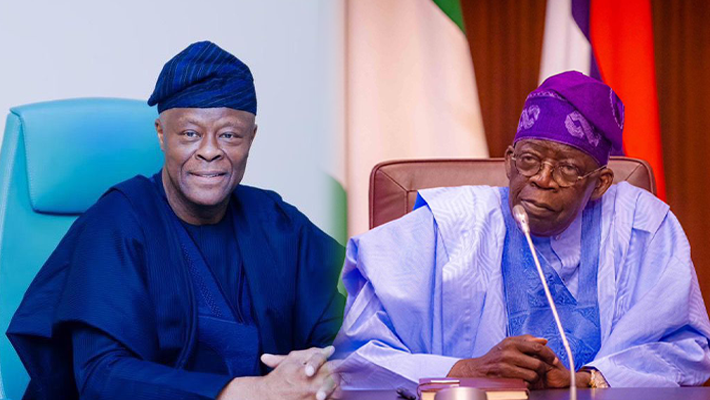
In an economy touted to have been “saved” by $20 billion due to policy reforms under President Bola Tinubu’s administration, the recent approval by the Senate for a $2.2 billion loan raises significant questions about fiscal discipline, economic priorities, and public accountability. The juxtaposition of these two stories, a declaration of financial salvation and the eagerness to incur more debt, reveals an apparent inconsistency in Nigeria’s economic management.
Finance Minister Wale Edun recently celebrated the gains of Tinubu’s reforms, notably the removal of fuel subsidies and the floating of the naira. According to Edun, these measures have saved Nigeria $20 billion, approximately 5% of the nation’s GDP. This figure has been presented as a monumental achievement, promising the redirection of funds toward critical sectors such as infrastructure, healthcare, education, and social services.
If this is accurate, then Tinubu’s reforms represent a watershed moment, signaling the administration’s ability to tackle rent-seeking practices and foster a more productive economy. The $20 billion, as Edun highlighted, is a resource that could catalyze transformative projects to uplift the nation’s socio-economic fabric.
In stark contrast to the triumphant announcement of these savings, the Senate recently approved Tinubu’s request to borrow $2.2 billion to fund the 2024 budget and bolster foreign reserves. The loan, according to Senate reports, will be sourced through Eurobonds and other international financial instruments. Proponents argue that borrowing at this scale will strengthen Nigeria’s external reserves and facilitate ongoing capital projects.
However, this decision raises a fundamental question: why borrow a relatively modest $2.2 billion when $20 billion has allegedly been saved? The optics are troubling. It suggests either a lack of fiscal coherence or a misrepresentation of the government’s financial position.
The essence of saving, whether in personal finance or national budgeting, is to build a buffer against future expenses. If Nigeria truly has $20 billion in savings, it is logical to draw a portion of these funds to cover the $2.2 billion requirement rather than incurring additional debt.
Borrowing comes at a cost, including interest payments, currency risks, and the burden of repayment for future administrations. By contrast, utilizing saved funds would reduce these financial liabilities while signaling to Nigerians that the government is committed to fiscal responsibility.
Nigeria’s debt profile is already worrisome, with debt servicing consuming a significant portion of national revenue. Borrowing more, even at favorable terms, perpetuates a cycle of dependency and limits the government’s ability to invest in long-term growth. Furthermore, the issuance of Eurobonds ties Nigeria to global financial markets, exposing the economy to external shocks.
By opting to borrow instead of utilizing savings, the government risks eroding public trust. Many Nigerians, already grappling with the economic fallout of subsidy removal and naira devaluation, may perceive this as a sign that the promised benefits of these reforms are either exaggerated or inaccessible.
If the government cannot allocate $2.2 billion from the purported $20 billion savings, it raises critical questions: “Are the Savings Real?” “Is the $20 billion a tangible, accessible sum, or is it merely a theoretical figure derived from avoided expenditures? If it exists, where is it held, and under what conditions can it be deployed?”
Also to be asked in this context is, “If the savings are indeed available, why is the government prioritizing external borrowing over deploying these funds to critical sectors?”
There is no denying the fact that for the Tinubu-led administration to engender transparency and accountability that Nigerians deserve to know how these savings are being managed. Without clarity, the narrative of $20 billion savings risks becoming another political sound bite.
In fact, the government’s decision-making should reflect the principles of fiscal discipline and strategic allocation of resources.
Against the foregoing backdrop it is expedient to suggest in this context that the government should draw from the saved $20 billion to meet immediate funding needs, such as the $2.2 billion loan request. This would reduce debt exposure and demonstrate a commitment to prudent financial management.
Thirdly, the government should provide a detailed breakdown of how the $20 billion is being utilized. Nigerians need assurances that these funds are not languishing in accounts or being redirected for less critical purposes.
In a similar vein, borrowing should be a last resort, not a default option. The government must explore alternative funding mechanisms, including public-private partnerships, to finance capital projects.
Again, the government should utilize savings to fund transformative projects that directly impact the lives of Nigerians, such as infrastructure, healthcare, and education. This will help mitigate the economic pain caused by subsidy removal and naira devaluation.
In fact, the contrasting narratives of saving $20 billion and borrowing $2.2 billion highlight the need for greater coherence in Nigeria’s fiscal policies. The government’s actions must align with its rhetoric, demonstrating that it is capable of managing the nation’s resources judiciously.
If Tinubu’s administration truly seeks to transform Nigeria’s economy, it must embrace transparency, accountability, and fiscal discipline. The $20 billion savings should not be an abstract concept but a tangible resource deployed to uplift the nation. Anything less undermines the sacrifices Nigerians have made and erodes confidence in the government’s reform agenda.
The choice is clear: draw from the savings or risk perpetuating a cycle of debt that future generations will bear. It is time for the government to practice what it preaches and ensure that its economic decisions reflect the interests of the Nigerian people.


























You must be logged in to post a comment Login