
Africa
Strengthening Democracy: A Call for Reforms in Nigeria’s Governance, by Alamin Musa Muhammad

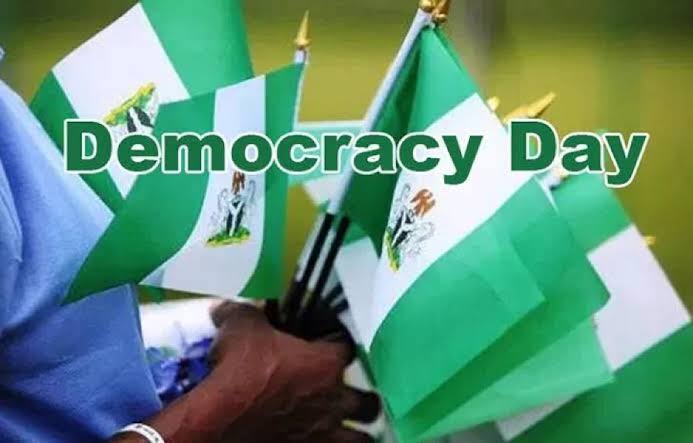
In recent years, Nigeria has stood at a pivotal juncture in its democratic evolution. Our country, rich in both natural and human resources, has grappled with challenges that threaten to undermine its democratic institutions. While there have been successes, particularly in the peaceful transfer of power and the continuation of democratic processes, there remain systemic issues that call for reflection and reform.
At the heart of these challenges is the question of participation. Democracy, in its ideal form, seeks to empower every citizen, granting them a voice and ensuring that the structures of governance are responsive to the needs of all.
Many since to have similar opinion in relation to the actual practice of democracy in Nigeria, Peter Obi, a former presidential candidate for the Labour Party (LP) in the general election of 2023, has expressed dismay at the state of Nigerian democracy, claiming that it has seen numerous losses and is hampered by poor leadership.
He tweeted, “We have continued to rank low and perform badly in every measurement of true democracy, signalling a critical deficiency in our democratic system.”
the Nigerian experience with democracy has revealed gaps in this aspiration. These gaps are not necessarily due to a lack of commitment to democratic principles but rather to a broader issue of implementation and inclusivity.
One of the core pillars of democracy is the ability of its citizens to participate meaningfully in governance or at least that what the famous scholar Plato believes. While voting and elections form the bedrock of this participation, they alone are insufficient to ensure that the broader goals of justice, equity, and empowerment are achieved.
Gabriel Dewan, Plateau state speaker house of assembly said, “Nigerian leaders, including myself have failed the people after 25 years of the country’s unbroken democracy, he rated Nigeria’s democracy low”.
Nigeria’s political landscape, shaped by decades of military rule and the influence of elite-driven politics, often falls short in translating electoral victories into genuine empowerment for its citizens.
Premium times reported the speaker to have said that the country was blessed with abundant human and natural resources, but they were not properly harnessed by the leaders. the natural resources and the blessings that God had bestowed upon Nigeria, the country ought to be far better than it is now, there are countries with far fewer resources than Nigeria, yet they were in a much better state.
The current administration, like many before it, has embarked on a series of reforms aimed at stabilizing the economy and addressing issues of security. Yet, these efforts, while commendable in intent, highlight the complexities of governance in a diverse and multifaceted society. The rising cost of living, coupled with increasing insecurity, suggests that reforms must be more attuned to the lived realities of the people.
Nigeria serves as a poignant example of the disconnect between democratic theory and practice within the country’s political landscape. As noted by BBC reporter Simi Jolaoso in a publication on Wikipedia, Nigeria is experiencing “the worst economic crisis in a generation,” marked by soaring inflation and skyrocketing food prices. This crisis has been exacerbated by economic reforms introduced under the current administration, including the removal of fuel subsidies and the devaluation of Naira. While these measures were ostensibly aimed at liberalizing the economy and attracting foreign investment, they have instead intensified the hardships faced by ordinary citizens.
Protests erupted on July 29, 2024, with demonstrators taking to the streets, brandishing placards proclaiming messages like “Enough is Enough” and “We Are Not Slaves in Our Country.” Such sentiments highlight the erosion of social justice and the exclusion of the masses from meaningful political participation, reflecting the theories posited by Dewey and others that underscore democracy’s essence as a system of values rather than merely a political framework.
Reforms must also extend to the institutions that safeguard democracy. A robust judiciary, a free press, and an active civil society are essential components of a functioning democracy. Strengthening these institutions will not only protect the rights of citizens but also ensure that the government remains accountable to the people it serves.
Furthermore, the concept of democracy as merely a political system, defined by elections and power transfers, must evolve. Democracy, at its core, is about fostering a system of values—justice, equity, and social progress. A democracy that fails to address the socio-economic disparities in society, or that marginalizes large sections of its populace, cannot fully claim the mantle of democratic legitimacy.
As Nigeria looks to the future, the question that must be asked is whether the current reforms are truly working for the greater good of all Nigerians. While the challenges are many, they also present an opportunity—a chance to redefine governance in a way that is more responsive, more inclusive, and more attuned to the aspirations of its people.
The strength of Nigeria’s democracy will ultimately depend on its ability to adapt and reform in ways that bridge the gaps between policy and practice, between the elite and the grassroots, and between political ambition and the needs of everyday Nigerians.
The decisions made today will shape the Nigeria of tomorrow. It is a call to action—not just for those in government but for every Nigerian who believes in the promise of democracy.
ALAMIN MUSA MUHAMMAD
MASS COMMUNICATION
BAYERO UNIVERSITY KANO

























You must be logged in to post a comment Login