
Education
The ₦267 Billion Paradox: Why Nigeria’s Basic Education Failure Is a Problem of Execution, Not Funding -By Yusuf Musa
Nigeria cannot keep leaving its basic education system underfunded in practice while billions sit idle in government accounts. Federal and state authorities need to confront the procurement and policy bottlenecks standing in the way of actually deploying this money. And going forward, public finance in basic education should be judged not by how big the budget announcement sounds, but by whether it actually translates into functional literacy, qualified teachers, and real learning in the classroom.

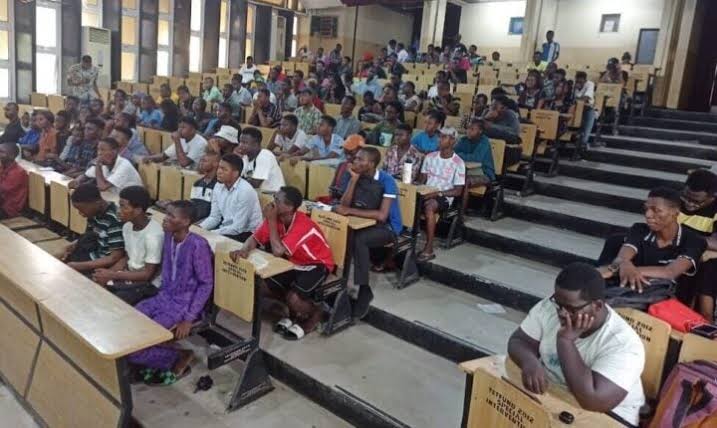
Across Nigeria, millions of children attend primary schools that lack functional roofs, desks, or basic learning materials. Yet figures released by the Universal Basic Education Commission show that as of August 2026, approximately ₦267 billion in intervention funds remained completely unspent in government accounts. To make matters worse, more than ₦65 billion in federal counterpart matching grants sits unaccessed simply because state governments have failed to provide their required equity share. This disconnect exposes something fundamental about Nigerian governance. Our basic education crisis isn’t really driven by a shortage of resources. It’s driven by administrative inertia, poor planning at the state level, and a serious accountability gap.
When public discussion turns to fixing education, the conversation always centers on expanding budget allocations. But ₦267 billion sitting idle in bank accounts makes one thing clear: allocating money without the capacity to actually execute it produces zero value for the children it was meant to help.
This isn’t a new problem either. When the Universal Basic Education programme was established under President Olusegun Obasanjo back in 2004, the goal was straightforward: guarantee free, compulsory, quality basic education for every Nigerian child. More than twenty years and trillions of naira later, Nigeria still carries one of the highest out-of-school populations in the world, with over 10.5 million children currently out of school. The issue was never really about policy design. It has always been about accountability at the state level and the failure to actually execute budgets that already exist on paper.
The reasons behind this paralysis are fairly well understood within policy circles, and they come down to a few recurring issues. Under the Universal Basic Education Act, states are required to contribute a 50 percent matching share before they can unlock federal intervention funds. In practice, many state governments prioritize short-term political projects instead, leaving tens of billions in federal matching grants locked away and untouched. On top of that, State Universal Basic Education Boards frequently get bogged down in lengthy procurement cycles, political disagreements over who gets awarded contracts, and administrative delays that slow disbursement even after funds are technically available. And even though federal allocations to states through FAAC have grown significantly over the past three years, the share of that money actually being spent on basic education has steadily shrunk.
While all of this money sits trapped in bureaucracy, learning outcomes across the country keep getting worse. A September 2026 UNICEF report on public finance for basic education shows that education spending as a share of total government budgets actually fell, dropping from 9.3 percent in 2015 to just 3.6 percent in 2023. And the human cost of that decline shows up clearly in learning outcomes. Nearly half of Primary 3 pupils, 49 percent, cannot meet minimum proficiency in basic math. By Primary 5, that number worsens, with 67 percent lacking foundational numeracy skills. And by Junior Secondary 2, a staggering 86 percent of students fail to reach minimum math proficiency.
What these numbers tell us is that simply putting up classroom buildings or handing out basic materials isn’t enough. Without qualified, properly supported teachers, updated curricula, and consistent assessment systems in place, physical infrastructure on its own barely moves the needle on actual learning.
Fixing this funding deadlock is going to require real structural changes at both the federal and state level, not just louder promises. The legal requirement for state counterpart funding needs to become more flexible and performance-based. States that consistently struggle to provide their matching share should be supported with conditional technical assistance or direct escrow arrangements tied to verified learning outcomes, rather than simply letting the capital sit idle indefinitely. UBEC and state governments also need to commit to publishing standardized, real-time dashboards showing every intervention released, every state matching contribution made, every procurement milestone hit, and every project actually completed. Making that information public would finally give School-Based Management Committees,civil society groups, and the public a way to monitor whether projects are being delivered. And perhaps most importantly, educational success needs to start being measured by actual student performance rather than by how much money got spent on contracts. Allocations should reward states that show real improvement in literacy, numeracy, and teacher development, so that every naira disbursed is tied directly to what happens inside a classroom.
At the end of the day, ₦267 billion sitting unspent alongside ₦65 billion in unaccessed matching funds reflects an operational breakdown that needs immediate attention, not another round of announcements. Nigeria cannot keep leaving its basic education system underfunded in practice while billions sit idle in government accounts. Federal and state authorities need to confront the procurement and policy bottlenecks standing in the way of actually deploying this money. And going forward, public finance in basic education should be judged not by how big the budget announcement sounds, but by whether it actually translates into functional literacy, qualified teachers, and real learning in the classroom.
Yusuf Musa
yusufmusarigasa@gmail.com




















You must be logged in to post a comment Login