
Africa
The Congo Crisis: Africa’s Hidden War And Its Far-Reaching Implications -By Isaac Asabor
Without a doubt, the conflict in the DRC is a glaring wound on the African continent. It exposes the worst of human greed, geopolitical manipulation, and governance failure. Yet, the world remains largely silent. If Africa is to achieve true peace and prosperity, it must confront and resolve the Congo crisis. The heart of Africa cannot continue to bleed while the world looks away.

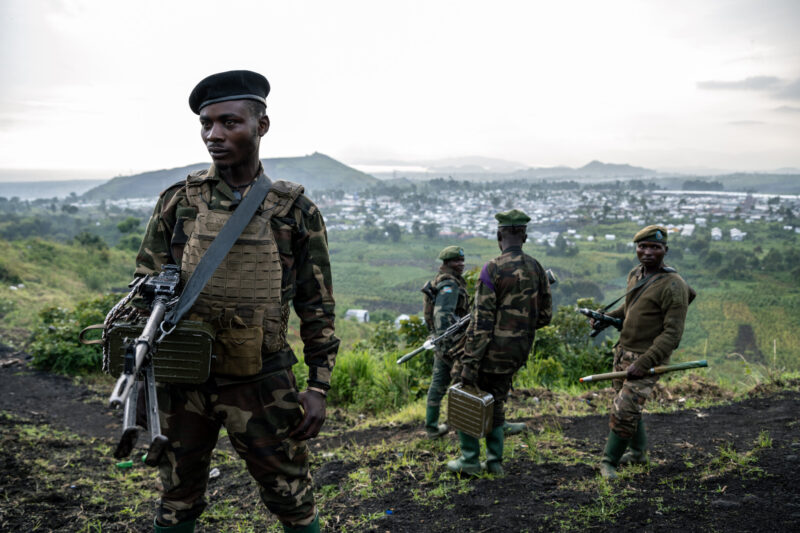
The Democratic Republic of Congo (DRC) is often referred to as the “heart of Africa.” However, this heart has been bleeding for decades due to conflict, war, and political instability. The crisis in the Congo is one of the longest-running and most complex conflicts in Africa, yet it often remains in the shadows of global discourse. While the world focuses on conflicts in Ukraine, the Middle East, or even Sudan, the DRC’s turmoil, marked by violence, foreign interference, and the plundering of resources, continues with devastating consequences.
To understand the ongoing crisis in the DRC, one must first look at its history. The country, formerly known as Zaire, gained independence from Belgium in 1960. However, its post-independence journey has been marred by coups, dictatorship, and external exploitation.
The conflict can be traced back to the 1994 Rwandan genocide, which led to an influx of refugees and armed groups into eastern Congo. These groups, including remnants of the genocidal Hutu militias (Interahamwe), clashed with Tutsi rebels supported by Rwanda and Uganda. This resulted in two major wars (1996-1997 and 1998-2003), involving multiple African countries, making the conflict the deadliest since World War II, with an estimated 5 million people dead.
Despite the official end of the Second Congo War in 2003, violence has persisted, particularly in the eastern provinces of North Kivu, South Kivu, and Ituri. Armed groups such as the March 23 Movement (M23), the Allied Democratic Forces (ADF), and local militias continue to engage in deadly battles over resources, ethnic grievances, and political control.
The DRC is one of the richest countries in the world in terms of natural resources. It possesses vast reserves of cobalt, gold, diamonds, and coltan, minerals crucial to global technology, including smartphones, electric vehicles, and military hardware. However, these resources have been a curse rather than a blessing.
Foreign corporations, neighboring countries, and local warlords all have vested interests in the Congo’s wealth. Rwanda and Uganda, in particular, have been accused of backing rebel groups in eastern Congo to exploit these resources. The United Nations and independent reports have repeatedly documented how minerals from the DRC are smuggled across the borders, fueling both conflict and corruption.
Western companies are not exempt from blame. Many multinational corporations rely on Congolese minerals but often turn a blind eye to the exploitation, child labor, and environmental destruction linked to their extraction. This vicious cycle ensures that while the world benefits from the DRC’s wealth, its people remain in poverty and perpetual violence.
The humanitarian situation in the DRC is dire. Millions have been displaced, and the country hosts one of the largest numbers of internally displaced people in the world. Women and children bear the brunt of the conflict, with sexual violence being used as a weapon of war. The United Nations has described the level of rape in Congo as the worst in the world, with tens of thousands of women and girls subjected to systematic sexual violence.
Furthermore, the lack of governance and insecurity makes access to basic healthcare, education, and food extremely difficult. The DRC, despite its riches, remains one of the poorest countries on the planet. The people of Congo have been abandoned by their government, the African Union, and the international community.
Congo’s governance crisis is another major contributor to its persistent conflict. President Félix Tshisekedi, who took over from Joseph Kabila in 2019, has struggled to establish stability. His government faces opposition from both armed groups and political rivals, while corruption remains deeply embedded in the state apparatus.
Elections in the DRC are often marred by allegations of fraud, suppression, and external interference. The lack of credible leadership weakens the state’s ability to provide security and social services, leaving room for warlords and foreign actors to thrive.
The conflict in the DRC is not just a Congolese problem; it has significant implications for the entire African continent.
The DRC shares borders with nine countries, making its instability a direct threat to regional peace. Uganda, Rwanda, Burundi, South Sudan, and the Central African Republic have all experienced spillover effects from Congo’s crisis, including refugee influxes and cross-border militant activities.
The disruption in Congo’s mining sector affects global supply chains. The instability affects trade routes, discourages foreign investment, and creates economic stagnation across Central and East Africa.
The inability of the AU to resolve the Congo crisis exposes its weaknesses. If Africa’s largest and wealthiest country cannot be stabilized, it raises questions about the AU’s effectiveness in managing continental conflicts.
The United States, China, and European nations all have interests in the DRC’s resources. The geopolitical battle over cobalt and coltan means that superpowers may continue to exploit the crisis rather than resolve it. China, for example, has secured significant mining contracts in Congo, further entrenching foreign control over its economy.
With the presence of groups linked to ISIS and Al-Shabaab in the eastern DRC, there is a growing fear that the region could become a breeding ground for terrorism. If the situation remains unchecked, it could lead to a security crisis beyond Africa.
At this juncture, it is expedient to ask, “What Can Be Done?” The answer to the foregoing cannot be farfetched as resolving the DRC crisis requires both domestic and international efforts.
In a similar vein, the Congolese government must take decisive action against corruption, improve security, and engage in inclusive political dialogue, even as neighboring countries must stop interfering in the DRC’s affairs and instead work towards diplomatic solutions.
Also in similar vein, Western nations must enforce stricter regulations on companies sourcing minerals from the DRC to ensure ethical mining practices, and international organizations must focus on grassroots solutions, supporting education, healthcare, and local businesses to uplift Congolese communities.
Also, the AU must take a proactive role in peacekeeping and negotiations, ensuring that Africa solves African problems.
Without a doubt, the conflict in the DRC is a glaring wound on the African continent. It exposes the worst of human greed, geopolitical manipulation, and governance failure. Yet, the world remains largely silent. If Africa is to achieve true peace and prosperity, it must confront and resolve the Congo crisis. The heart of Africa cannot continue to bleed while the world looks away.





















You must be logged in to post a comment Login