
Africa
The Nigerian Leadership Myth: A Satirical Safari…, by Prince Charles Dickson

The recent arraignment of minors for treason in Nigeria has sparked widespread outrage and condemnation from various quarters. Their arraignment has raised concerns about the handling of juvenile cases and the implications of such actions on the children’s future. The federal government’s position on the matter has been criticized, with many calling for the immediate release of the minors. Sadly, it’s going to come and go like all such matters, no one will be held liable or accountable.
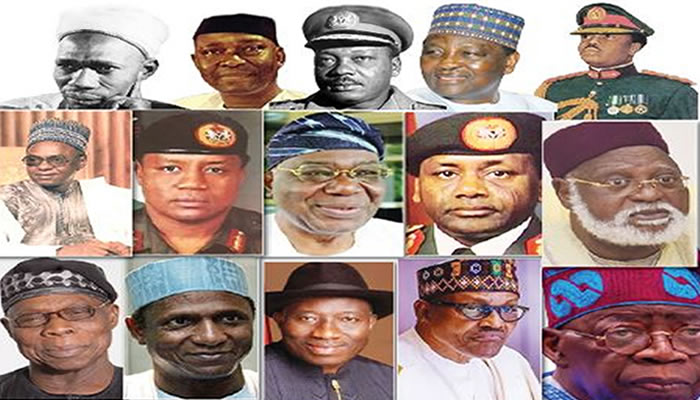
The incident highlights the challenges of leadership in Nigeria, so, let me tell us the story of leadership—a satirical safari through power and promise.
Nigerian leadership. Say those words in any social setting, and watch the room split into chuckles, sighs, and, sometimes, heated monologues. Nigerian leadership is a tale that could rival any Hollywood blockbuster in plot twists, suspense, and emotional rollercoasters. However, it’s also a tale layered with the mystique of myths—idealized versions of what leadership is supposed to be versus what we often get.
We are a Comedy of Errors…Nigeria, a land of contrasts, a nation blessed with immense potential, yet plagued by a leadership conundrum that seems to defy logic. The recurring theme is a leadership that promises much and delivers little, a leadership that often seems more interested in personal enrichment than national development. This has led many to question the very concept of Nigerian leadership, to wonder if it’s not just a grand illusion, a mirage in the desert of hope.
The Nigerian leader, in popular imagination, is a peculiar creature. He (and it’s almost always a he) is often portrayed as a demi-god, a messiah who will miraculously transform the nation overnight. He is expected to solve all problems, from poverty and corruption to insecurity and infrastructure decay.
Yet, time and again, these leaders fail to live up to the hype. They are often more concerned with power retention than problem-solving, more interested in enriching themselves and their cronies than uplifting the masses.
The myth of Nigerian leadership has had a devastating impact on the country. It has led to a culture of cynicism and apathy, where people have lost faith in the ability of their leaders to make a difference. This has, in turn, led to a decline in civic engagement and a rise in social unrest.
Let us start with the allure of the “Messiah Complex”. There’s a strange ritual that occurs every four years. Nigerians from all walks of life gather, united in collective hope, as politicians-turned-Messiahs make promises that sound like poetry. We’ve been told of visions of transforming deserts into oases and turning debts into riches. We’ve heard of a future filled with functional electricity, pothole-free roads, and hospitals that will make a Swiss watchmaker green with envy. These messianic figures appear every election season with a well-rehearsed script and an arsenal of grandiose claims that even Aesop himself would have had trouble believing.
Every so often, however, Nigerians fall for the shiny charisma, the promises of change, and the proclamations of patriotism. The hope is intoxicating. “Maybe this time it’s different,” people think. However, the “Messiah” quickly devolves into the “Excuse Machine,” because just like clockwork, the mirage fades and the landscape of reality becomes all too clear.
The Myth of Transformation. A word often sprinkled into campaign speeches and government slogans, like salt in a pot of jollof rice. Politicians sell transformation as if it were a buy-one-get-one-free deal at a Lagos market. The truth, however, is more of a slow simmer than a fast boil. Promises are made with the certainty of a Shakespearean tragedy. Our leaders assure us of mega-cities, free education, and top-tier health care — not unlike New York, Tokyo, or Paris — only to end up delivering results closer to rural Ajegunle, where even basic amenities are hard to come by.
Every politician tells us they’ll be different. They swear to bridge the gap between rich and poor, elevate the standard of living, and make Nigeria great again (though no one quite remembers when Nigeria was “great” by their implied standards). They preach transformation, yet reality reminds us more of the song “Nothing New Under the Sun.” And while “transformation” sounds beautiful in theory, it often translates to moving from one ineffective policy to the next, with very little real change in sight.
Now, here’s a real mystery: Nigerian leaders often amass incredible wealth while they’re in service to the nation. It’s almost as if there’s an invisible ATM in every office. Take a simple councilor position, and it might magically pay enough to build a mansion, fly first-class, and send children to Ivy League schools abroad. It is the Paradox of Wealth and Service.
Surely, one must wonder: Is public office in Nigeria blessed with some hidden oil well that the rest of us common folk don’t know about? Or maybe, just maybe, the lines between “public servant” and “private business mogul” are so blurred that even Picasso would have difficulty painting it.
There is a cultural paradox here too. In Nigeria, if a person “makes it” in government, they become a hero in their village. While the rest of the country might bemoan corruption, friends and family back home celebrate their “son’s” success. This celebration of political “achievement” is ingrained, and while the culture venerates “serving the people,” the individuals themselves are often held up as “untouchable” figures, immune to scrutiny or criticism. It’s a complex paradox, and one that feeds the myth.
Another pillar of Nigerian leadership myth is the promise of security. Each administration vows to end the violence that has plagued parts of the country, whether it’s the Northeast, plagued by insurgency, or the Northwest, suffering under banditry. Every president is the Commander-in-Chief of the Nigerian Armed Forces, yet they seem more skilled in speeches than in strategies. One might think, given their promises, that each new administration would make Nigeria one of the safest nations on earth. Yet, security remains elusive, like trying to catch rain with a sieve.
The real irony is in the way leaders themselves are heavily guarded while citizens fend for themselves. It’s not uncommon to see a convoy with enough SUVs to form a motorcade protecting one individual while the ordinary citizen walks home through streets dimly lit and streets less patrolled. And yet, Nigerians are resilient. In the face of so much insecurity, they go about their lives, praying that one day, security will be more than a lofty campaign promise.
Leadership in Nigeria is much like a soap opera — long, dramatic, and filled with cliffhangers. And just like the characters in these dramas, Nigerian leaders are often concerned with their legacy. But what does legacy even mean in the context of Nigerian leadership? The legacies that some leaders leave are more about buildings, statues, and airports bearing their names than about sustainable development. And when the next leader comes in, one of the first steps is often to dismantle, rename, or outright ignore the predecessor’s “legacy.”
What this means for Nigeria is a series of disjointed projects, half-hearted initiatives, and policies abandoned halfway. In place of real progress, Nigeria has a collection of monuments to political egos, a scrapbook of half-completed buildings, and a string of reforms that never quite made it to completion.
But here’s the twist: for all the comedy and tragedy of Nigerian leadership, Nigerians themselves are the true leaders. They are the ones who hustle, adapt, and thrive despite the odds. While politicians grandstand, ordinary Nigerians build businesses from scratch, create art and culture that captivate the world, and maintain a resilient spirit that no amount of hardship seems to quench.
The myth of Nigerian leadership persists because, deep down, we all hold out hope that one day, the leaders we elect will reflect the best of us — not the worst. Nigerians deserve leaders who understand that leadership is a service, not a birthright, a responsibility, not a ticket to personal paradise.
In the end, perhaps the myth will give way to reality. Maybe the Messiah Complex will be replaced by the Public Servant. But until then, Nigerians will do what they have always done — lead themselves, rise above, and continue to believe that one day, true leadership will emerge, not as myth but as reality, and Nigeria may win—Only time will tell
—
Prince Charles Dickson PhD
Team Lead
The Tattaaunawa Roundtable Initiative (TRICentre)
https://tattaaunawa.org/
Development & Media Practitioner|
Researcher|Policy Analyst|Public Intellect|Teacher
234 803 331 1301, 234 805 715 2301
Alternate Mail: pcdbooks@yahoo.com
Skype ID: princecharlesdickson

























You must be logged in to post a comment Login