
Africa
The Spreading Fire Of Insecurity In Nigeria And The Sahel -By Princess Jane Simon
The insecurity crisis in Nigeria and the Sahel is a ticking time bomb. Unless urgent action is taken to address its root causes, the violence may spread even further south, threatening the stability of the entire West African subregion. The question is no longer whether the crisis can be contained — it is whether the region has the political courage to confront it decisively.

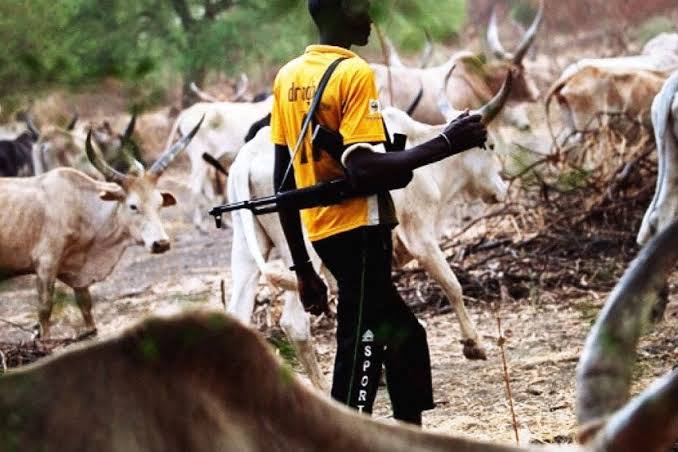
Across Nigeria and the wider Sahel region, insecurity has evolved into a complex humanitarian and political crisis that now threatens the very existence of communities and the stability of entire nations. What began more than a decade ago as a violent insurgency in northeast Nigeria has now transformed into an interlinked web of terrorism, banditry, and communal conflicts. These overlapping threats have created a corridor of instability stretching from Lake Chad through northern Nigeria and across Mali, Niger, and Burkina Faso.
In Nigeria, states such as Borno, Yobe, and Adamawa remain at the center of the Boko Haram and Islamic State West Africa Province (ISWAP) insurgencies. Despite numerous military offensives and government claims of “technical victory,” attacks on rural communities continue unabated. Insurgents ambush military convoys, kidnap civilians, and loot villages, leaving behind destruction and despair. Millions of Nigerians have been displaced, while humanitarian workers face increasing danger in conflict zones.
The crisis has gradually spread to the northwest, where heavily armed bandits have turned entire regions into zones of terror. From Zamfara to Katsina, from Kaduna to Niger State, villages have been attacked for ransom, cattle, or revenge. Thousands have been killed, while many more have been forced to flee their ancestral lands. The line between insurgents and criminals has become blurred, with many groups adopting ideological justifications to legitimize their violent acts.
Meanwhile, Nigeria’s porous borders have made the situation even more complex. Arms smuggling, human trafficking, and cross-border movement of militants have become common. The instability in neighboring countries like Niger and Chad contributes directly to Nigeria’s own security challenges. The Sahel belt is now a battlefield of competing armed factions, militias, and extremists, many of whom are linked to international terrorist networks.
Beyond the immediate violence, insecurity has devastated local economies and disrupted social life. Farmers are abandoning their farmlands out of fear, leading to widespread food shortages and rising prices. Schools in conflict-prone areas remain shut, depriving millions of children of education. Healthcare systems are overwhelmed, and humanitarian aid cannot reach many affected communities due to ongoing hostilities.
The social implications are also severe. The constant displacement of people has created tensions between host communities and refugees, while young people, frustrated by unemployment and hopelessness, are easily recruited by violent groups. Women and children remain the most vulnerable — subjected to abductions, sexual violence, and forced marriages.
Experts argue that the insecurity in Nigeria and the Sahel cannot be solved by military means alone. The crisis is rooted in deep socio-economic inequalities, poor governance, and the neglect of rural development. Corruption and lack of political will have weakened state institutions, while inadequate intelligence sharing among regional governments has made coordinated action difficult.
Efforts by ECOWAS and the African Union have so far yielded limited results. Regional military coalitions like the Multinational Joint Task Force (MNJTF) have achieved some victories but lack sustainable funding and logistical support. Meanwhile, the withdrawal of foreign forces such as France’s Operation Barkhane has created security vacuums that extremists quickly exploit.
For Nigeria and the region to overcome this security nightmare, leaders must invest in long-term solutions — education, job creation, and good governance. Communities must be empowered through inclusive dialogue, while border management and regional cooperation should be prioritized. Civil society and the media must also play their role in promoting peace, accountability, and awareness.
The insecurity crisis in Nigeria and the Sahel is a ticking time bomb. Unless urgent action is taken to address its root causes, the violence may spread even further south, threatening the stability of the entire West African subregion. The question is no longer whether the crisis can be contained — it is whether the region has the political courage to confront it decisively.
Princess Jane Simon is a 300 Level Student From Mass Communication Department University Of Maiduguri.

























You must be logged in to post a comment Login