
Africa
Tinibu’s Fuel Tax Reform: A Bold Step Towards a Sustainable Future -By Jabir T. Usman
Nigerians should not view the fuel tax with fear, but rather with hope. Hope for cleaner cities, better infrastructure, a diversified economy, and a country that can proudly stand among the nations taking bold action for their people. This is not just a tax, it is a vision for the Nigeria of tomorrow.

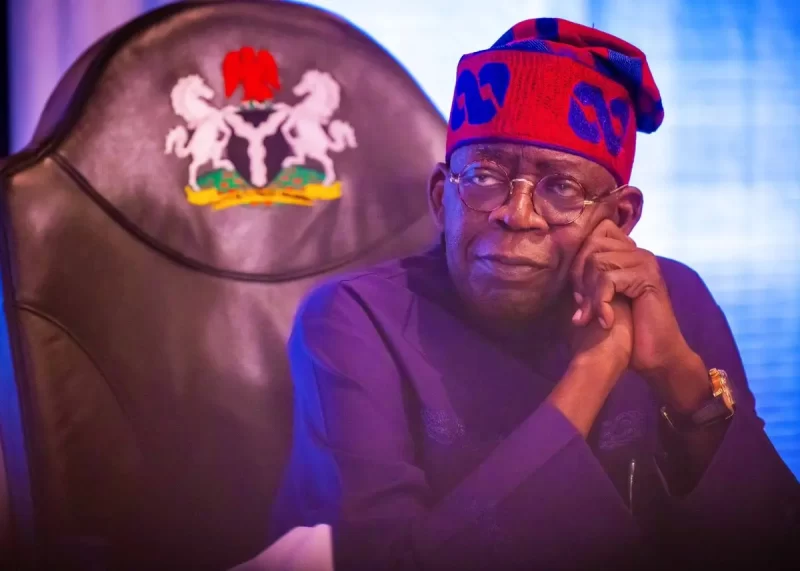
On June 26, 2025, President Bola Ahmed Tinibu signed into law the much debated 5 percent fuel tax, a landmark decision that has since ignited conversations across the country. Although its implementation date is yet to be announced, the policy already stands as one of the boldest economic and environmental reforms under his administration. While some citizens express apprehension, the government has made it clear that this policy is not designed to burden Nigerians, but rather to build a more sustainable and prosperous future.
From the onset, the federal government clarified that the surcharge applies exclusively to fossil fuel products, petrol, diesel, and aviation fuel. Importantly, essential household energy products such as kerosene, cooking gas (LPG), and Compressed Natural Gas (CNG) are exempted. This carefully structured approach ensures that the fuel tax does not unduly affect vulnerable households, but instead targets sectors most responsible for environmental degradation.
Government officials emphasized that the primary aim of the 5 percent fuel tax is to raise the necessary funds to accelerate Nigeria’s transition into clean and renewable energy. According to the Ministry of Finance, the revenue generated will be channeled into the development of green energy projects, transport infrastructure, and strategic initiatives aimed at reducing Nigeria’s dependence on fossil fuels.
For decades, Nigeria’s economy has leaned heavily on petroleum, a resource that has provided wealth but also created over-reliance and vulnerability. President Tinibu’s administration, by introducing this tax, demonstrates foresight in recognizing the need to diversify energy sources and align with global climate-friendly practices. Indeed, such proactive governance is essential for the nation’s long-term survival in an increasingly energy-conscious world.
Public reactions to the policy have been mixed. Critics argue that Nigerians are already grappling with high living costs and view the fuel tax as an additional burden. However, advocates point out that the exemptions for kerosene, LPG, and CNG directly cushion ordinary households. In truth, the tax primarily affects sectors with higher energy consumption, ensuring that wealthier and industrial energy users shoulder a fair share of responsibility for national development.
When placed in a global context, Nigeria’s decision is far from unique. Countries around the world impose fuel taxes as part of their broader fiscal and environmental policies. Kenya, for example, imposes an excise duty on petroleum products to fund infrastructure. In Europe, nations such as Germany, the Netherlands, Italy, Greece, and the United Kingdom have long levied fuel taxes, both to raise revenue and to discourage excessive fossil fuel use.
Similarly, emerging economies like Indonesia, Russia, Brazil, Mexico, and Canada apply fuel taxes in varying degrees to stabilize markets and fund public projects. Norway, often hailed as a model for responsible energy governance, imposes significant fuel taxes while simultaneously leading in the adoption of electric vehicles. These examples prove that fuel taxes are neither punitive nor novel, they are practical tools for balancing economic needs with environmental stewardship.
Against this backdrop, President Tinibu’s decision positions Nigeria among forward-thinking nations taking deliberate steps to safeguard the environment while strengthening fiscal stability. Far from being an unpopular measure, the fuel tax should be viewed as a patriotic call to action, one that urges citizens to embrace cleaner energy and support national development.
Beyond environmental considerations, the funds from this surcharge will directly contribute to improving Nigeria’s road and transport infrastructure. Poor infrastructure has long been a stumbling block to economic growth, leading to high logistics costs and inefficiencies across sectors. By dedicating resources from the fuel tax to this area, the government is setting the stage for faster, safer, and more cost-effective movement of goods and services.
Moreover, the investment in green energy will create new jobs, particularly in solar, wind, and hydro-electric projects. This will not only diversify Nigeria’s economy but also reduce unemployment rates. For young people especially, the transition to renewable energy presents fresh opportunities to innovate, learn, and lead in the fast-growing global clean energy market.
President Tinibu’s administration deserves commendation for balancing short-term economic concerns with long-term sustainability goals. Rather than taking the politically easy route of postponing reforms, the government has shown courage in implementing a policy that ensures Nigeria does not lag behind in the global energy transition.
While the voices of dissent cannot be ignored, Nigerians should take solace in the exemptions provided, the clarity of purpose outlined by the government, and the many international examples that demonstrate the effectiveness of such measures. Change often comes with discomfort, but it is this kind of calculated discomfort that lays the foundation for lasting progress.
The 5 percent fuel tax is not just about revenue, it is about responsibility. It is about ensuring that those who benefit most from fossil fuel consumption contribute more to the common good. It is about investing in roads, railways, renewable energy, and cleaner air for future generations.
Indeed, history will remember this move as a courageous step under the leadership of President Bola Ahmed Tinibu. By looking beyond immediate political gains and focusing on the long-term wellbeing of the nation, the government has proven that leadership is about foresight, not expediency.
Therefore, Nigerians should not view the fuel tax with fear, but rather with hope. Hope for cleaner cities, better infrastructure, a diversified economy, and a country that can proudly stand among the nations taking bold action for their people. This is not just a tax, it is a vision for the Nigeria of tomorrow.
Jabir T Usman writes from Sabon Gari Tudun Wada Kaduna jabson.usman@gmail.com























You must be logged in to post a comment Login